

From Soil to Science: ML2 and ML9 as Potential Antibiotic Producers
Location
CoLab, COM 192
Start Date
30-4-2026 10:45 AM
Document Type
Poster
Description
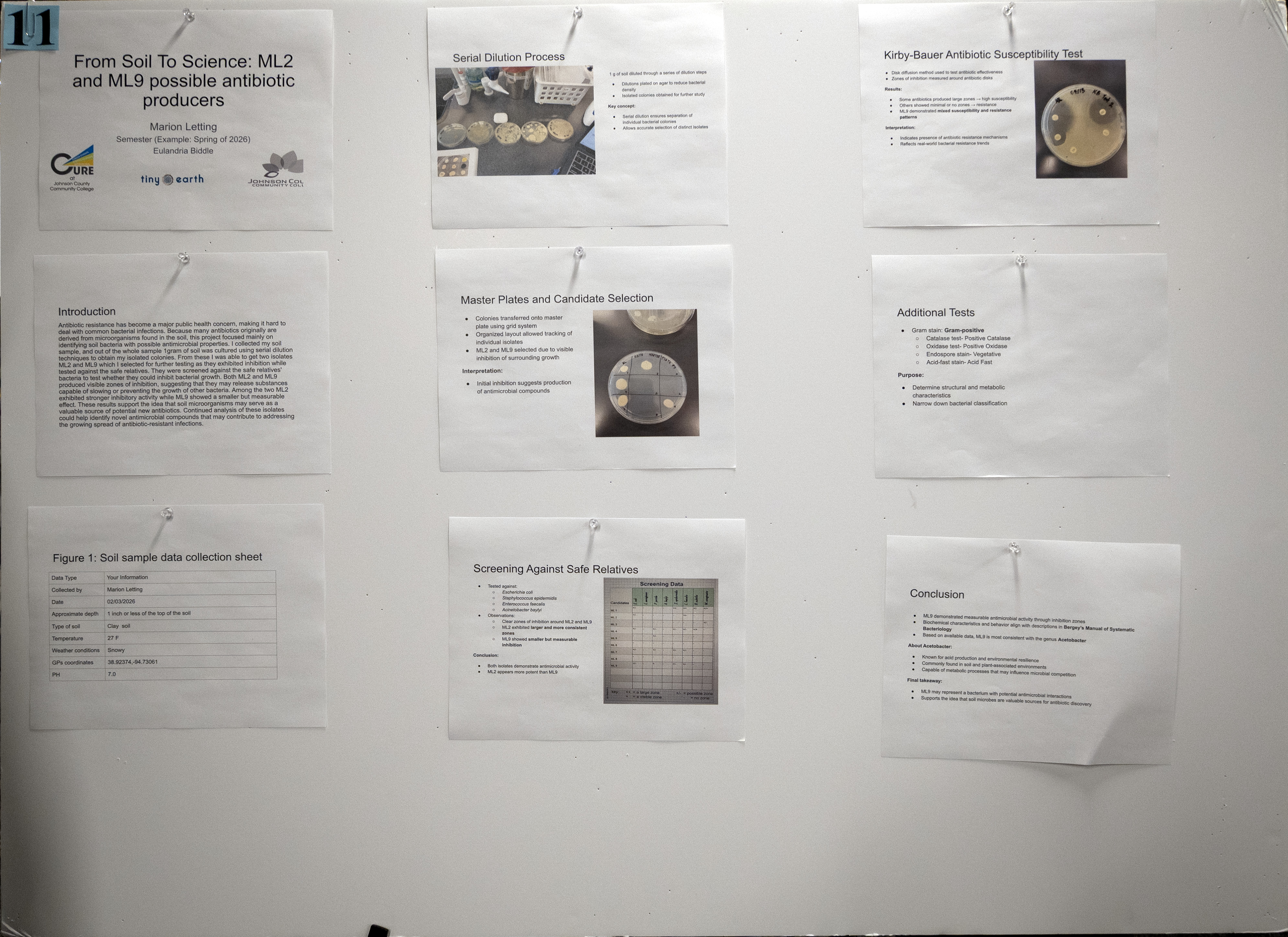
Antibiotic resistance has become a major public health concern, making it hard to deal with common bacterial infections. Because many antibiotics originally are derived from microorganisms found in the soil, this project focused mainly on identifying soil bacteria with possible antimicrobial properties. I collected my soil sample, and out of the whole sample 1gram of soil was cultured using serial dilution techniques to obtain my isolated colonies. From these I was able to get two isolates ML2 and ML9 which I selected for further testing as they exhibited inhibition while tested against the safe relatives. They were screened against the safe relatives' bacteria to test whether they could inhibit bacterial growth. Both ML2 and ML9 produced visible zones of inhibition, suggesting that they may release substances capable of slowing or preventing the growth of other bacteria. Among the two ML2 exhibited stronger inhibitory activity while ML9 showed a smaller but measurable effect. These results support the idea that soil microorganisms may serve as a valuable source of potential new antibiotics. Continued analysis of these isolates could help identify novel antimicrobial compounds that may contribute to addressing the growing spread of antibiotic-resistant infections.
Image
From Soil to Science: ML2 and ML9 as Potential Antibiotic Producers
CoLab, COM 192
Antibiotic resistance has become a major public health concern, making it hard to deal with common bacterial infections. Because many antibiotics originally are derived from microorganisms found in the soil, this project focused mainly on identifying soil bacteria with possible antimicrobial properties. I collected my soil sample, and out of the whole sample 1gram of soil was cultured using serial dilution techniques to obtain my isolated colonies. From these I was able to get two isolates ML2 and ML9 which I selected for further testing as they exhibited inhibition while tested against the safe relatives. They were screened against the safe relatives' bacteria to test whether they could inhibit bacterial growth. Both ML2 and ML9 produced visible zones of inhibition, suggesting that they may release substances capable of slowing or preventing the growth of other bacteria. Among the two ML2 exhibited stronger inhibitory activity while ML9 showed a smaller but measurable effect. These results support the idea that soil microorganisms may serve as a valuable source of potential new antibiotics. Continued analysis of these isolates could help identify novel antimicrobial compounds that may contribute to addressing the growing spread of antibiotic-resistant infections.
Comments
The faculty mentor for this project was Eulandria Biddle.