

Genetically Engineered Algae to Degrade Plastic
Location
CoLab, COM 188
Start Date
30-4-2026 10:45 AM
Document Type
Poster
Description
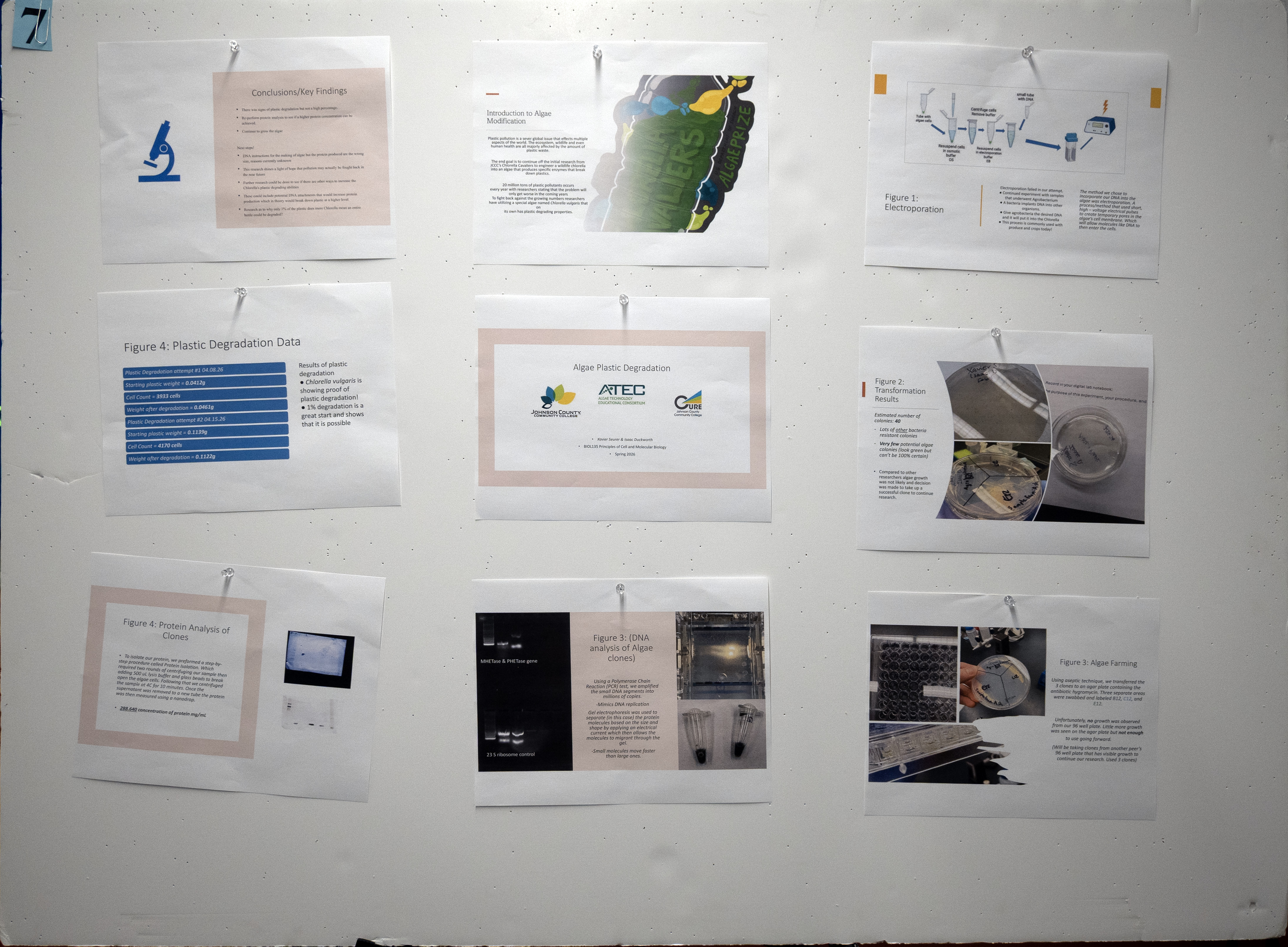
Plastic pollution is a severe global issue that effects multiple aspects of the world. The ecosystem, wildlife and even human health are all majorly affected by the amount of plastic waste. The end goal is to engineer a wildlife chlorella into an algae that produces specific enzymes that break down plastics. To accomplish this, a specific part of our DNA will be introduced to the algae via electroporation. To see if the incorporation was successful, we will perform multiple selection processes to verify and confirm that the electroporation was successful. After selecting a couple colonies of our algae sample, a screening will be done on the clones to further ensure that the DNA and proteins for plastic degradation are present. Once verified the DNA will then be separated in order to measure the concentration and a PCR reaction will then be conducted. The electroporation process was overall unsuccessful in introducing our DNA to the wildlife chlorella. When the Algae was introduced to hygromycin, little to none survived. A sample collected from a peer was used instead for further analysis. The DNA in this sample was fortunately positive. Plastic pollution continues to effect key and crucial aspects of this world to this day, but by successfully engineering wildlife chlorella to produce these enzymes, plastics will cause a much less impact on the ecosystem, wildlife, and our health going forward.
Image
Genetically Engineered Algae to Degrade Plastic
CoLab, COM 188
Plastic pollution is a severe global issue that effects multiple aspects of the world. The ecosystem, wildlife and even human health are all majorly affected by the amount of plastic waste. The end goal is to engineer a wildlife chlorella into an algae that produces specific enzymes that break down plastics. To accomplish this, a specific part of our DNA will be introduced to the algae via electroporation. To see if the incorporation was successful, we will perform multiple selection processes to verify and confirm that the electroporation was successful. After selecting a couple colonies of our algae sample, a screening will be done on the clones to further ensure that the DNA and proteins for plastic degradation are present. Once verified the DNA will then be separated in order to measure the concentration and a PCR reaction will then be conducted. The electroporation process was overall unsuccessful in introducing our DNA to the wildlife chlorella. When the Algae was introduced to hygromycin, little to none survived. A sample collected from a peer was used instead for further analysis. The DNA in this sample was fortunately positive. Plastic pollution continues to effect key and crucial aspects of this world to this day, but by successfully engineering wildlife chlorella to produce these enzymes, plastics will cause a much less impact on the ecosystem, wildlife, and our health going forward.
Comments
The faculty mentor for this project was Heather Seitz.