

Finding New Antibiotic Producing Bacteria
Location
CoLab, COM 190
Start Date
30-4-2026 10:45 AM
Document Type
Poster
Description
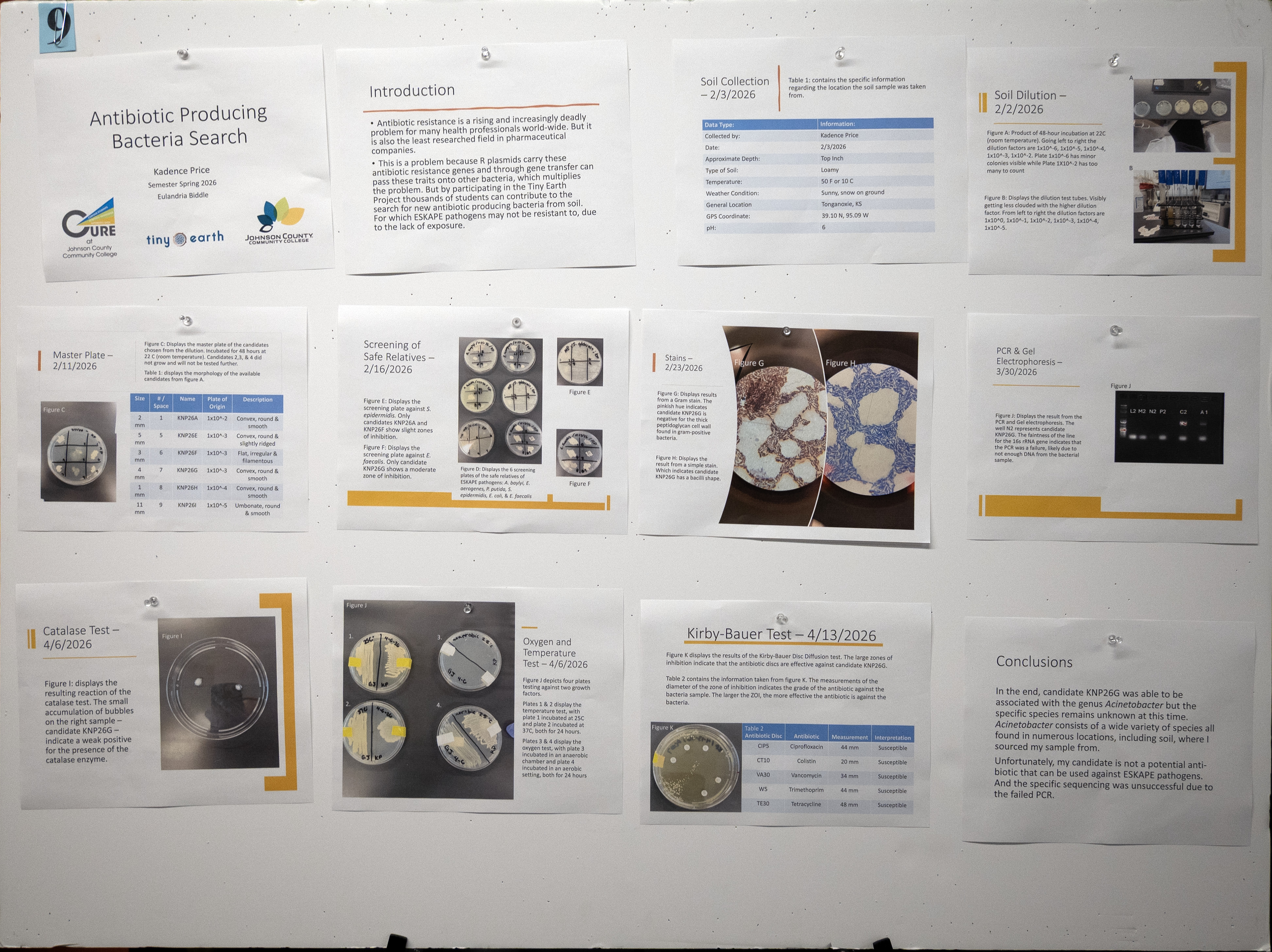
It is important to be actively involved in the search for antibiotic producing bacteria – APB – because, now more than ever, there is a need for greater varieties of antibiotics. Our list of known/ effective antibiotics is finite while the number of antibiotic-resistant bacteria and pan-resistant bacteria has been increasing. Pan-resistant bacteria are resistant to all known antibiotics and with over five hundred reported cases of pan-resistant bacterial viruses across the world, this is quickly becoming a dangerous pandemic. Already hundreds of people have been directly affected by these pan-resistant bacteria, with the most common pan-resistant bacteria dubbed ESKAPE pathogens. These ESKAPE pathogens consist of Enterococcus faecium, Staphylococcus aureus, Klebsiella pneumoniae, Acinetobacter baumannii, pseudomonas aeruginosa, and Enterobacter species. By participating in the Tiny Earth Project and spreading awareness, we can reduce the lack of information on antibiotics and increase the advocacy for APB research for big companies. The Tiny Earth Project consists of thousands of students diligently collecting samples and testing their potential candidates against safe relatives of ESKAPE pathogens to test their antibiotic producing abilities. In my research, I found a potential candidate for an APB. It displays zone of inhibition for a safe relative of an ESKAPE pathogen, E. faecalis. This is important because zones of inhibition indicate that the potential candidate bacteria is producing some type of antibiotic the safe relative is not resistant to. This means that the potential APB might be able to inhibit the ESKAPE relative as well and eventually may be a future antibiotic treatment.
Image
Finding New Antibiotic Producing Bacteria
CoLab, COM 190
It is important to be actively involved in the search for antibiotic producing bacteria – APB – because, now more than ever, there is a need for greater varieties of antibiotics. Our list of known/ effective antibiotics is finite while the number of antibiotic-resistant bacteria and pan-resistant bacteria has been increasing. Pan-resistant bacteria are resistant to all known antibiotics and with over five hundred reported cases of pan-resistant bacterial viruses across the world, this is quickly becoming a dangerous pandemic. Already hundreds of people have been directly affected by these pan-resistant bacteria, with the most common pan-resistant bacteria dubbed ESKAPE pathogens. These ESKAPE pathogens consist of Enterococcus faecium, Staphylococcus aureus, Klebsiella pneumoniae, Acinetobacter baumannii, pseudomonas aeruginosa, and Enterobacter species. By participating in the Tiny Earth Project and spreading awareness, we can reduce the lack of information on antibiotics and increase the advocacy for APB research for big companies. The Tiny Earth Project consists of thousands of students diligently collecting samples and testing their potential candidates against safe relatives of ESKAPE pathogens to test their antibiotic producing abilities. In my research, I found a potential candidate for an APB. It displays zone of inhibition for a safe relative of an ESKAPE pathogen, E. faecalis. This is important because zones of inhibition indicate that the potential candidate bacteria is producing some type of antibiotic the safe relative is not resistant to. This means that the potential APB might be able to inhibit the ESKAPE relative as well and eventually may be a future antibiotic treatment.
Comments
The faculty mentor for this project was Eulandria Biddle.