

Combating Resistance from the Ground Up
Location
CoLab, COM 109
Start Date
30-4-2026 8:15 AM
Document Type
Poster
Description
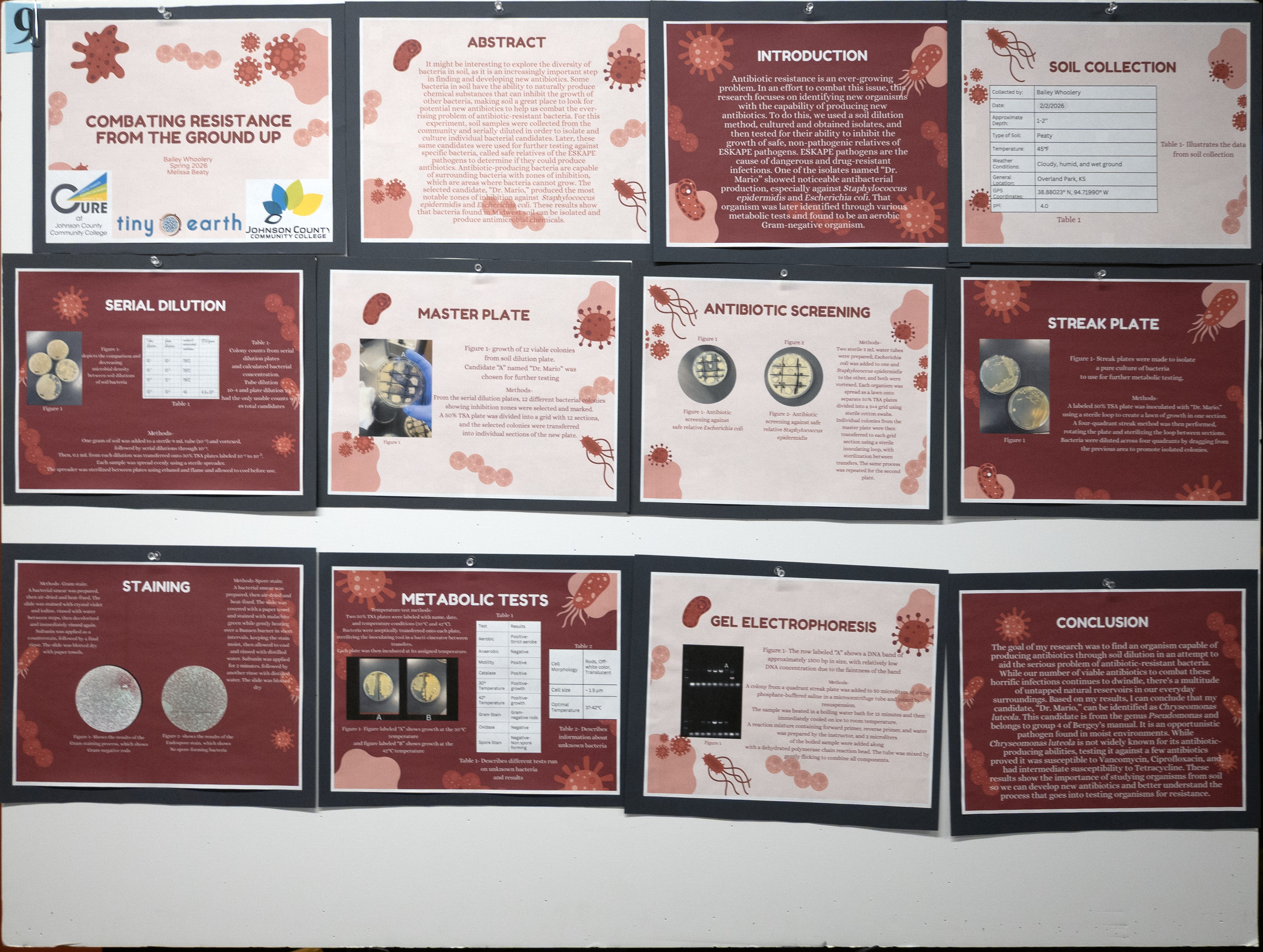
It might be interesting to explore the diversity of bacteria in soil, as it is an increasingly important step in finding and developing new antibiotics. Some bacteria in soil have the ability to naturally produce chemical substances that can inhibit the growth of other bacteria, making soil a great place to look for potential new antibiotics to help us to combat the ever rising problem of antibiotic-resistant bacteria. For this experiment, soil samples were collected from the community and serially diluted in order to isolate and culture individual bacterial candidates. Later, these same candidates were used for further testing against specific bacteria, called safe relatives of the ESKAPE pathogens to determine if they could produce antibiotics. Antibiotic-producing bacteria are capable of surrounding bacteria with zones of inhibition, which are areas where bacteria cannot grow. The selected candidate, “Dr. Mario,” produced the most notable zones of inhibition against Staphylococcus epidermidis and Escherichia coli. These results show that bacteria found in midwest soil can be isolated and produce antimicrobial chemicals.
Image
Combating Resistance from the Ground Up
CoLab, COM 109
It might be interesting to explore the diversity of bacteria in soil, as it is an increasingly important step in finding and developing new antibiotics. Some bacteria in soil have the ability to naturally produce chemical substances that can inhibit the growth of other bacteria, making soil a great place to look for potential new antibiotics to help us to combat the ever rising problem of antibiotic-resistant bacteria. For this experiment, soil samples were collected from the community and serially diluted in order to isolate and culture individual bacterial candidates. Later, these same candidates were used for further testing against specific bacteria, called safe relatives of the ESKAPE pathogens to determine if they could produce antibiotics. Antibiotic-producing bacteria are capable of surrounding bacteria with zones of inhibition, which are areas where bacteria cannot grow. The selected candidate, “Dr. Mario,” produced the most notable zones of inhibition against Staphylococcus epidermidis and Escherichia coli. These results show that bacteria found in midwest soil can be isolated and produce antimicrobial chemicals.
Comments
The faculty mentor for this project was Melissa Beaty.