

Combating Antibiotic Resistance
Location
CoLab, COM 110
Start Date
30-4-2026 8:15 AM
Document Type
Poster
Description
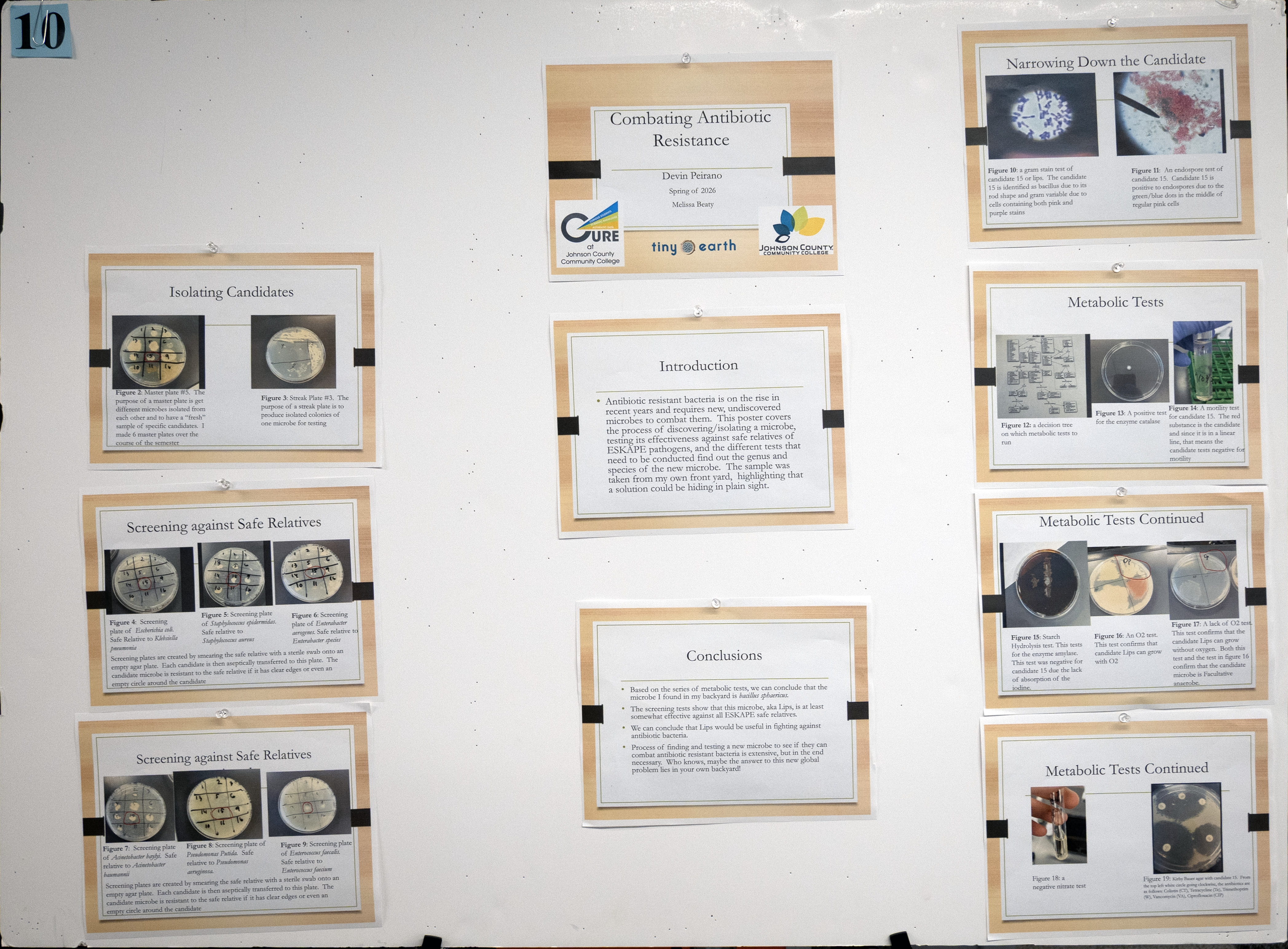
The increased use of antibiotics in recent years has given rise to antibiotic resistant bacteria. These antibiotic resistant bacteria require new, undiscovered microbes to combat them. The information on the poster below documents the process in finding new microbes from soil samples, cultivating them over the course of 3 months, identifying which bacteria could potentially inhibit other bacteria, and finally testing them against safe relatives to ESKAPE pathogens. This poster will also go over one microbe I discovered from a soil sample from my front yard. This microbe has demonstrated the ability to inhibit the growth of safe relatives ESKAPE pathogens such as Enterococcus faecalis, Staphylococcus epidermidis, Escherichia coli, Acinetobacer baylyi, Pseudomonas putida, and Enterobacter aerogenes. Demonstrating that it could be possibly used to fight against antibiotic resistant bacteria.
Image
Combating Antibiotic Resistance
CoLab, COM 110
The increased use of antibiotics in recent years has given rise to antibiotic resistant bacteria. These antibiotic resistant bacteria require new, undiscovered microbes to combat them. The information on the poster below documents the process in finding new microbes from soil samples, cultivating them over the course of 3 months, identifying which bacteria could potentially inhibit other bacteria, and finally testing them against safe relatives to ESKAPE pathogens. This poster will also go over one microbe I discovered from a soil sample from my front yard. This microbe has demonstrated the ability to inhibit the growth of safe relatives ESKAPE pathogens such as Enterococcus faecalis, Staphylococcus epidermidis, Escherichia coli, Acinetobacer baylyi, Pseudomonas putida, and Enterobacter aerogenes. Demonstrating that it could be possibly used to fight against antibiotic resistant bacteria.
Comments
The faculty mentor for this project was Melissa Beaty.