

Hidden in the Dirt: Discovering Antibiotic-Producing Microbes in Soil
Location
CoLab, COM 160
Start Date
30-4-2026 9:30 AM
Document Type
Poster
Description
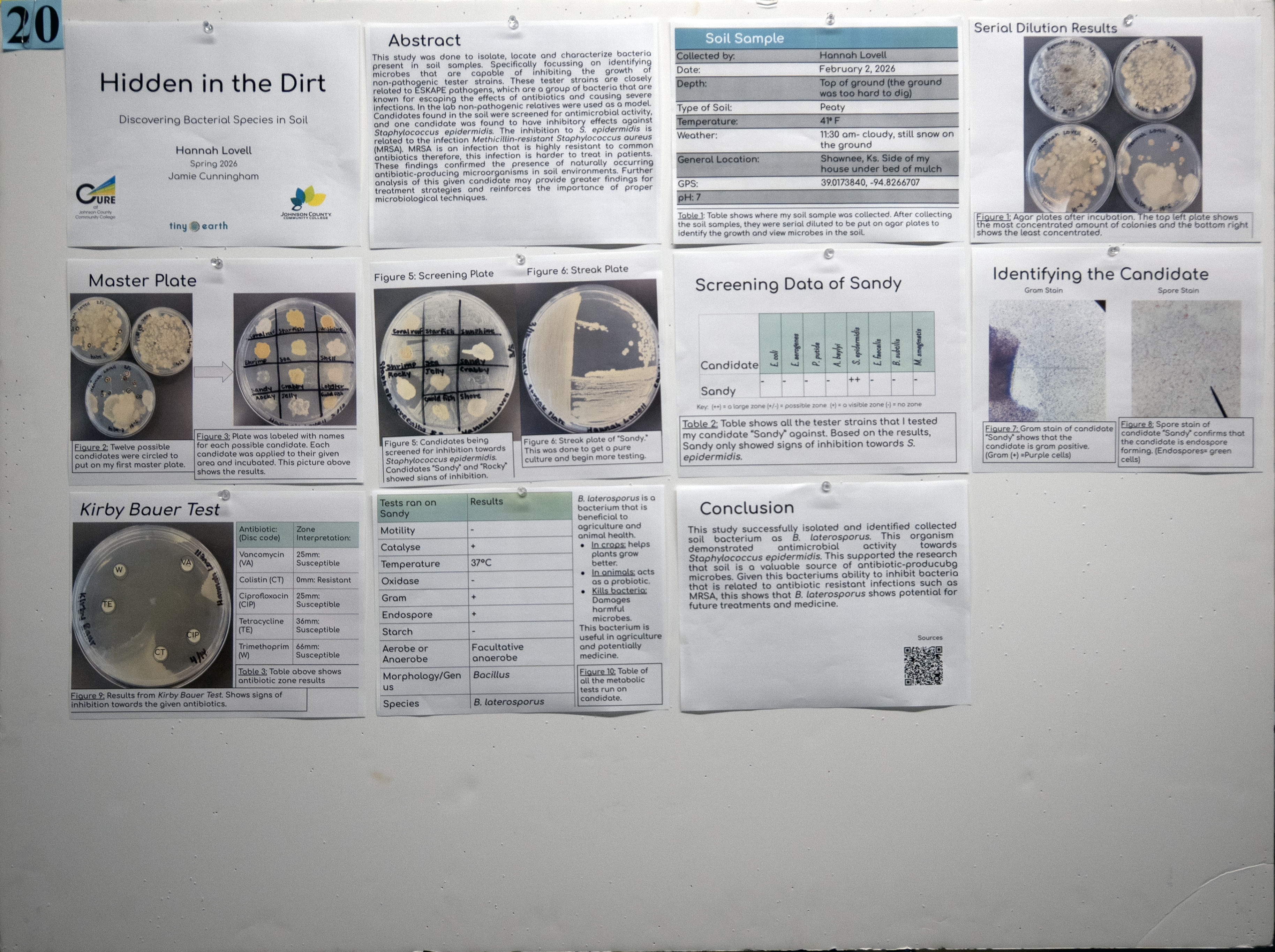
This study was done to isolate, locate and characterize bacteria present in soil samples. Specifically focusing on identifying microbes that are capable of inhibiting the growth of non-pathogenic tester strains. These tester strains are closely related to ESKAPE pathogens, which are a group of bacteria that are known for escaping the effects of antibiotics and causing severe infections. In the lab non-pathogenic relatives were used as a model. Candidates found in the soil were screened for antimicrobial activity, and one candidate was found to have inhibitory effects against Staphylococcus epidermis. The inhibition to S. epi is related to the infection MRSA. MRSA is an infection that is highly resistant to common antibiotics therefore, this infection is harder to treat in patients. These findings confirmed the presence of naturally occurring antibiotic-producing microorganisms in soil environments. Further analysis of this given candidate may provide greater findings for treatment strategies and reinforces the importance of proper microbiological techniques.
Image
Hidden in the Dirt: Discovering Antibiotic-Producing Microbes in Soil
CoLab, COM 160
This study was done to isolate, locate and characterize bacteria present in soil samples. Specifically focusing on identifying microbes that are capable of inhibiting the growth of non-pathogenic tester strains. These tester strains are closely related to ESKAPE pathogens, which are a group of bacteria that are known for escaping the effects of antibiotics and causing severe infections. In the lab non-pathogenic relatives were used as a model. Candidates found in the soil were screened for antimicrobial activity, and one candidate was found to have inhibitory effects against Staphylococcus epidermis. The inhibition to S. epi is related to the infection MRSA. MRSA is an infection that is highly resistant to common antibiotics therefore, this infection is harder to treat in patients. These findings confirmed the presence of naturally occurring antibiotic-producing microorganisms in soil environments. Further analysis of this given candidate may provide greater findings for treatment strategies and reinforces the importance of proper microbiological techniques.
Comments
The faculty mentor for this project was Jamie Cunningham.