

Genetically Engineered Algae to Degrade Plastic and Improve Ecosystems
Location
CoLab, COM 146
Start Date
30-4-2026 9:30 AM
Document Type
Poster
Description
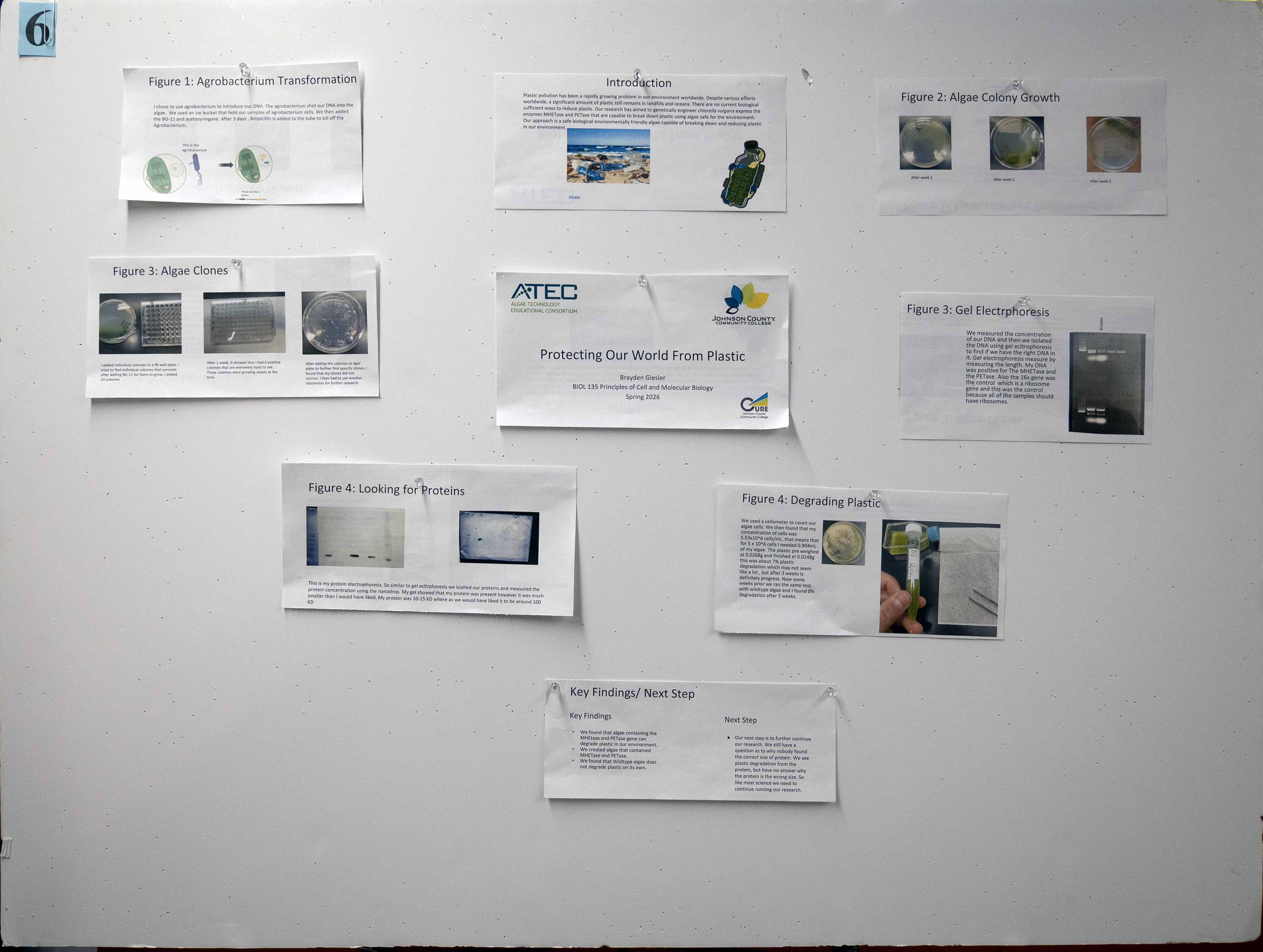
This year we have been doing research on how to help solve the problem of plastic pollution that is killing our oceans and environment. 57 million tons of plastic is in our world with no process to degrade it and that number is not going down right now, but our plan is to change that. Our overall goal is to create a plastic degrading algae that works and is safe for our environment. To start, we used algae and introduced our DNA to the MHETase and PETase gene. We are looking for algae that carries the MHETase and PETase enzymes. Out of the 24 wells on my 96 well plate none were positive and all of the algae died , so I used a classmates. Of his 24 clones 6 were positive clones with algae growth. After that we we further tested and used gel electrophoresis to find out if our clone was positive. I found that my clone was positive and had algae growth in its sample. This research has a chance to make a major impact on the health of our environment and prevent further contamination of our world.
Image
Genetically Engineered Algae to Degrade Plastic and Improve Ecosystems
CoLab, COM 146
This year we have been doing research on how to help solve the problem of plastic pollution that is killing our oceans and environment. 57 million tons of plastic is in our world with no process to degrade it and that number is not going down right now, but our plan is to change that. Our overall goal is to create a plastic degrading algae that works and is safe for our environment. To start, we used algae and introduced our DNA to the MHETase and PETase gene. We are looking for algae that carries the MHETase and PETase enzymes. Out of the 24 wells on my 96 well plate none were positive and all of the algae died , so I used a classmates. Of his 24 clones 6 were positive clones with algae growth. After that we we further tested and used gel electrophoresis to find out if our clone was positive. I found that my clone was positive and had algae growth in its sample. This research has a chance to make a major impact on the health of our environment and prevent further contamination of our world.
Comments
The faculty mentor for this project was Heather Seitz.