

Finding New Antibiotics in Local Soil
Location
CoLab, COM 157
Start Date
30-4-2026 9:30 AM
Document Type
Poster
Description
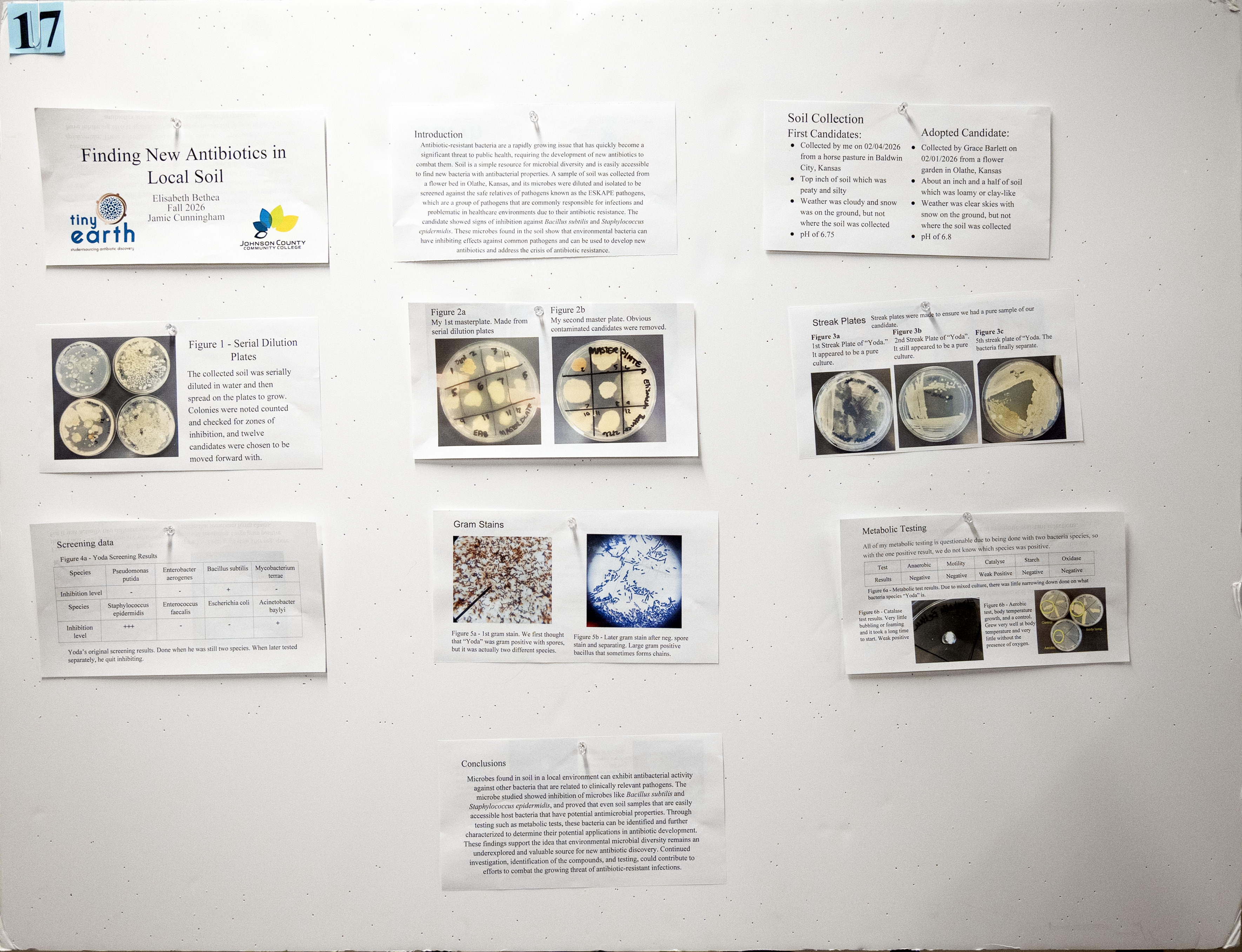
Antibiotic-resistant bacteria are a rapidly growing issue that has quickly become a significant threat to public health, requiring the development of new antibiotics to combat them. Soil is a simple resource for microbial diversity and is easily accessible to find new bacteria with antibacterial properties. A sample of soil was collected from a flower bed in Olathe, Kansas, and its microbes were diluted and isolated to be screened against the safe relatives of pathogens known as the ESKAPE pathogens, which are a group of pathogens that are commonly responsible for infections and problematic in healthcare environments due to their antibiotic resistance. The candidate showed signs of inhibition against Bacillus subtilis and Staphylococcus epidermis. These microbes found in the soil show that environmental bacteria can have inhibiting effects against common pathogens and can be used to develop new antibiotics and address the crisis of antibiotic resistance.
Image
Finding New Antibiotics in Local Soil
CoLab, COM 157
Antibiotic-resistant bacteria are a rapidly growing issue that has quickly become a significant threat to public health, requiring the development of new antibiotics to combat them. Soil is a simple resource for microbial diversity and is easily accessible to find new bacteria with antibacterial properties. A sample of soil was collected from a flower bed in Olathe, Kansas, and its microbes were diluted and isolated to be screened against the safe relatives of pathogens known as the ESKAPE pathogens, which are a group of pathogens that are commonly responsible for infections and problematic in healthcare environments due to their antibiotic resistance. The candidate showed signs of inhibition against Bacillus subtilis and Staphylococcus epidermis. These microbes found in the soil show that environmental bacteria can have inhibiting effects against common pathogens and can be used to develop new antibiotics and address the crisis of antibiotic resistance.
Comments
The faculty mentor for this project was Jamie Cunningham.