

Antimicrobial Activity of Soil Isolate JC26C
Location
CoLab, COM 399
Start Date
30-4-2026 5:30 PM
Document Type
Poster
Description
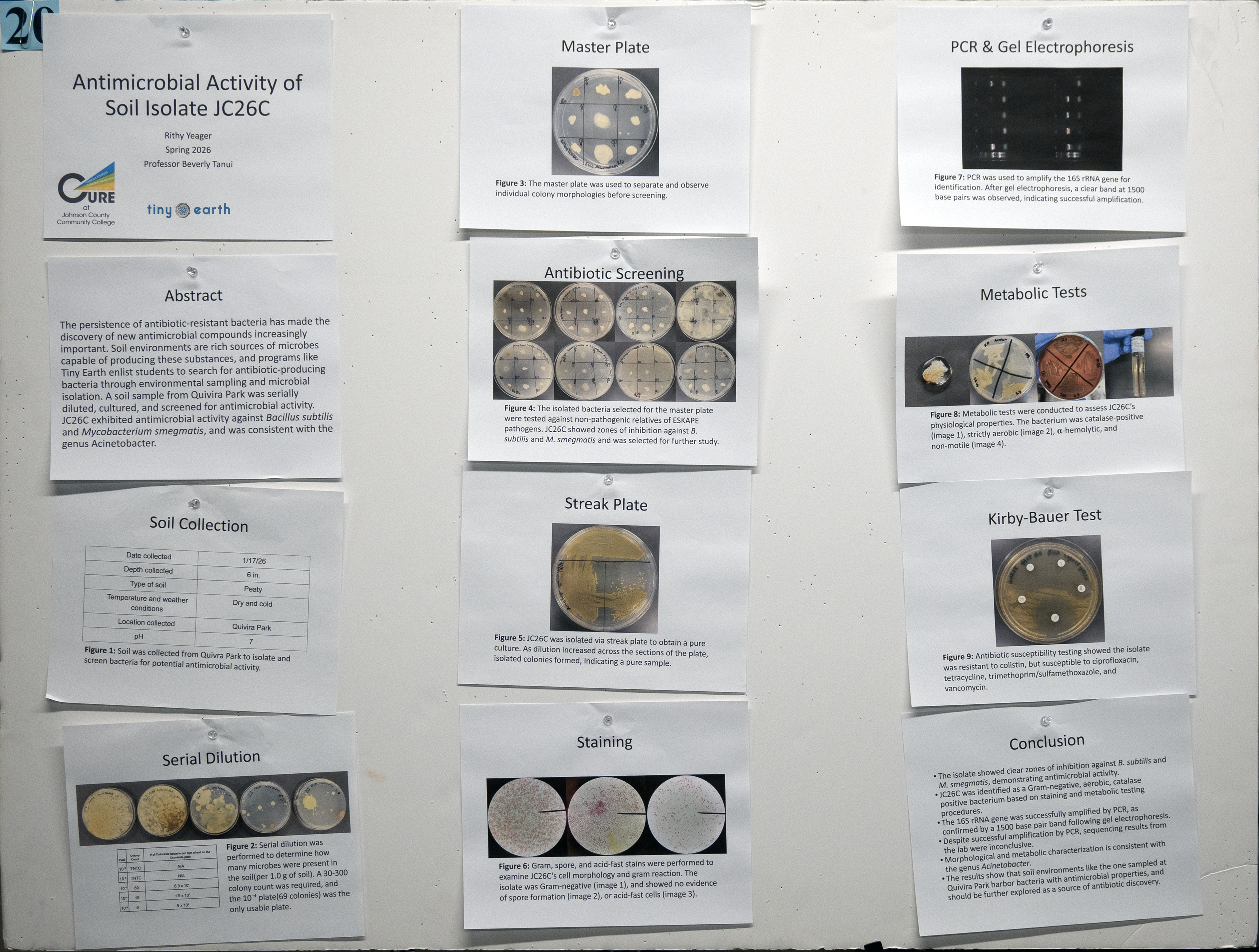
As antibiotic resistance has increased over time, so has the need to find new microbes that can be used to treat bacterial infections. With the help of the Tiny Earth Project, students collect soil samples to identify possible antibiotic-producing microorganisms that could be used in medicine. In this study, a soil sample was collected from Quivira Park and processed through serial dilution to isolate individual bacterial colonies. These isolates were then screened for antimicrobial activity against relatives of ESKAPE pathogens. One isolate (JC26C) demonstrated antimicrobial potential by producing zones of inhibition against two test strains: Bacillus subtilis and Mycobacterium smegmatis. Further testing is necessary to identify and study the compound responsible for inhibition, but these findings support the idea that environmental samples, especially in soil, are important in the search for novel antibiotic treatments.
Image
Antimicrobial Activity of Soil Isolate JC26C
CoLab, COM 399
As antibiotic resistance has increased over time, so has the need to find new microbes that can be used to treat bacterial infections. With the help of the Tiny Earth Project, students collect soil samples to identify possible antibiotic-producing microorganisms that could be used in medicine. In this study, a soil sample was collected from Quivira Park and processed through serial dilution to isolate individual bacterial colonies. These isolates were then screened for antimicrobial activity against relatives of ESKAPE pathogens. One isolate (JC26C) demonstrated antimicrobial potential by producing zones of inhibition against two test strains: Bacillus subtilis and Mycobacterium smegmatis. Further testing is necessary to identify and study the compound responsible for inhibition, but these findings support the idea that environmental samples, especially in soil, are important in the search for novel antibiotic treatments.
Comments
The faculty mentor for this project was Beverly Tanui.