

Antibiotic Discovery
Location
CoLab, COM 389
Start Date
30-4-2026 5:30 PM
Document Type
Poster
Description
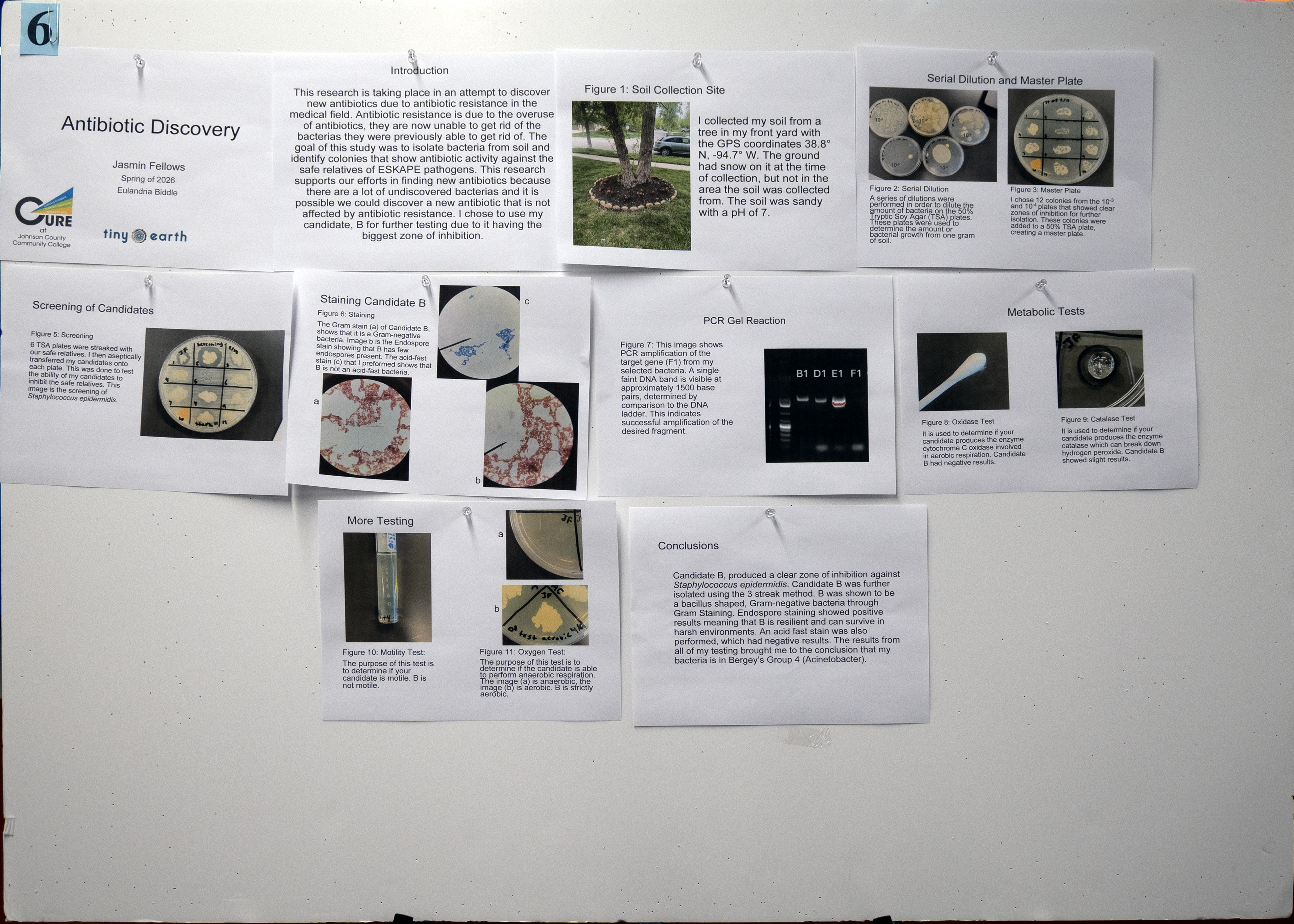
This research is taking place in an attempt to discover new antibiotics due to antibiotic resistance in the medical field. Antibiotic resistance is due to the overuse of antibiotics; they are now unable to get rid of the bacteria they were previously able to get rid of. The goal of this study was to isolate bacteria from soil and identify colonies that show antibiotic activity against the safe relatives of ESKAPE pathogens. One candidate, named B, produced a clear zone of inhibition against Staphylococcus epidermidis. Candidate B was further isolated using the 3 streak method. B was shown to be a bacillus-shaped, Gram-negative bacterium through Gram staining. Endospore staining was positive, indicating that B is resilient and can survive in harsh environments. An acid-fast stain was also performed, which had negative results. Further testing is necessary to identify what kind of bacteria B is. This research supports our efforts to find new antibiotics because many bacteria remain undiscovered, and we may discover one that is not affected by antibiotic resistance.
Image
Antibiotic Discovery
CoLab, COM 389
This research is taking place in an attempt to discover new antibiotics due to antibiotic resistance in the medical field. Antibiotic resistance is due to the overuse of antibiotics; they are now unable to get rid of the bacteria they were previously able to get rid of. The goal of this study was to isolate bacteria from soil and identify colonies that show antibiotic activity against the safe relatives of ESKAPE pathogens. One candidate, named B, produced a clear zone of inhibition against Staphylococcus epidermidis. Candidate B was further isolated using the 3 streak method. B was shown to be a bacillus-shaped, Gram-negative bacterium through Gram staining. Endospore staining was positive, indicating that B is resilient and can survive in harsh environments. An acid-fast stain was also performed, which had negative results. Further testing is necessary to identify what kind of bacteria B is. This research supports our efforts to find new antibiotics because many bacteria remain undiscovered, and we may discover one that is not affected by antibiotic resistance.
Comments
The faculty mentor for this project was Eulandria Biddle.