

Utilizing Chlorella Vulgaris for Microplastic Degradation
Location
CoLab, COM 356
Start Date
30-4-2026 3:45 PM
Document Type
Poster
Description
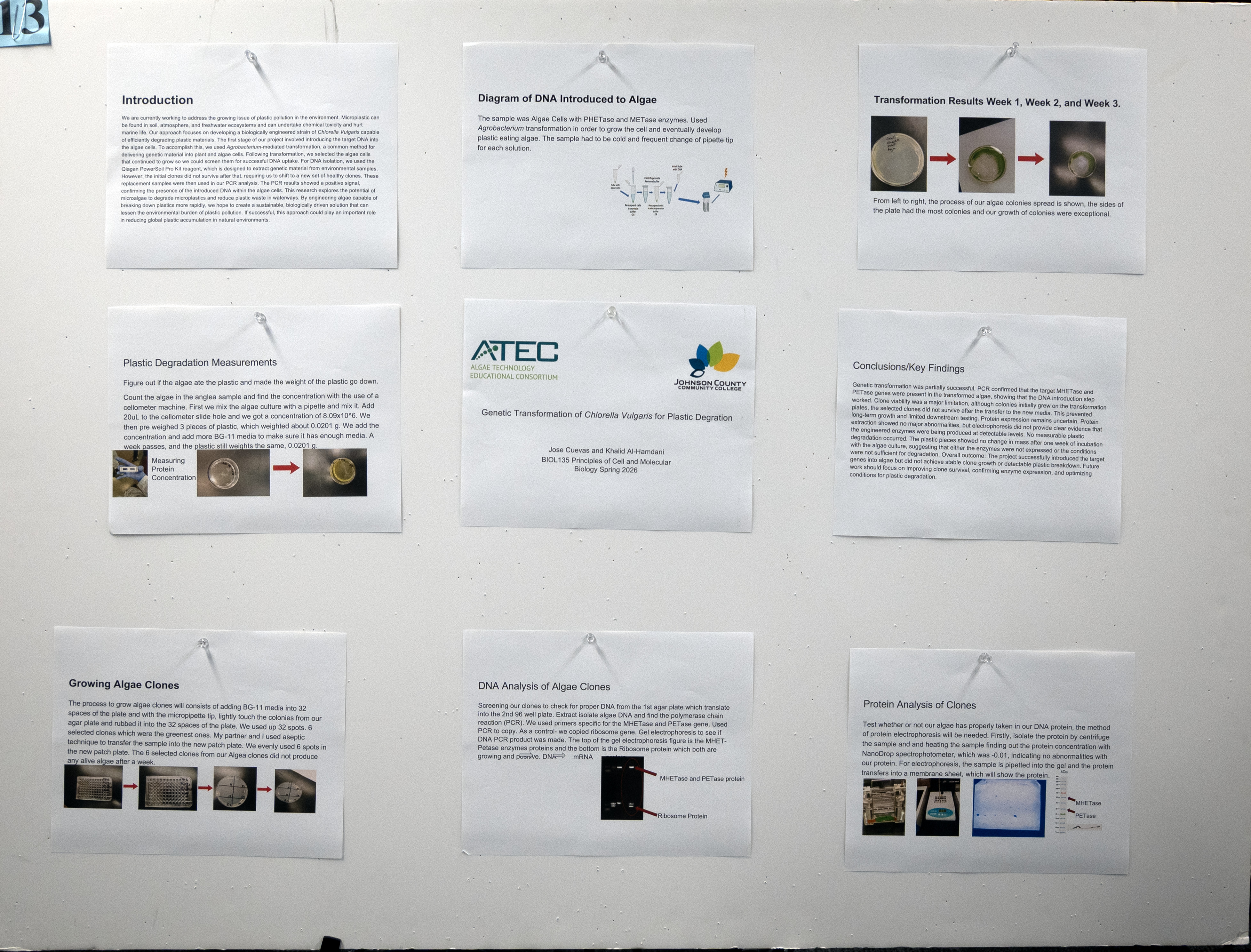
We are currently working to address the growing issue of plastic pollution in the environment. Microplastic can be found in soil, atmosphere, and freshwater ecosystems and can undertake chemical toxicity and hurt marine life. Our approach focuses on developing a biologically engineered strain of Chlorella vulgaris capable of efficiently degrading plastic materials. The first stage of our project involved introducing the target DNA into the algae cells. To accomplish this, we used Agrobacterium-mediated transformation, a common method for delivering genetic material into plant and algae cells. Following transformation, we selected the algae cells that continued to grow so we could screen them for successful DNA uptake. For DNA isolation, we used the Qiagen PowerSoil Pro Kit reagent, which is designed to extract genetic material from environmental samples. However, the initial clones did not survive after that, requiring us to shift to a new set of healthy clones. These replacement samples were then used in our PCR analysis. The PCR results showed a positive signal, confirming the presence of the introduced DNA within the algae cells. This research explores the potential of microalgae to degrade microplastics and reduce plastic waste in waterways. By engineering algae capable of breaking down plastics more rapidly, we hope to create a sustainable, biologically driven solution that can lessen the environmental burden of plastic pollution. If successful, this approach could play an important role in reducing global plastic accumulation in natural environments.
Image
Utilizing Chlorella Vulgaris for Microplastic Degradation
CoLab, COM 356
We are currently working to address the growing issue of plastic pollution in the environment. Microplastic can be found in soil, atmosphere, and freshwater ecosystems and can undertake chemical toxicity and hurt marine life. Our approach focuses on developing a biologically engineered strain of Chlorella vulgaris capable of efficiently degrading plastic materials. The first stage of our project involved introducing the target DNA into the algae cells. To accomplish this, we used Agrobacterium-mediated transformation, a common method for delivering genetic material into plant and algae cells. Following transformation, we selected the algae cells that continued to grow so we could screen them for successful DNA uptake. For DNA isolation, we used the Qiagen PowerSoil Pro Kit reagent, which is designed to extract genetic material from environmental samples. However, the initial clones did not survive after that, requiring us to shift to a new set of healthy clones. These replacement samples were then used in our PCR analysis. The PCR results showed a positive signal, confirming the presence of the introduced DNA within the algae cells. This research explores the potential of microalgae to degrade microplastics and reduce plastic waste in waterways. By engineering algae capable of breaking down plastics more rapidly, we hope to create a sustainable, biologically driven solution that can lessen the environmental burden of plastic pollution. If successful, this approach could play an important role in reducing global plastic accumulation in natural environments.
Comments
The faculty mentor for this project was Heather Seitz.