

Plastic-Eating Algae
Location
CoLab, COM 385
Start Date
30-4-2026 5:30 PM
Document Type
Poster
Description
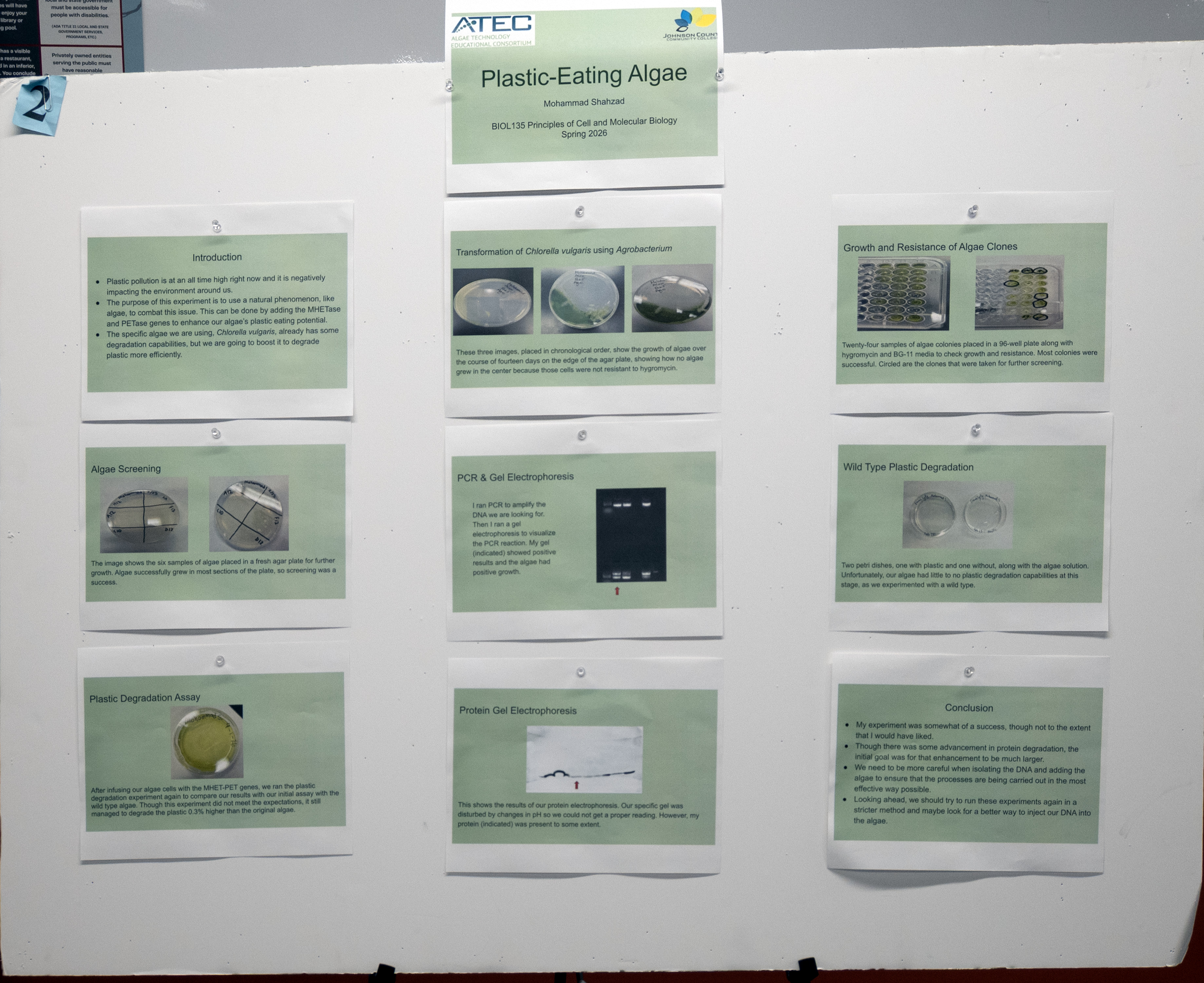
Plastic pollution is at an all time high right now and is one of the biggest issues faced by environmental agencies. The purpose of this research was to find a way to degrade this plastic in order to benefit and give back to the environment around us. To do this, we tried making plastic-eating algae by adding the required genes to it. Specifically, we introduced DNA of the MHETase and PETase genes into our Chlorella vulgaris algae. We then selected our algae clones and eliminated any of the algae that did not have our added DNA. Following that, we isolated the DNA and checked its concentration to test if the clones had taken it in adequately. Our next step was to run a PCR reaction to amplify the DNA along with a control containing the 23S ribosome gene. Furthermore, we ran a gel electrophoresis to check if we had any positive results, which we luckily did. The last steps were to test if the modified algae actually degraded plastic and to increase the amounts of the successful algae we had created. This experiment was a success, as we were left with many positive algae clones that had our DNA, and were working the way we had intended when beginning the experiment. Due to our success, I hope we can mass produce this algae to help with the big plastic pollution issue we have at hand and contribute to a bigger effort to reduce the issue.
Image
Plastic-Eating Algae
CoLab, COM 385
Plastic pollution is at an all time high right now and is one of the biggest issues faced by environmental agencies. The purpose of this research was to find a way to degrade this plastic in order to benefit and give back to the environment around us. To do this, we tried making plastic-eating algae by adding the required genes to it. Specifically, we introduced DNA of the MHETase and PETase genes into our Chlorella vulgaris algae. We then selected our algae clones and eliminated any of the algae that did not have our added DNA. Following that, we isolated the DNA and checked its concentration to test if the clones had taken it in adequately. Our next step was to run a PCR reaction to amplify the DNA along with a control containing the 23S ribosome gene. Furthermore, we ran a gel electrophoresis to check if we had any positive results, which we luckily did. The last steps were to test if the modified algae actually degraded plastic and to increase the amounts of the successful algae we had created. This experiment was a success, as we were left with many positive algae clones that had our DNA, and were working the way we had intended when beginning the experiment. Due to our success, I hope we can mass produce this algae to help with the big plastic pollution issue we have at hand and contribute to a bigger effort to reduce the issue.
Comments
The faculty mentor for this project was Heather Seitz.