

Antibiotic Resistance: A Solution to Healthcare's "Smallest" Issue
Location
CoLab, COM 375
Start Date
30-4-2026 3:45 PM
Document Type
Poster
Description
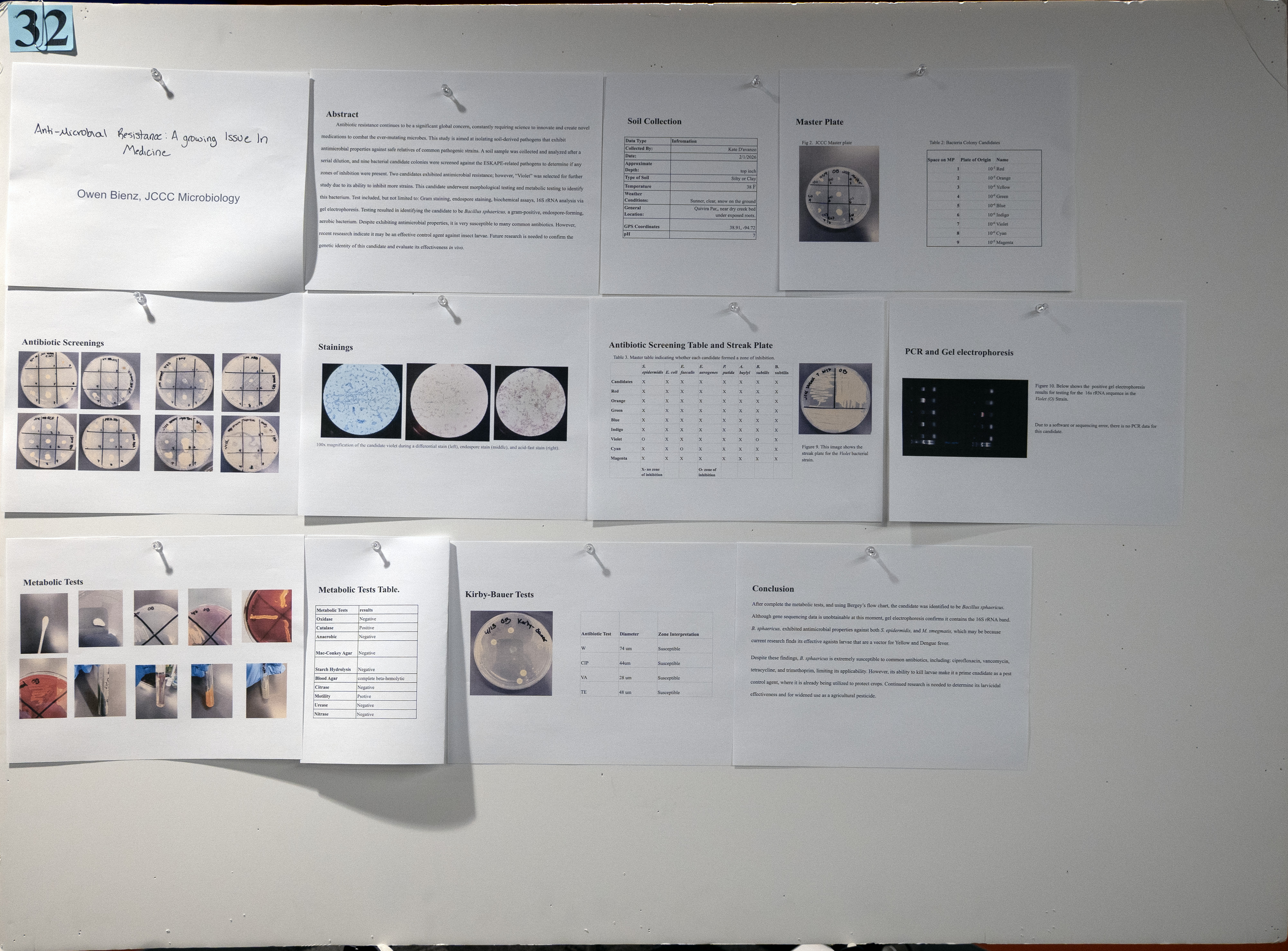
Every time an antibiotic is used to treat a bacterial infection, it increases the risk of creating a strain that is antibiotic-resistant. This issue remains one of the biggest challenges in healthcare due to the overprescription of antibiotics by doctors, leading to an increase in antibiotic-resistant bacteria. This project used local soil from the JCCC area to determine if there are naturally occurring bacteria that possess the ability to kill common antibacterial-resistant bacteria. After multiple screenings, one bacterial strain was selected for its ability to kill Staphylococcus epidermidis and Mycobacterium smegmatis. This initial screening indicates there are local bacterial strains capable of killing multiple pathogens related to the ESKAPE pathogens (highly virulent, antibiotic-resistant bacteria) that cause the majority of hospital infections. Through additional testing, this bacteria strand will be identified and hopefully used for future research.
Image
Antibiotic Resistance: A Solution to Healthcare's "Smallest" Issue
CoLab, COM 375
Every time an antibiotic is used to treat a bacterial infection, it increases the risk of creating a strain that is antibiotic-resistant. This issue remains one of the biggest challenges in healthcare due to the overprescription of antibiotics by doctors, leading to an increase in antibiotic-resistant bacteria. This project used local soil from the JCCC area to determine if there are naturally occurring bacteria that possess the ability to kill common antibacterial-resistant bacteria. After multiple screenings, one bacterial strain was selected for its ability to kill Staphylococcus epidermidis and Mycobacterium smegmatis. This initial screening indicates there are local bacterial strains capable of killing multiple pathogens related to the ESKAPE pathogens (highly virulent, antibiotic-resistant bacteria) that cause the majority of hospital infections. Through additional testing, this bacteria strand will be identified and hopefully used for future research.
Comments
The faculty mentor for this project was Beverly Tanui.