

Soil Dilution to Find Antibiotics
Location
CoLab, COM 370
Start Date
30-4-2026 3:45 PM
Document Type
Poster
Description
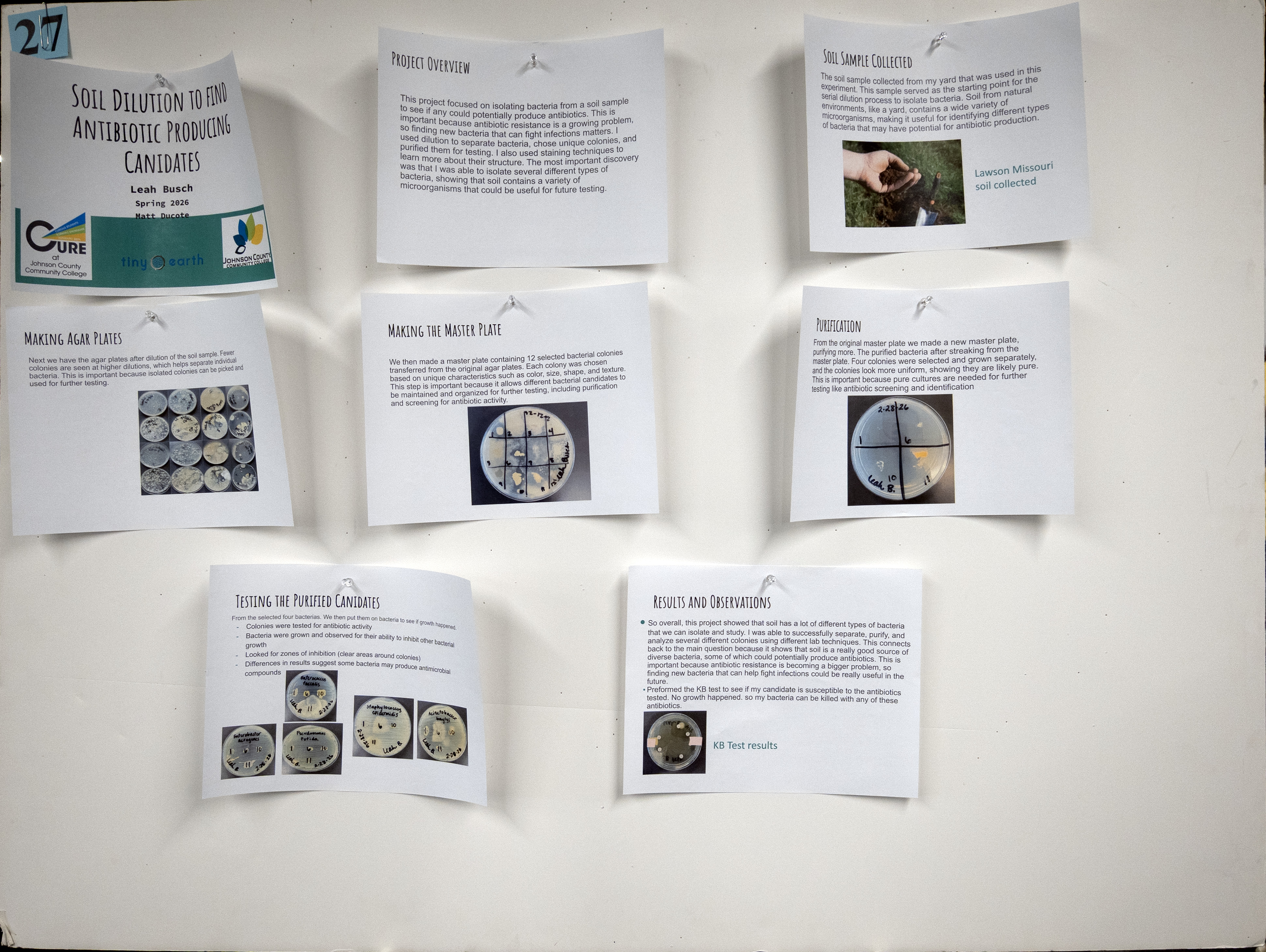
Soil microorganisms are an important source of naturally occurring antibiotics. The purpose of this experiment was to isolate bacteria from soil samples and determine whether any of the organisms produced substances capable of inhibiting the growth of other bacteria. A soil sample was collected and subjected to a series of serial dilutions in order to reduce the concentration of microorganisms present. Diluted samples were then spread onto nutrient agar plates and incubated to allow individual colonies to develop. Distinct bacterial colonies were selected and transferred to fresh media for further testing. These isolates were then screened against indicator bacteria to observe whether zones of inhibition formed around the colonies. The presence of a clear zone indicated that the soil bacterium was producing an antimicrobial compound that prevented the surrounding bacteria from growing. Several isolates produced visible zones of inhibition, while others showed no effect on bacterial growth. The results indicate that soil contains diverse microbial populations, including some bacteria capable of producing antibiotic substances. Serial dilution proved to be an effective method for separating and isolating individual organisms from a mixed soil sample. This experiment demonstrates the importance of soil as a source of antibiotic-producing microorganisms and highlights the potential for discovering new antimicrobial compounds from environmental samples.
Image
Soil Dilution to Find Antibiotics
CoLab, COM 370
Soil microorganisms are an important source of naturally occurring antibiotics. The purpose of this experiment was to isolate bacteria from soil samples and determine whether any of the organisms produced substances capable of inhibiting the growth of other bacteria. A soil sample was collected and subjected to a series of serial dilutions in order to reduce the concentration of microorganisms present. Diluted samples were then spread onto nutrient agar plates and incubated to allow individual colonies to develop. Distinct bacterial colonies were selected and transferred to fresh media for further testing. These isolates were then screened against indicator bacteria to observe whether zones of inhibition formed around the colonies. The presence of a clear zone indicated that the soil bacterium was producing an antimicrobial compound that prevented the surrounding bacteria from growing. Several isolates produced visible zones of inhibition, while others showed no effect on bacterial growth. The results indicate that soil contains diverse microbial populations, including some bacteria capable of producing antibiotic substances. Serial dilution proved to be an effective method for separating and isolating individual organisms from a mixed soil sample. This experiment demonstrates the importance of soil as a source of antibiotic-producing microorganisms and highlights the potential for discovering new antimicrobial compounds from environmental samples.
Comments
The faculty mentor for this project was Matt Ducote.