

Riverfront Resistance: Screening Soil Microbes for Antimicrobial Activity
Location
CoLab, COM 368
Start Date
30-4-2026 3:45 PM
Document Type
Poster
Description
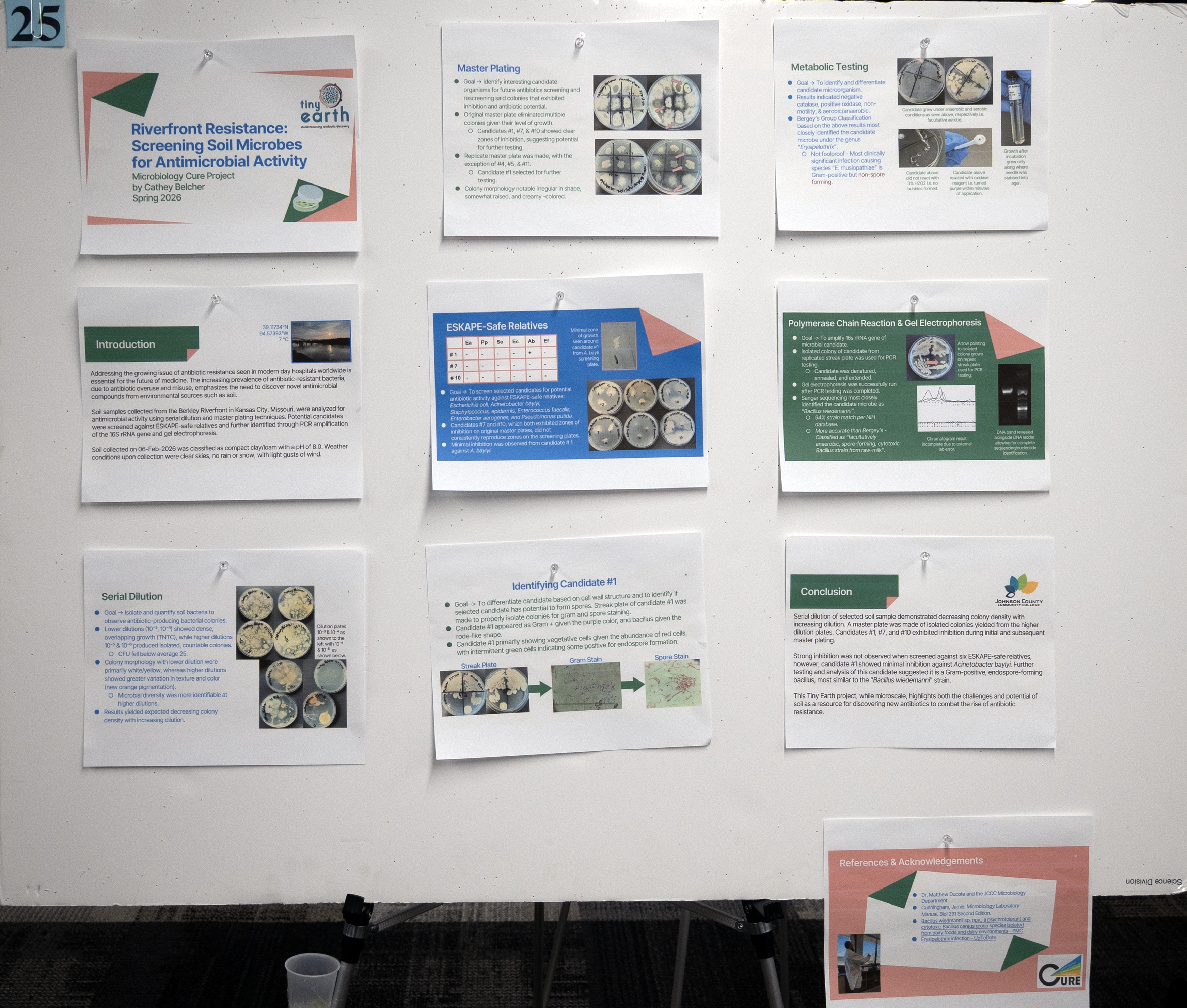
Addressing the growing issue of antibiotic resistance seen in modern day hospitals worldwide is essential for the future of medicine. The increasing prevalence of antibiotic-resistant bacteria, due to antibiotic overuse and misuse, emphasizes the need to discover novel antimicrobial compounds from environmental sources such as soil. Soil samples collected from the Berkley Riverfront in Kansas City, Missouri, were analyzed for antimicrobial activity using serial dilution and master plating techniques. Potential candidates were screened against ESKAPE-safe relatives and further identified through PCR amplification of the 16S rRNA gene and gel electrophoresis. Serial dilution demonstrated decreasing colony density with increasing dilution. A master plate was made of isolated colonies yielded from the higher dilution plates. Candidates #1, #7, and #10 exhibited inhibition during initial and subsequent master plating. Strong inhibition was not observed when screened against six ESKAPE-safe relatives, however, candidate #1 showed minimal inhibition against Acinetobacter baylyi. Further analysis of this candidate suggested it is a Gram-positive, endospore-forming bacillus. This Tiny Earth project, while ongoing, highlights both the challenges and potential of soil as a resource for discovering new antibiotics to combat the rise of antibiotic resistance.
Image
Riverfront Resistance: Screening Soil Microbes for Antimicrobial Activity
CoLab, COM 368
Addressing the growing issue of antibiotic resistance seen in modern day hospitals worldwide is essential for the future of medicine. The increasing prevalence of antibiotic-resistant bacteria, due to antibiotic overuse and misuse, emphasizes the need to discover novel antimicrobial compounds from environmental sources such as soil. Soil samples collected from the Berkley Riverfront in Kansas City, Missouri, were analyzed for antimicrobial activity using serial dilution and master plating techniques. Potential candidates were screened against ESKAPE-safe relatives and further identified through PCR amplification of the 16S rRNA gene and gel electrophoresis. Serial dilution demonstrated decreasing colony density with increasing dilution. A master plate was made of isolated colonies yielded from the higher dilution plates. Candidates #1, #7, and #10 exhibited inhibition during initial and subsequent master plating. Strong inhibition was not observed when screened against six ESKAPE-safe relatives, however, candidate #1 showed minimal inhibition against Acinetobacter baylyi. Further analysis of this candidate suggested it is a Gram-positive, endospore-forming bacillus. This Tiny Earth project, while ongoing, highlights both the challenges and potential of soil as a resource for discovering new antibiotics to combat the rise of antibiotic resistance.
Comments
The faculty mentor for this project was Matt Ducote.