

Engineering Microalgae for Plastic Degradation
Location
CoLab, COM 357
Start Date
30-4-2026 3:45 PM
Document Type
Poster
Description
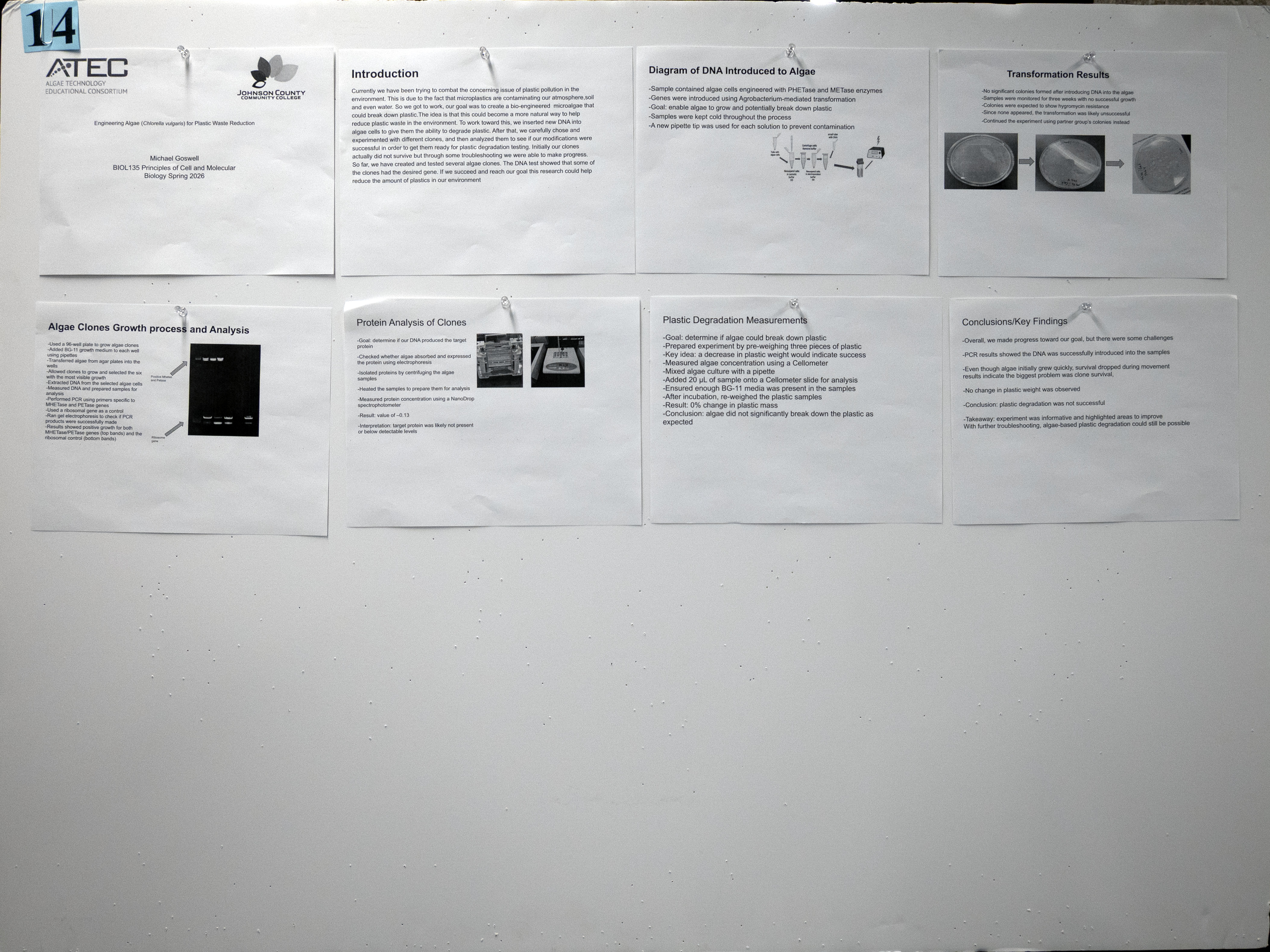
Plastic pollution is a major problem that’s affecting oceans and waterways around the world. In fact, as we speak, it is increasing and can seriously damage the ecosystem, animals, and even human health. The goal of this project is to create microalgae that can break down plastic more efficiently. The idea is that this could become a more natural way to help reduce plastic waste in the environment. To work toward this, we inserted new DNA into algae cells to give them the ability to degrade plastic. After that, we carefully chose and experimented with different clones, and then analyzed them to see if our modifications were successful in order to get them ready for plastic degradation testing. So far, we have created and tested several algae clones. The DNA test showed that some of the clones had the desired gene. This research could help lead to new ways of dealing with plastic pollution using biology.
Image
Engineering Microalgae for Plastic Degradation
CoLab, COM 357
Plastic pollution is a major problem that’s affecting oceans and waterways around the world. In fact, as we speak, it is increasing and can seriously damage the ecosystem, animals, and even human health. The goal of this project is to create microalgae that can break down plastic more efficiently. The idea is that this could become a more natural way to help reduce plastic waste in the environment. To work toward this, we inserted new DNA into algae cells to give them the ability to degrade plastic. After that, we carefully chose and experimented with different clones, and then analyzed them to see if our modifications were successful in order to get them ready for plastic degradation testing. So far, we have created and tested several algae clones. The DNA test showed that some of the clones had the desired gene. This research could help lead to new ways of dealing with plastic pollution using biology.
Comments
The faculty mentor for this project was Heather Seitz.