

Engineered Chlorella Vulgaris Algae’s Degradation of Type 1 Plastic
Location
CoLab, COM 359
Start Date
30-4-2026 3:45 PM
Document Type
Poster
Description
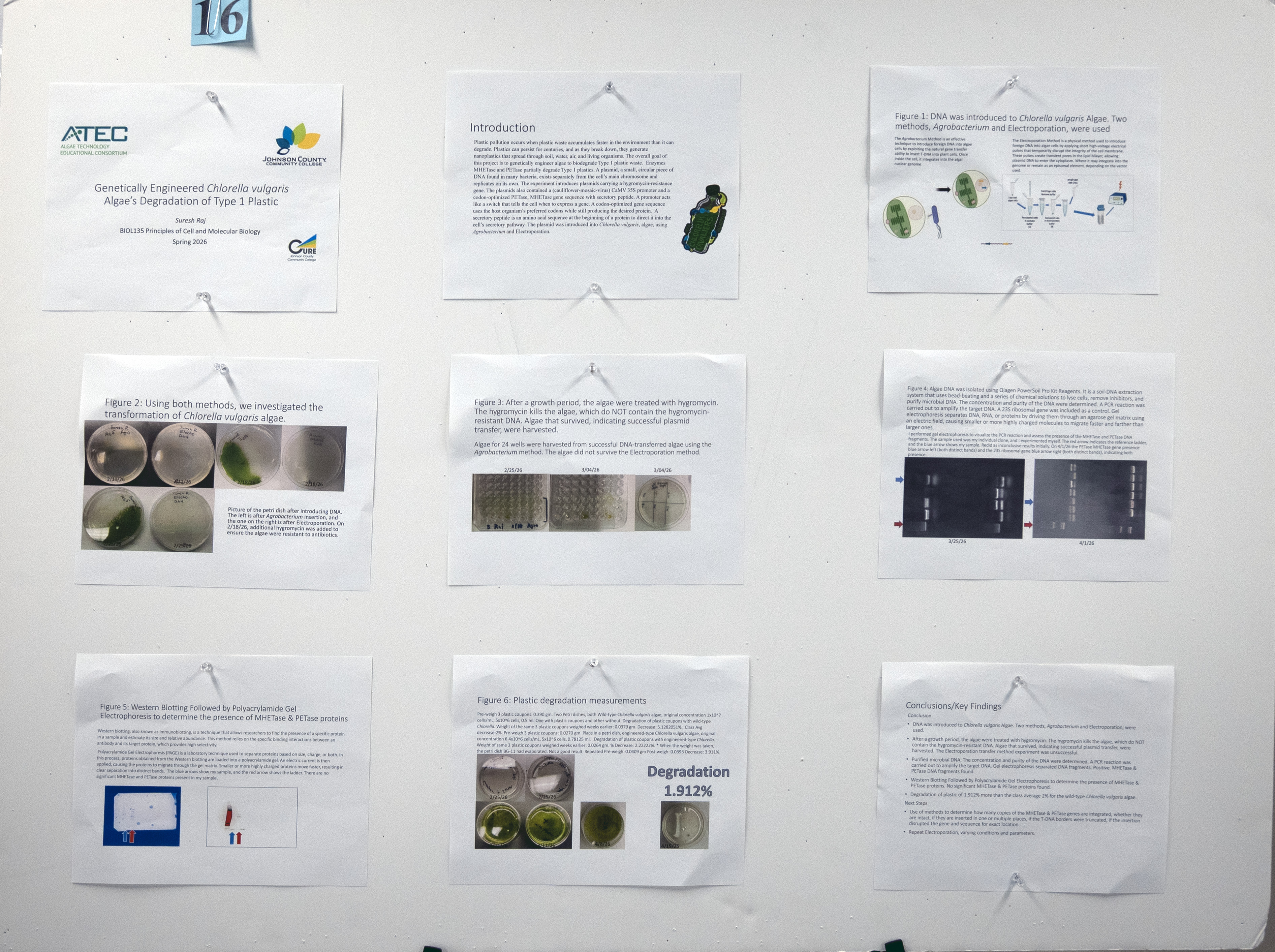
Plastic pollution occurs when plastic waste accumulates faster in the environment than it can degrade. The overall goal of this project is to engineer algae to biodegrade Type 1 plastic waste. A plasmid containing the MHETase and PETase genes and the hygromycin-resistant gene was introduced into Chlorella vulgaris algae using Agrobacterium. After a growth period, the algae were treated with hygromycin. Algae that survived, indicating successful plasmid transfer, were harvested. The engineered algae DNA was isolated. The concentration and purity of the DNA sample were determined. Pre-weighed 3 plastic coupons. Two petri dishes, both with Wild-type Chlorella vulgaris algae, and one with the plastic coupons. Degradation of plastic coupons with wild-type Chlorella was determined by comparing the weights of the same 3 plastic coupons measured previously. A PCR reaction was carried out to amplify the target DNA, and a 23S ribosomal gene was included as a control. Ran gel electrophoresis to visualize the PCR reaction. The sample used was my individual clone, and I experimented myself- results: 23S ribosomal gene: Faint; DNA MTHETase and PETase gene presence: Inconclusive. If successful, the engineered Chlorella vulgaris algae would break down Type 1 plastic at a significantly higher rate than the wild-type algae. Finally, test for the rate of plastic coupon degradation with the engineered algae and compare the results to the control degradation rate with wild-type Chlorella vulgaris algae.
Image
Engineered Chlorella Vulgaris Algae’s Degradation of Type 1 Plastic
CoLab, COM 359
Plastic pollution occurs when plastic waste accumulates faster in the environment than it can degrade. The overall goal of this project is to engineer algae to biodegrade Type 1 plastic waste. A plasmid containing the MHETase and PETase genes and the hygromycin-resistant gene was introduced into Chlorella vulgaris algae using Agrobacterium. After a growth period, the algae were treated with hygromycin. Algae that survived, indicating successful plasmid transfer, were harvested. The engineered algae DNA was isolated. The concentration and purity of the DNA sample were determined. Pre-weighed 3 plastic coupons. Two petri dishes, both with Wild-type Chlorella vulgaris algae, and one with the plastic coupons. Degradation of plastic coupons with wild-type Chlorella was determined by comparing the weights of the same 3 plastic coupons measured previously. A PCR reaction was carried out to amplify the target DNA, and a 23S ribosomal gene was included as a control. Ran gel electrophoresis to visualize the PCR reaction. The sample used was my individual clone, and I experimented myself- results: 23S ribosomal gene: Faint; DNA MTHETase and PETase gene presence: Inconclusive. If successful, the engineered Chlorella vulgaris algae would break down Type 1 plastic at a significantly higher rate than the wild-type algae. Finally, test for the rate of plastic coupon degradation with the engineered algae and compare the results to the control degradation rate with wild-type Chlorella vulgaris algae.
Comments
The faculty mentor for this project was Heather Seitz.