

Using Algae to Break Down Plastic
Location
CoLab, COM 355
Start Date
30-4-2026 3:45 PM
Document Type
Poster
Description
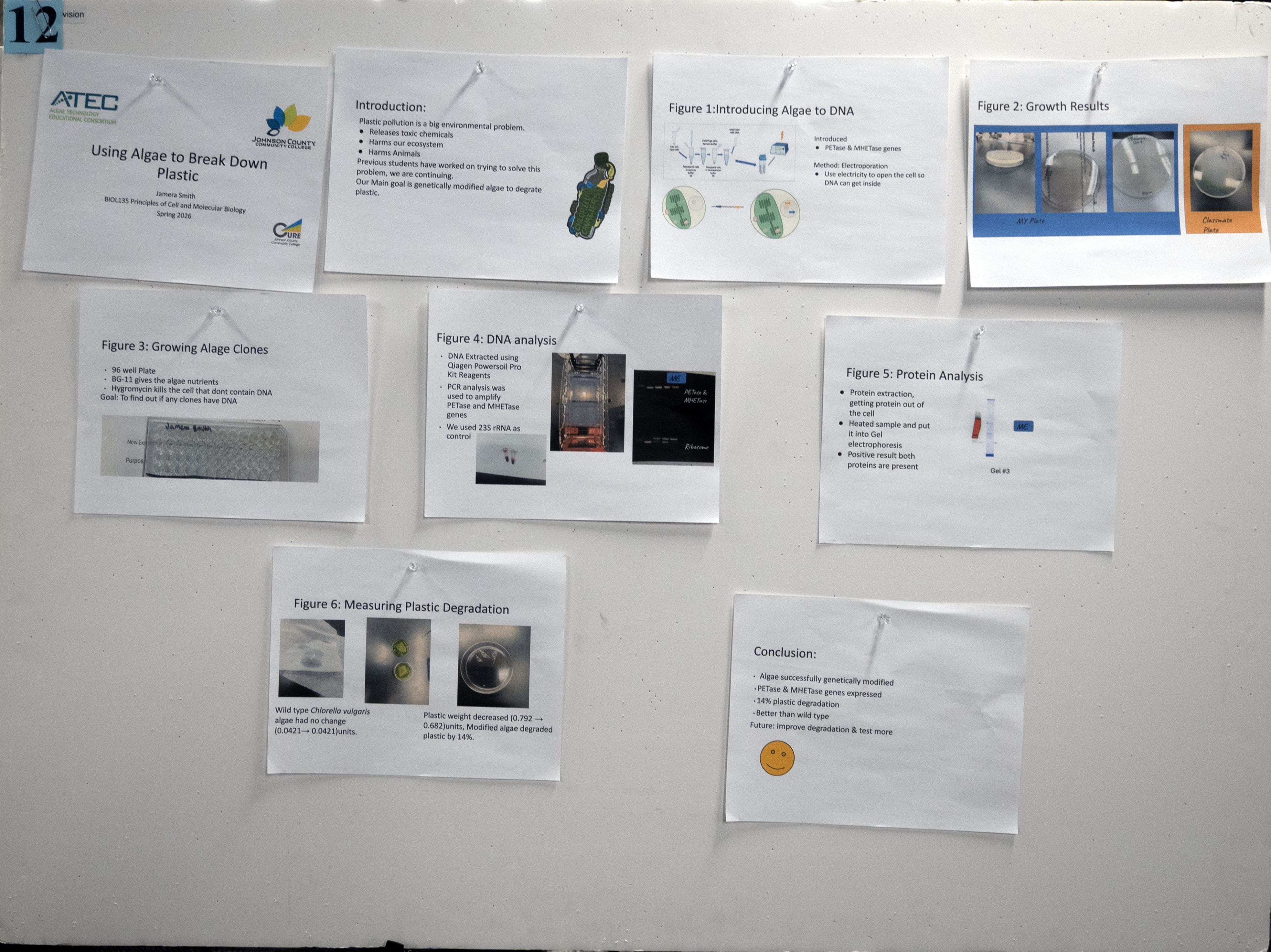
Plastic pollution in oceans and lakes is a big environmental problem that harms animals and releases toxic chemicals into the environment. Our research focuses on trying to solve this issue by creating algae that can break down plastic. The main goal is to genetically modify algae so it can degrade plastic. To get this to happen, I introduced the MHETase and PETase genes into algae cells using electroporation. At first, there was little algae growth and contamination from bacteria, so the transformation was not successful. Because of this, I used my classmate Rose who successfully transformed algae that was done using Agrobacterium. After that, I placed the algae samples into a 96 well plate and selected one clone to continue with. Then killed any algae cells that did not contain the inserted DNA. I extracted DNA from my selected clone and ran a PCR test to check for the presence of the gene, using the 23S ribosomal gene as a positive control. My results were positive, showing that the algae contained DNA and had healthy green pigmentation. Meaning the transformation was successful for at least one clone. This research could help create a biological way to reduce plastic pollution. In the future, the next step would be to test if the algae could break down plastic and make the process better.
Image
Using Algae to Break Down Plastic
CoLab, COM 355
Plastic pollution in oceans and lakes is a big environmental problem that harms animals and releases toxic chemicals into the environment. Our research focuses on trying to solve this issue by creating algae that can break down plastic. The main goal is to genetically modify algae so it can degrade plastic. To get this to happen, I introduced the MHETase and PETase genes into algae cells using electroporation. At first, there was little algae growth and contamination from bacteria, so the transformation was not successful. Because of this, I used my classmate Rose who successfully transformed algae that was done using Agrobacterium. After that, I placed the algae samples into a 96 well plate and selected one clone to continue with. Then killed any algae cells that did not contain the inserted DNA. I extracted DNA from my selected clone and ran a PCR test to check for the presence of the gene, using the 23S ribosomal gene as a positive control. My results were positive, showing that the algae contained DNA and had healthy green pigmentation. Meaning the transformation was successful for at least one clone. This research could help create a biological way to reduce plastic pollution. In the future, the next step would be to test if the algae could break down plastic and make the process better.
Comments
The faculty mentor for this project was Heather Seitz.