

Algae vs Plastic
Location
CoLab, COM 353
Start Date
30-4-2026 3:45 PM
Document Type
Poster
Description
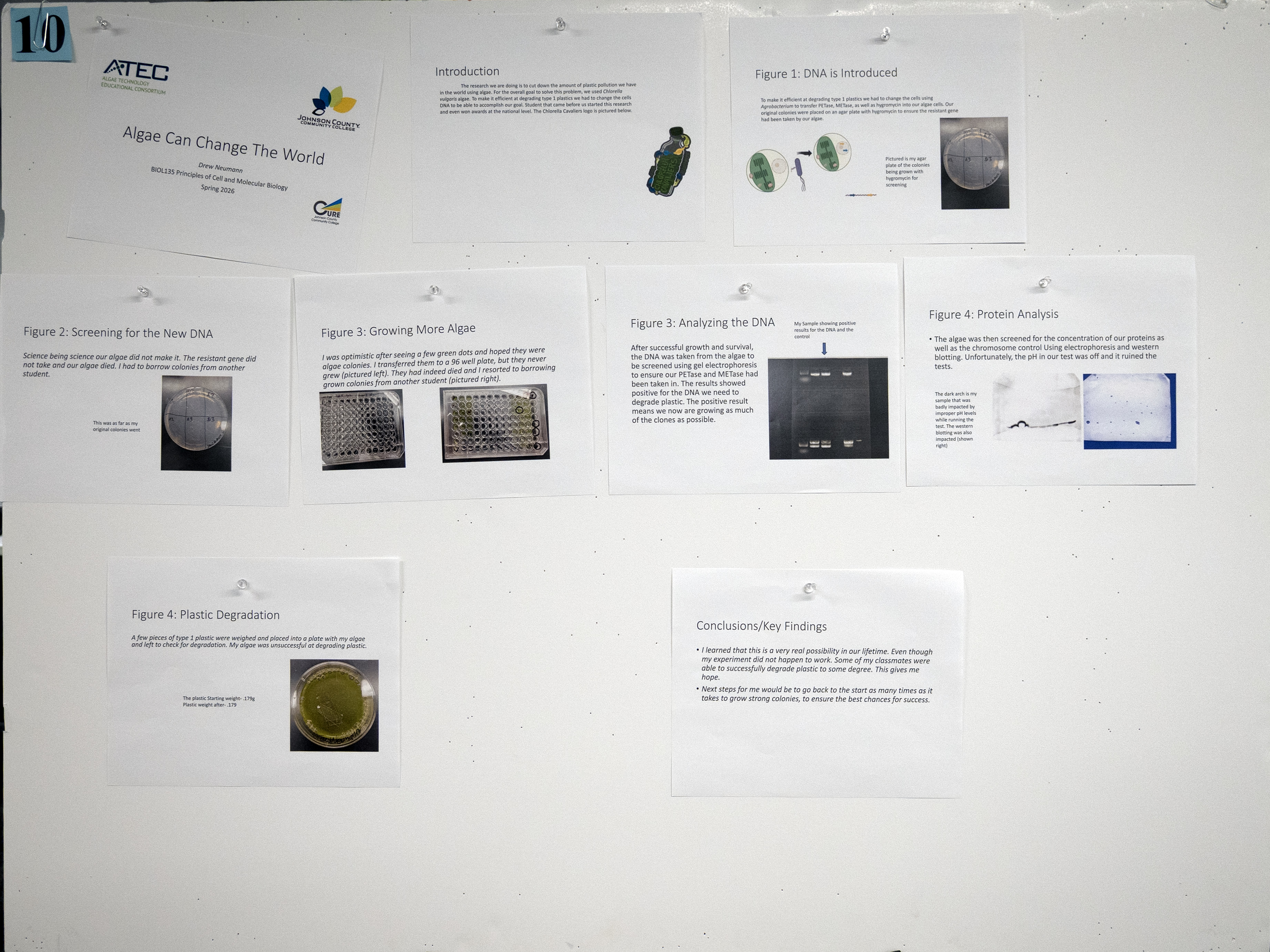
The research we are doing is to cut down the amount of plastic pollution we have in the world using algae. For the overall goal to solve this problem, we used Chlorella vulgaris algae. To make it efficient at degrading type 1 plastics we had to change the cells using Agrobacterium to transfer PETase, METase, as well as hygromycin into our algae cells. Our original colonies were placed on an agar plate with hygromycin to ensure the resistant gene had been taken by our algae. After successful growth and survival, the DNA was taken from the algae to be screened using gel electrophoresis to ensure our PETase and METase had been taken in. The results showed positive for the DNA we need to degrade plastic. The positive result means we now are growing as much of the clones as possible. The next step we had to make sure our algae could degrade plastic. Pieces of a plastic bottle were weighed and placed in an agar plate with our algae clones and left to degrade. The overall weight will be recorded at intervals so we can effectively measure the amount of degradation over set periods of time. This research will have an immense impact on the environment, as algae can grow well in the wild the water ways that typically contain plastic pollution and can be cleaned up naturally with our algae. Cleaning our water ways and limiting the impact of human waste in our world will improve the quality of live for all living things.
Image
Algae vs Plastic
CoLab, COM 353
The research we are doing is to cut down the amount of plastic pollution we have in the world using algae. For the overall goal to solve this problem, we used Chlorella vulgaris algae. To make it efficient at degrading type 1 plastics we had to change the cells using Agrobacterium to transfer PETase, METase, as well as hygromycin into our algae cells. Our original colonies were placed on an agar plate with hygromycin to ensure the resistant gene had been taken by our algae. After successful growth and survival, the DNA was taken from the algae to be screened using gel electrophoresis to ensure our PETase and METase had been taken in. The results showed positive for the DNA we need to degrade plastic. The positive result means we now are growing as much of the clones as possible. The next step we had to make sure our algae could degrade plastic. Pieces of a plastic bottle were weighed and placed in an agar plate with our algae clones and left to degrade. The overall weight will be recorded at intervals so we can effectively measure the amount of degradation over set periods of time. This research will have an immense impact on the environment, as algae can grow well in the wild the water ways that typically contain plastic pollution and can be cleaned up naturally with our algae. Cleaning our water ways and limiting the impact of human waste in our world will improve the quality of live for all living things.
Comments
The faculty mentor for this project was Heather Seitz.