

Unearthing Novel Antibiotics in our Backyards
Location
CoLab, COM 329
Start Date
30-4-2026 2:30 PM
Document Type
Poster
Description
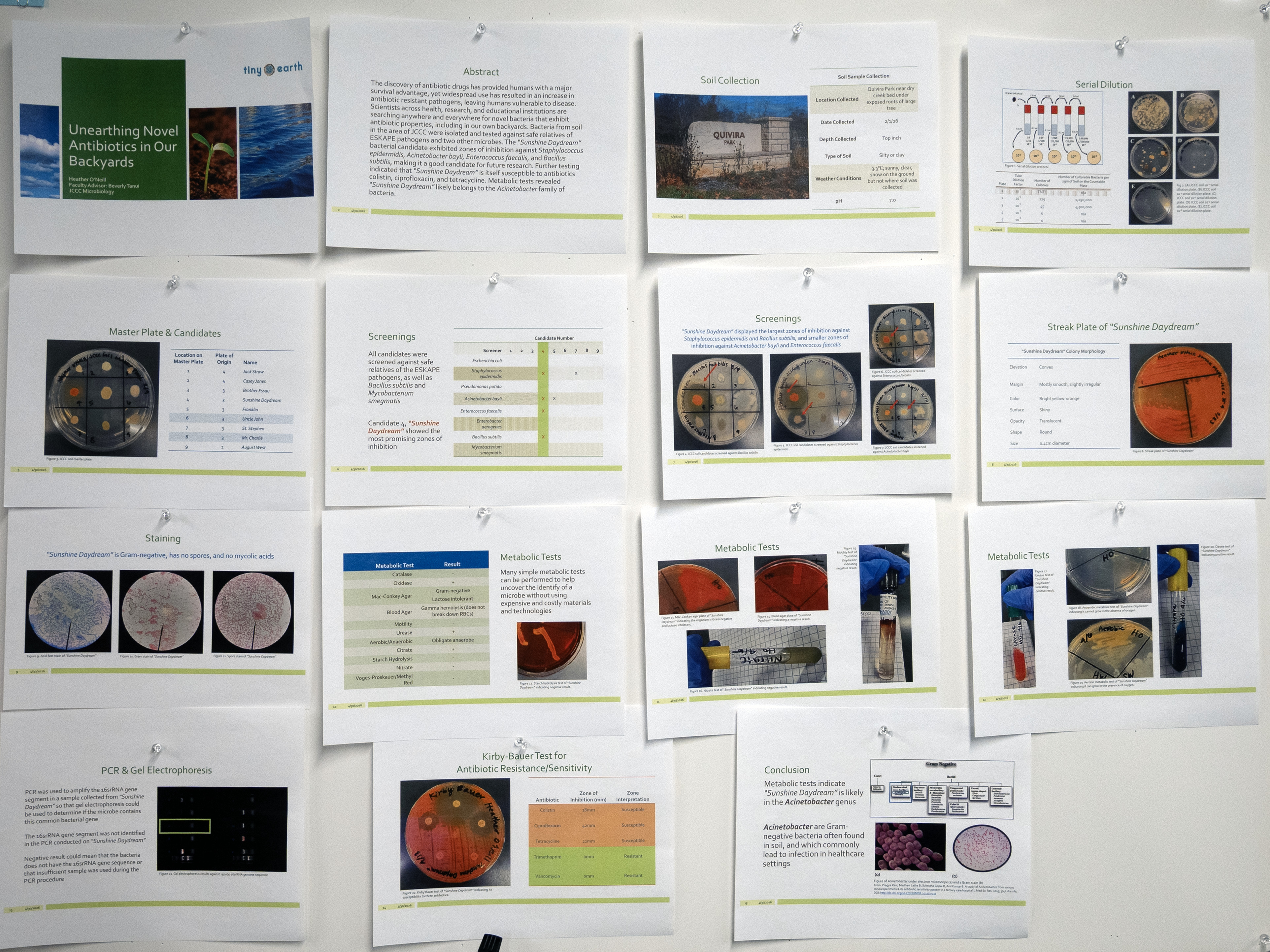
The discovery of antibiotic drugs has provided humans with a major survival advantage, yet widespread use has resulted in an increase in antibiotic resistant pathogens, leaving humans vulnerable to disease. Scientists across health, research, and educational institutions are searching anywhere and everywhere for novel bacteria that exhibit antibiotic properties, including in our own backyards. Researchers collect bacterial samples from extreme environments like oceans and volcanoes, yet one of the most abundant sources of bacteria is the soil found at our homes and schools. Bacteria from soil in the area of JCCC were isolated and tested against safe relatives of ESKAPE pathogens. The “Sunshine Daydream” bacterial candidate exhibited zones of inhibition against Staphylococcus epidermidis, Acinetobacter bayli, Enterococcus faecalis, and Bacillus subtilis. This bacteria's apparent resistance to these ESKAPE pathogen relatives make it an interesting candidate for future antibiotic research. Further genetic tests will be conducted in attempt to identify the species of this bacteria.
Image
Unearthing Novel Antibiotics in our Backyards
CoLab, COM 329
The discovery of antibiotic drugs has provided humans with a major survival advantage, yet widespread use has resulted in an increase in antibiotic resistant pathogens, leaving humans vulnerable to disease. Scientists across health, research, and educational institutions are searching anywhere and everywhere for novel bacteria that exhibit antibiotic properties, including in our own backyards. Researchers collect bacterial samples from extreme environments like oceans and volcanoes, yet one of the most abundant sources of bacteria is the soil found at our homes and schools. Bacteria from soil in the area of JCCC were isolated and tested against safe relatives of ESKAPE pathogens. The “Sunshine Daydream” bacterial candidate exhibited zones of inhibition against Staphylococcus epidermidis, Acinetobacter bayli, Enterococcus faecalis, and Bacillus subtilis. This bacteria's apparent resistance to these ESKAPE pathogen relatives make it an interesting candidate for future antibiotic research. Further genetic tests will be conducted in attempt to identify the species of this bacteria.
Comments
The faculty mentor for this project was Beverly Tanui.