

Lamp Fabrication
Location
CoLab, COM 307
Start Date
30-4-2026 2:30 PM
Document Type
Poster
Description
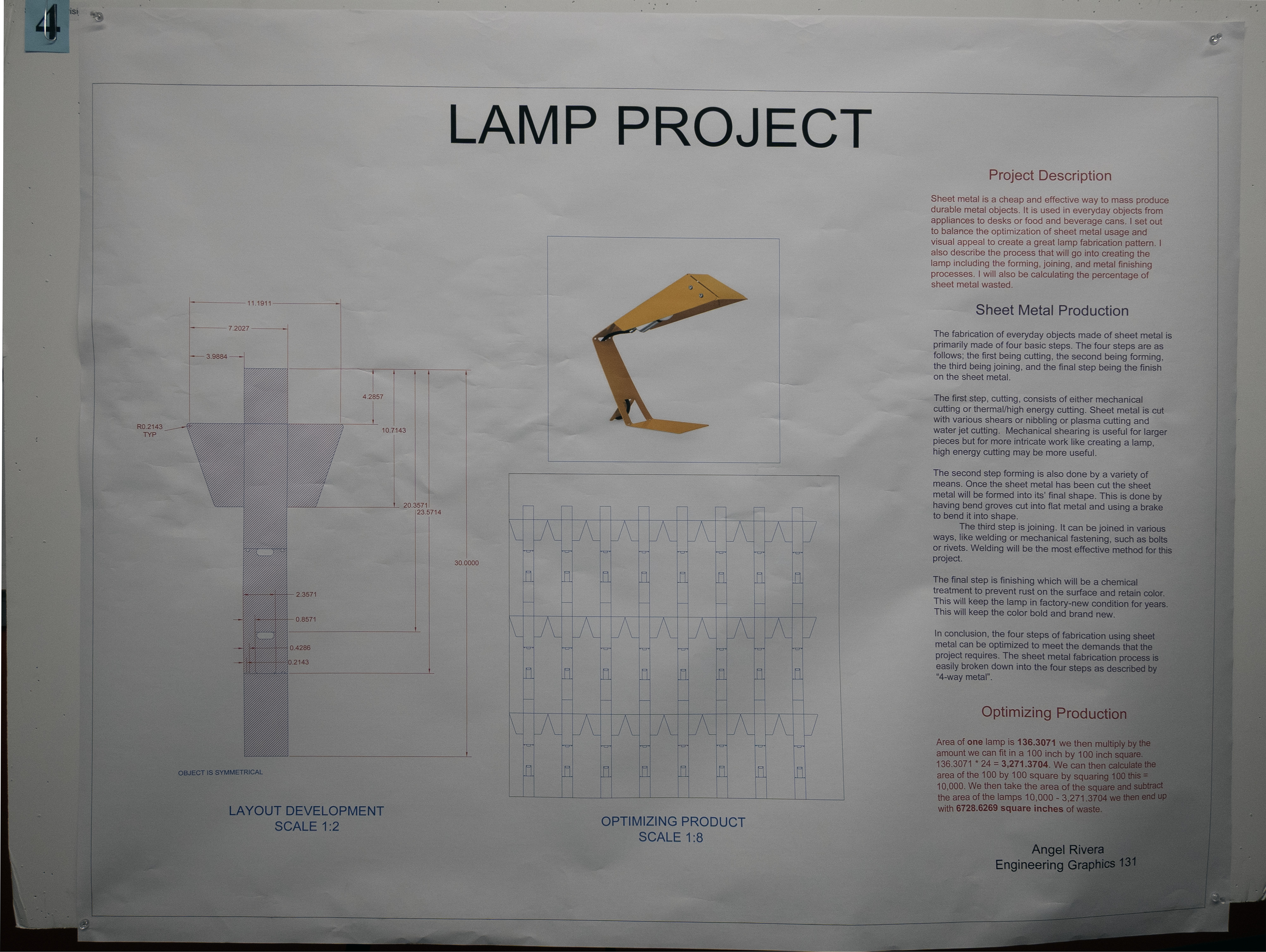
The fabrication of everyday objects made of sheet metal is primarily made of four basic steps. The four steps are as follows; the first being cutting, the second being forming, the third being joining, and the final step being the finish on the sheet metal. The first step, cutting, consists of either mechanical cutting or thermal/high energy cutting. Sheet metal is cut with various shears or nibbling or plasma cutting and water jet cutting. Mechanical shearing is useful for larger pieces but for more intricate work like creating a lamp, high energy cutting may be more useful. The second step forming is also done by a variety of means. Once the sheet metal has been cut the sheet metal will be formed into its’ final shape. This is done by having bend groves cut into flat metal and using a brake to bend it into shape. The third step is joining. It can be joined in various ways, like welding or mechanical fastening, such as bolts or rivets. Welding will be the most effective method for this project. The final step is finishing which will be a chemical treatment to prevent rust on the surface and retain color. This will keep the lamp in factory-new condition for years. This will keep the color bold and brand new. In conclusion, the four steps of fabrication using sheet metal can be optimized to meet the demands that the project requires. The sheet metal fabrication process is easily broken down into the four steps as described by “4-way metal”.
Image
Lamp Fabrication
CoLab, COM 307
The fabrication of everyday objects made of sheet metal is primarily made of four basic steps. The four steps are as follows; the first being cutting, the second being forming, the third being joining, and the final step being the finish on the sheet metal. The first step, cutting, consists of either mechanical cutting or thermal/high energy cutting. Sheet metal is cut with various shears or nibbling or plasma cutting and water jet cutting. Mechanical shearing is useful for larger pieces but for more intricate work like creating a lamp, high energy cutting may be more useful. The second step forming is also done by a variety of means. Once the sheet metal has been cut the sheet metal will be formed into its’ final shape. This is done by having bend groves cut into flat metal and using a brake to bend it into shape. The third step is joining. It can be joined in various ways, like welding or mechanical fastening, such as bolts or rivets. Welding will be the most effective method for this project. The final step is finishing which will be a chemical treatment to prevent rust on the surface and retain color. This will keep the lamp in factory-new condition for years. This will keep the color bold and brand new. In conclusion, the four steps of fabrication using sheet metal can be optimized to meet the demands that the project requires. The sheet metal fabrication process is easily broken down into the four steps as described by “4-way metal”.
Comments
The faculty mentor for this project was Susan Johnson.