

Isolation and Screening of Soil Bacteria for Antibiotic Production
Location
CoLab, COM 318
Start Date
30-4-2026 2:30 PM
Document Type
Poster
Description
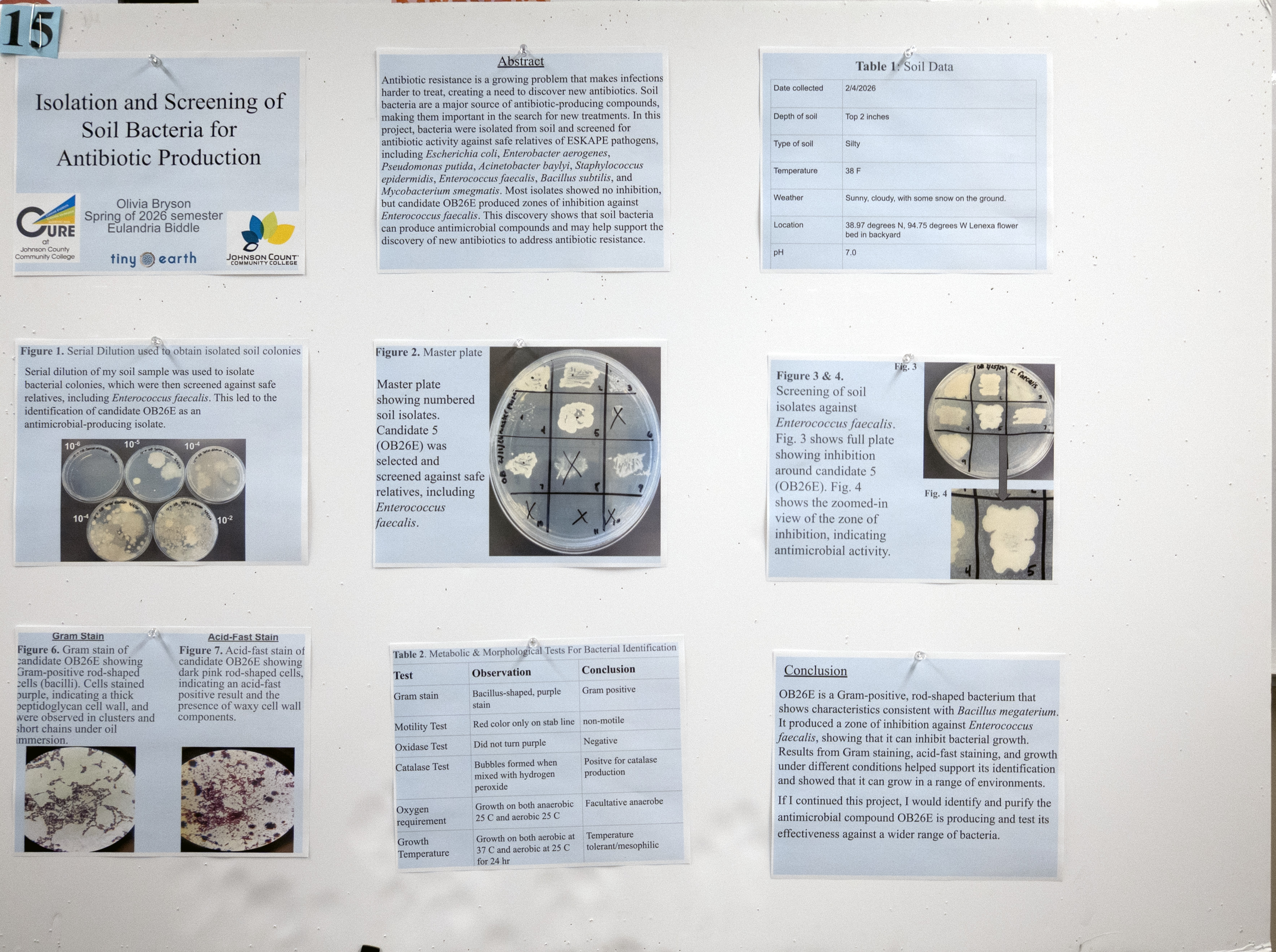
Soil bacteria are an important source of antibiotic-producing organisms, making them valuable in the search for new treatments against bacterial infections. This project focused on isolating bacteria from soil and screening them for antibiotic activity against safe relatives of the ESKAPE pathogens, including Escherichia coli, Enterobacter aerogenes, Pseudomonas putida, Acinetobacter baylyi, Staphylococcus epidermidis, Enterococcus faecalis, Bacillus subtilis, and Mycobacterium smegmatis. Individual colonies were isolated and patched onto screening plates containing these organisms to test for inhibitory activity. While most colonies showed no inhibition, Colony 5 produced small to medium zones of inhibition against multiple safe relatives and was selected for further study based on this activity. These results demonstrate that soil contains bacteria capable of producing compounds that inhibit other microbes, highlighting their potential role in antibiotic discovery.
Image
Isolation and Screening of Soil Bacteria for Antibiotic Production
CoLab, COM 318
Soil bacteria are an important source of antibiotic-producing organisms, making them valuable in the search for new treatments against bacterial infections. This project focused on isolating bacteria from soil and screening them for antibiotic activity against safe relatives of the ESKAPE pathogens, including Escherichia coli, Enterobacter aerogenes, Pseudomonas putida, Acinetobacter baylyi, Staphylococcus epidermidis, Enterococcus faecalis, Bacillus subtilis, and Mycobacterium smegmatis. Individual colonies were isolated and patched onto screening plates containing these organisms to test for inhibitory activity. While most colonies showed no inhibition, Colony 5 produced small to medium zones of inhibition against multiple safe relatives and was selected for further study based on this activity. These results demonstrate that soil contains bacteria capable of producing compounds that inhibit other microbes, highlighting their potential role in antibiotic discovery.
Comments
The faculty mentor for this project was Eulandria Biddle.