

Plastic Degrading Algae
Location
CoLab, COM 294
Start Date
30-4-2026 1:15 PM
Document Type
Poster
Description
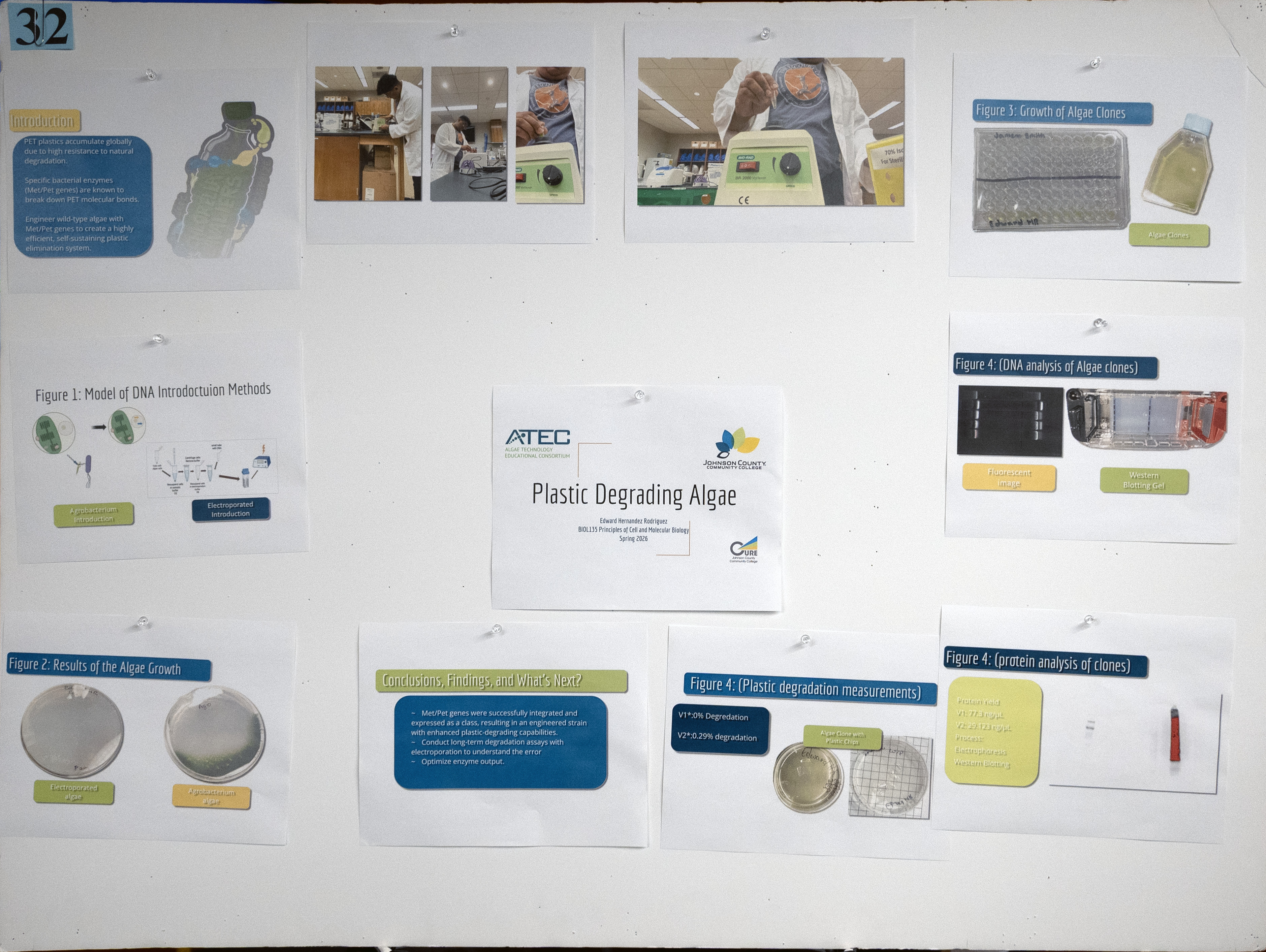
Earth is contaminated with plastic, a substance that can persist in the environment for decades. To combat this issue, we can utilize natural biological processes to break down these contaminants, specifically by engineering algae with plastic-degrading enzymes. To create this modified algae, we introduced DNA through two methods: Agrobacterium-mediated transformation and electroporation. Our experiment showed that the Agrobacterium colonies grew significantly better than those from electroporation. During the selection and screening phase, we used a membrane-like filter to strain the DNA, allowing us to isolate and analyze a successful Agrobacterium sample with a DNA quantity of 77.3 microliters. We then placed the algae on a plate to test for plastic breakdown. Despite the successful growth of the colonies, our results showed a degradation percentage of 0%. However, this research provides an alternative approach to solving the plastic crisis and could eventually lead to a significant reduction in environmental contamination.
Image
Plastic Degrading Algae
CoLab, COM 294
Earth is contaminated with plastic, a substance that can persist in the environment for decades. To combat this issue, we can utilize natural biological processes to break down these contaminants, specifically by engineering algae with plastic-degrading enzymes. To create this modified algae, we introduced DNA through two methods: Agrobacterium-mediated transformation and electroporation. Our experiment showed that the Agrobacterium colonies grew significantly better than those from electroporation. During the selection and screening phase, we used a membrane-like filter to strain the DNA, allowing us to isolate and analyze a successful Agrobacterium sample with a DNA quantity of 77.3 microliters. We then placed the algae on a plate to test for plastic breakdown. Despite the successful growth of the colonies, our results showed a degradation percentage of 0%. However, this research provides an alternative approach to solving the plastic crisis and could eventually lead to a significant reduction in environmental contamination.
Comments
The faculty mentor for this project was Heather Seitz.