

Isolation and Screening of Soil Bacteria for Antimicrobial Activity Against ESKAPE Pathogens: Identification of Candidate “Alfred
Location
CoLab, COM 240
Start Date
30-4-2026 12:00 PM
Document Type
Poster
Description
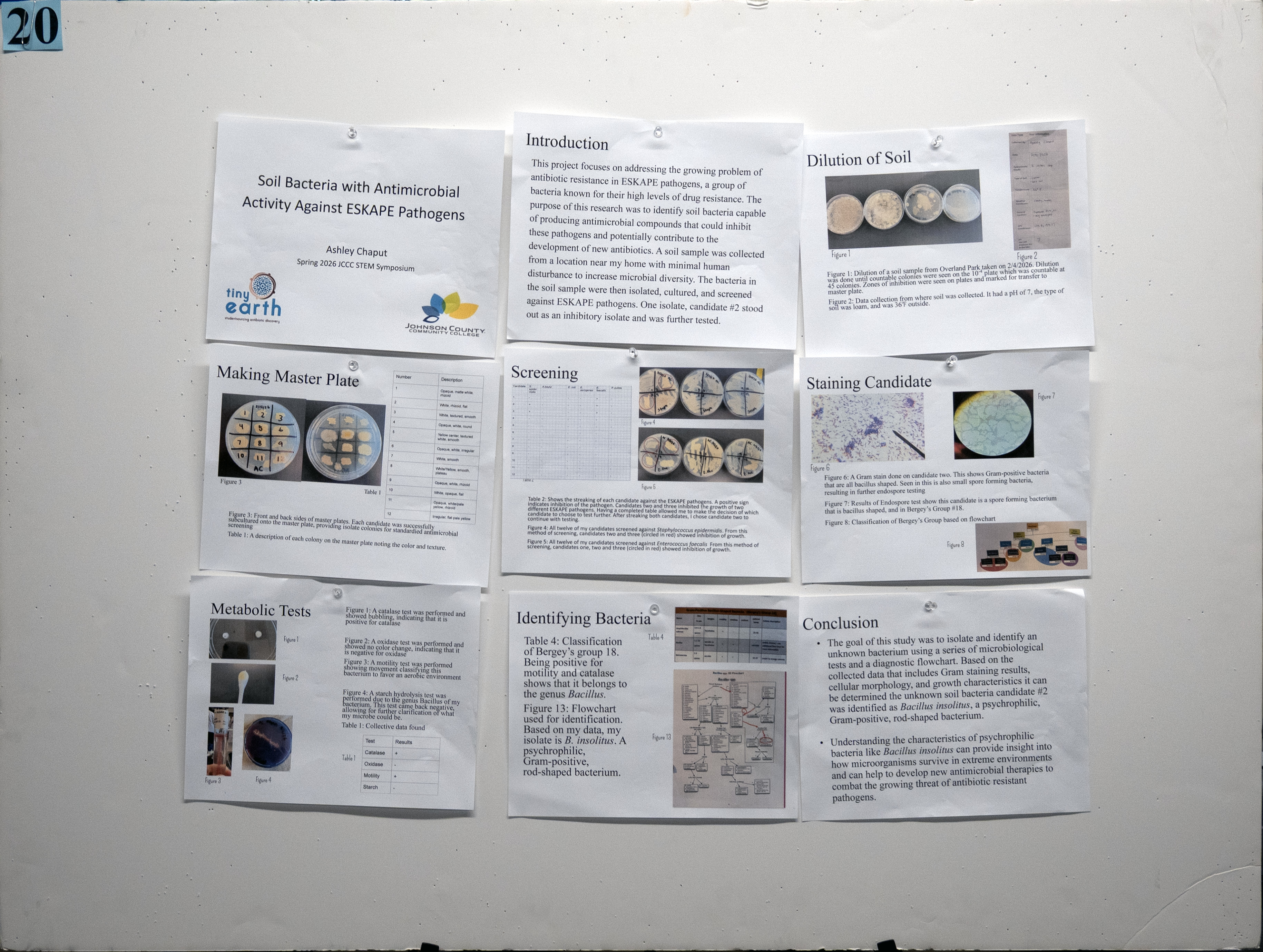
This research is important in order to assess antibiotic resistance against the growing number of ESKAPE pathogens in today’s world, which exhibit a high level of drug resistance. Finding solutions in these antimicrobial compounds is critical for creating new antibiotics. I chose a location near my house where many animals reside, as well as one with minimal human disturbance. Soil near animals could contain a higher concentration of antibiotics and allow for more diversity in my sample. My soil bacteria was then isolated, cultured, and then screened in the hope that it possessed the ability to inhibit the growth of multiple ESKAPE pathogens. In the testing I have completed, 12 candidates were screened against each eskape pathogens, and the results showed two positives, each exhibiting the same ESKAPE pathogens. These pathogens were Staphylococcus epidermis and Enterococcus faecalis, and the candidates that inhibited the growth of these were Robin (2) and Alfred(3). My final candidate that will be tested going forward is Alfred, as my final streak of this candidate allowed for individual colonies to be seen.
Image
Isolation and Screening of Soil Bacteria for Antimicrobial Activity Against ESKAPE Pathogens: Identification of Candidate “Alfred
CoLab, COM 240
This research is important in order to assess antibiotic resistance against the growing number of ESKAPE pathogens in today’s world, which exhibit a high level of drug resistance. Finding solutions in these antimicrobial compounds is critical for creating new antibiotics. I chose a location near my house where many animals reside, as well as one with minimal human disturbance. Soil near animals could contain a higher concentration of antibiotics and allow for more diversity in my sample. My soil bacteria was then isolated, cultured, and then screened in the hope that it possessed the ability to inhibit the growth of multiple ESKAPE pathogens. In the testing I have completed, 12 candidates were screened against each eskape pathogens, and the results showed two positives, each exhibiting the same ESKAPE pathogens. These pathogens were Staphylococcus epidermis and Enterococcus faecalis, and the candidates that inhibited the growth of these were Robin (2) and Alfred(3). My final candidate that will be tested going forward is Alfred, as my final streak of this candidate allowed for individual colonies to be seen.
Comments
The faculty mentor for this project was Heather Seitz.