

JCCC Creek Water Analysis: Water Hardness
Location
CoLab, COM 256
Start Date
30-4-2026 12:00 PM
Document Type
Poster
Description
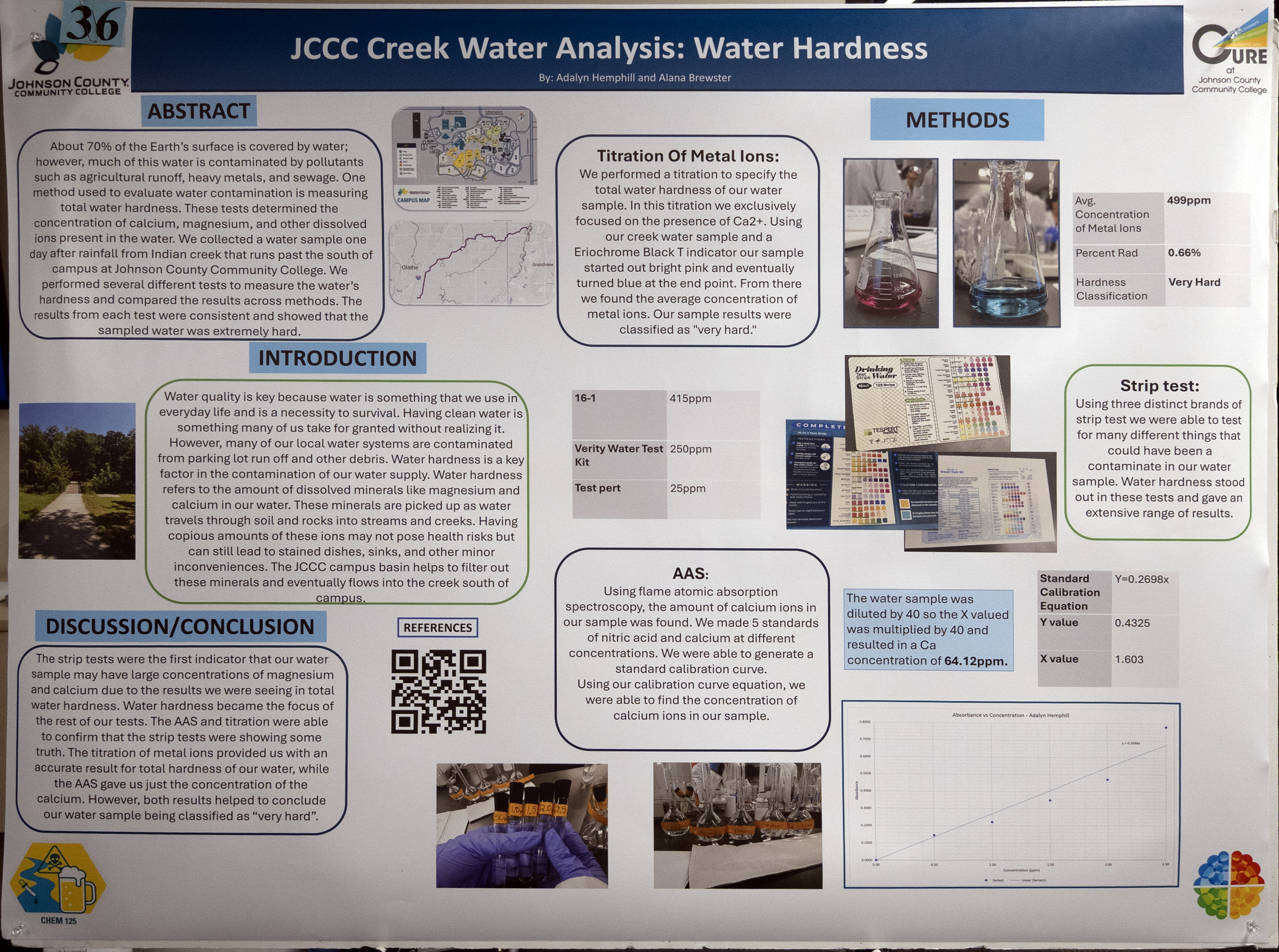
About 70% of the Earth’s surface is covered by water; however, much of this water is contaminated by pollutants such as agricultural runoff, heavy metals, and sewage. One method used to evaluate water contamination is measuring total water hardness. These tests determine the concentration of calcium, magnesium, and other dissolved ions present in the water. We collected a water sample one day after rainfall from a creek that runs through the campus of Johnson County Community College. We performed several different tests to measure the water’s hardness and compared the results across methods. The results from each test were consistent and indicated that the sampled water was very hard.
Image
JCCC Creek Water Analysis: Water Hardness
CoLab, COM 256
About 70% of the Earth’s surface is covered by water; however, much of this water is contaminated by pollutants such as agricultural runoff, heavy metals, and sewage. One method used to evaluate water contamination is measuring total water hardness. These tests determine the concentration of calcium, magnesium, and other dissolved ions present in the water. We collected a water sample one day after rainfall from a creek that runs through the campus of Johnson County Community College. We performed several different tests to measure the water’s hardness and compared the results across methods. The results from each test were consistent and indicated that the sampled water was very hard.
Comments
The faculty mentor for this project was Lori Slavin.