

Antibiotic Resistance of JCCC's Compost Soil
Location
CoLab, COM 239
Start Date
30-4-2026 12:00 PM
Document Type
Poster
Description
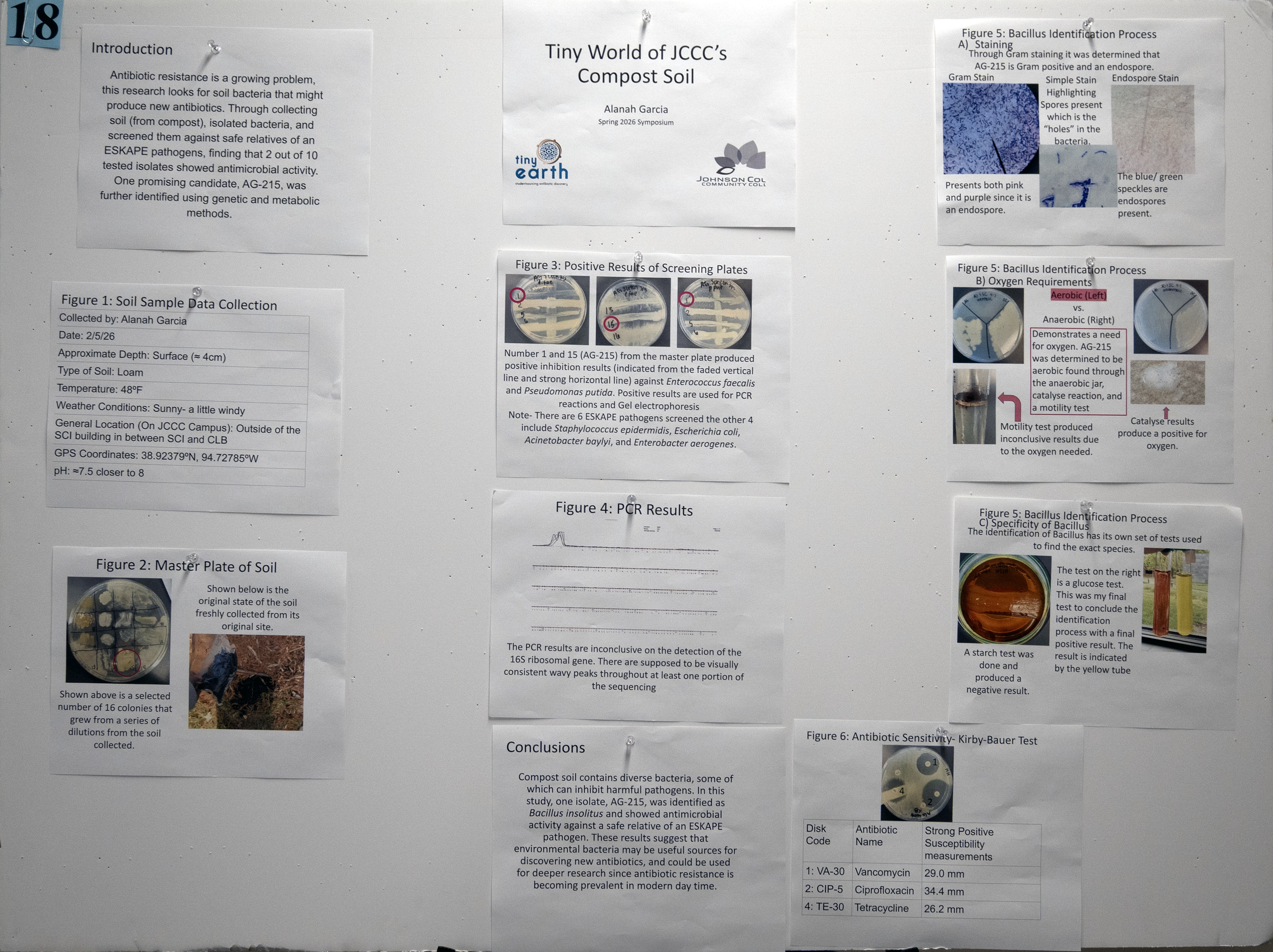
Antibiotic resistance is a major public health concern because it makes infections harder to treat and increases the risk of disease spread. Soil environments, especially compost, are rich in microbial diversity and may serve as reservoirs for antibiotic-producing organisms and resistance traits, which is why compost soil from Johnson County Community College was selected for this study. Soil samples were serially diluted, plated on agar, and individual bacterial colonies were isolated and screened for antimicrobial activity against ESKAPE pathogens. A total of sixteen bacterial isolates were collected, ten were screened, and two of the bacterial isolates presented positive inhibition against at least one ESKAPE pathogen, indicating potential antimicrobial properties. One candidate isolate, AG-215, was selected for further analysis and has been identified using both genetic sequencing and metabolic characterization techniques. The goal of this research is to contribute to the search for new antibiotics that could combat antibiotic-resistant infections, and guide further research into naturally occurring bacteria as sources of new antimicrobial compounds.
Image
Antibiotic Resistance of JCCC's Compost Soil
CoLab, COM 239
Antibiotic resistance is a major public health concern because it makes infections harder to treat and increases the risk of disease spread. Soil environments, especially compost, are rich in microbial diversity and may serve as reservoirs for antibiotic-producing organisms and resistance traits, which is why compost soil from Johnson County Community College was selected for this study. Soil samples were serially diluted, plated on agar, and individual bacterial colonies were isolated and screened for antimicrobial activity against ESKAPE pathogens. A total of sixteen bacterial isolates were collected, ten were screened, and two of the bacterial isolates presented positive inhibition against at least one ESKAPE pathogen, indicating potential antimicrobial properties. One candidate isolate, AG-215, was selected for further analysis and has been identified using both genetic sequencing and metabolic characterization techniques. The goal of this research is to contribute to the search for new antibiotics that could combat antibiotic-resistant infections, and guide further research into naturally occurring bacteria as sources of new antimicrobial compounds.
Comments
The faculty mentor for this project was Heather Seitz.