

Algae vs Plastic: A Biotech Breakthrough for a Cleaner Planet
Location
CoLab, COM 233
Start Date
30-4-2026 12:00 PM
Document Type
Poster
Description
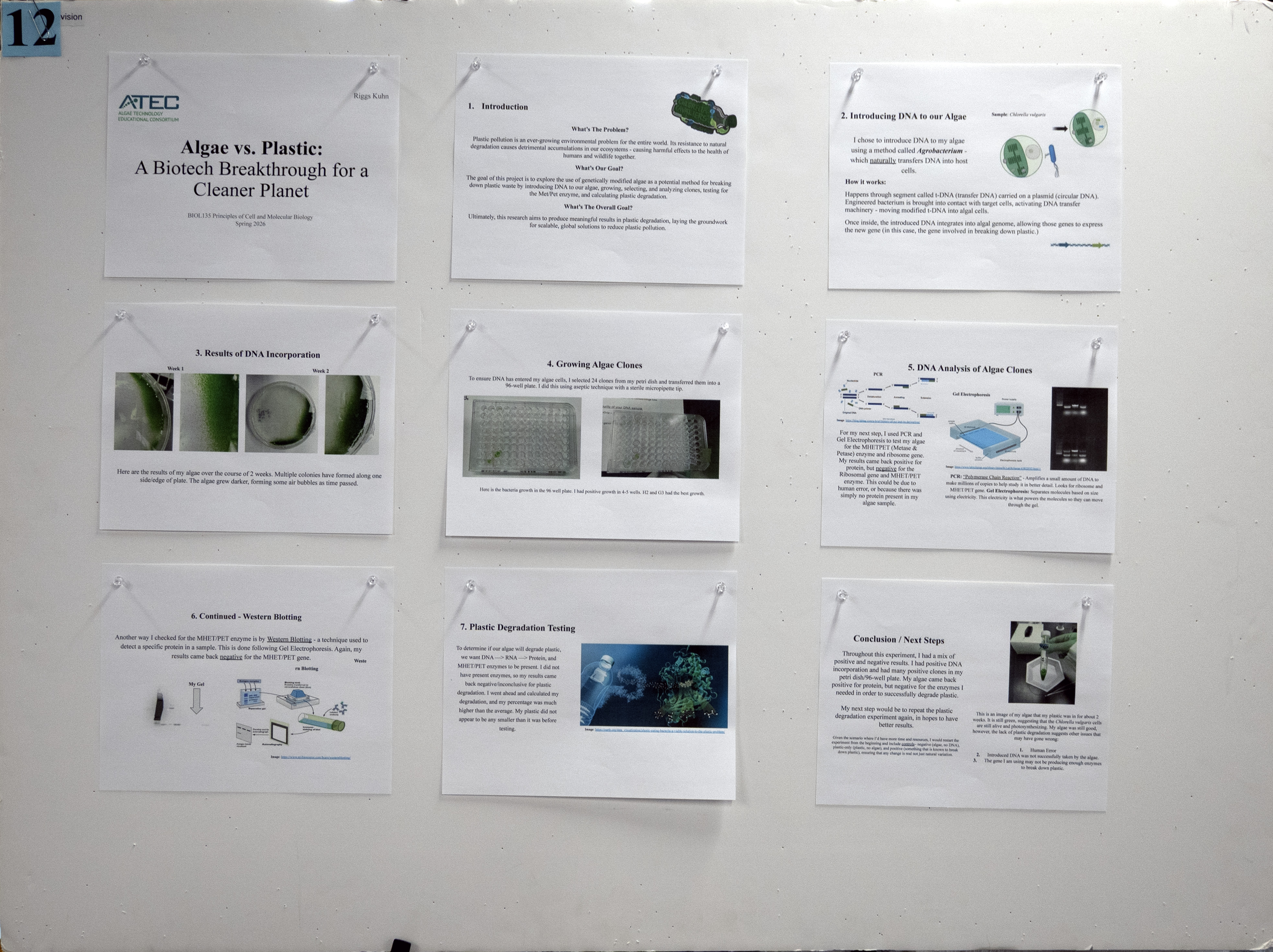
Plastic pollution is an ever-growing environmental problem for the entire world. Its resistance to natural degradation causes detrimental accumulations in our ecosystems. This in turn causes harmful effects to the health of humans and wildlife together. The purpose of this study is to investigate the use of genetically modified algae as a potential solution for the global plastic degradation epidemic. We hope to create a sustainable solution for both the future and the futures to come. In order to achieve this, we will first introduce genes encoding plastic-degrading enzymes to the cholera algae cells. It is our hypothesis that the surviving cells will then be isolated and cloned. These clones will then be screened for DNA incorporation and protein expression. Our study has shown positive gains and had multiple positive clones. This has been tested by positive and successful DNA incorporation, indicating effective transformation. These transformations and findings provide support to the use of engineered algae. Thus creating an efficient and environmentally friendly way to reduce waste in our ecosystems. Furthermore, this study will also shed light on the ability to move forward with advancements in biotechnology, drastically reducing and helping us decrease global plastic pollution. However, it could be the start for future studies finding additional solutions or continuing never-ending environmental problems around the world.
Image
Algae vs Plastic: A Biotech Breakthrough for a Cleaner Planet
CoLab, COM 233
Plastic pollution is an ever-growing environmental problem for the entire world. Its resistance to natural degradation causes detrimental accumulations in our ecosystems. This in turn causes harmful effects to the health of humans and wildlife together. The purpose of this study is to investigate the use of genetically modified algae as a potential solution for the global plastic degradation epidemic. We hope to create a sustainable solution for both the future and the futures to come. In order to achieve this, we will first introduce genes encoding plastic-degrading enzymes to the cholera algae cells. It is our hypothesis that the surviving cells will then be isolated and cloned. These clones will then be screened for DNA incorporation and protein expression. Our study has shown positive gains and had multiple positive clones. This has been tested by positive and successful DNA incorporation, indicating effective transformation. These transformations and findings provide support to the use of engineered algae. Thus creating an efficient and environmentally friendly way to reduce waste in our ecosystems. Furthermore, this study will also shed light on the ability to move forward with advancements in biotechnology, drastically reducing and helping us decrease global plastic pollution. However, it could be the start for future studies finding additional solutions or continuing never-ending environmental problems around the world.
Comments
The faculty mentor for this project was Heather Seitz.