

Algae Plastic Degration
Location
CoLab, COM 232
Start Date
30-4-2026 12:00 PM
Document Type
Poster
Description
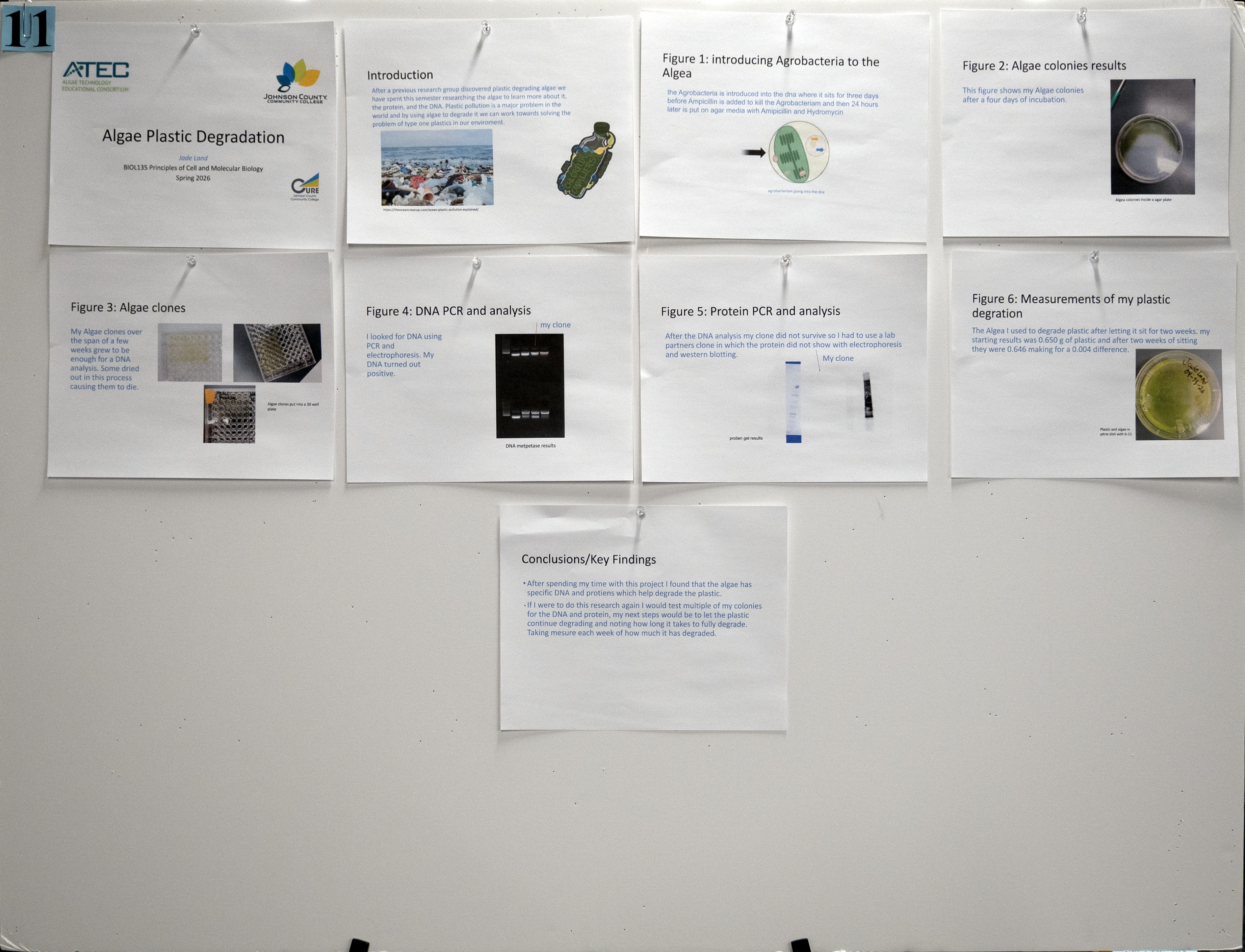
For this project, I have been working towards solving plastic pollution, a problem that would aid wildlife and nature altogether. My goal for this is to create plastic-degrading algae that can be placed within water to slowly degrade the plastics within. To solve the issue of plastic pollution, I will first introduce the algae DNA. After this, I will select clones for a screening process. Once the screening process is done, I will begin to analyze the DNA and proteins for the final step, where I will use this DNA to degrade plastic. Once it comes down to results, I found that I had one clone that was positive and able to degrade plastic. It was unfortunate that after this finding, the clone had died, meaning I needed to find a new clone to use and send through this screening process again. Once done, and once positive DNA was found again, I was able to use this DNA to create plastic-degrading algae. This project is important to the environment because plastic in the water causes harm not just to animals, but also to nature, and to you and me. As plastic sits in water, it also picks up chemicals and toxins within the water, meaning when wildlife consumes this plastic, it gets contaminated with these same toxins (Gianna Andrews, 2012). We as humans tend to eat animals or fish that have consumed these plastics, causing the likelihood for toxins to then enter our bodies along with microplastics. While the ultimate goal would be for people to recycle more, that is not something that can help plastic already in the oceans. In order to protect our oceans, we must find a way to clean them. Plastic-degrading algae is a solution. Work Cited Plastics in the ocean affecting human health. (n.d.). Case Studies. https://serc.carleton.edu/NAGTWorkshops/health/case_studies/plastics.html
Image
Algae Plastic Degration
CoLab, COM 232
For this project, I have been working towards solving plastic pollution, a problem that would aid wildlife and nature altogether. My goal for this is to create plastic-degrading algae that can be placed within water to slowly degrade the plastics within. To solve the issue of plastic pollution, I will first introduce the algae DNA. After this, I will select clones for a screening process. Once the screening process is done, I will begin to analyze the DNA and proteins for the final step, where I will use this DNA to degrade plastic. Once it comes down to results, I found that I had one clone that was positive and able to degrade plastic. It was unfortunate that after this finding, the clone had died, meaning I needed to find a new clone to use and send through this screening process again. Once done, and once positive DNA was found again, I was able to use this DNA to create plastic-degrading algae. This project is important to the environment because plastic in the water causes harm not just to animals, but also to nature, and to you and me. As plastic sits in water, it also picks up chemicals and toxins within the water, meaning when wildlife consumes this plastic, it gets contaminated with these same toxins (Gianna Andrews, 2012). We as humans tend to eat animals or fish that have consumed these plastics, causing the likelihood for toxins to then enter our bodies along with microplastics. While the ultimate goal would be for people to recycle more, that is not something that can help plastic already in the oceans. In order to protect our oceans, we must find a way to clean them. Plastic-degrading algae is a solution. Work Cited Plastics in the ocean affecting human health. (n.d.). Case Studies. https://serc.carleton.edu/NAGTWorkshops/health/case_studies/plastics.html
Comments
The faculty mentor for this project was Heather Seitz.