

Algae Plastic Degradation
Location
CoLab, COM 235
Start Date
30-4-2026 12:00 PM
Document Type
Poster
Description
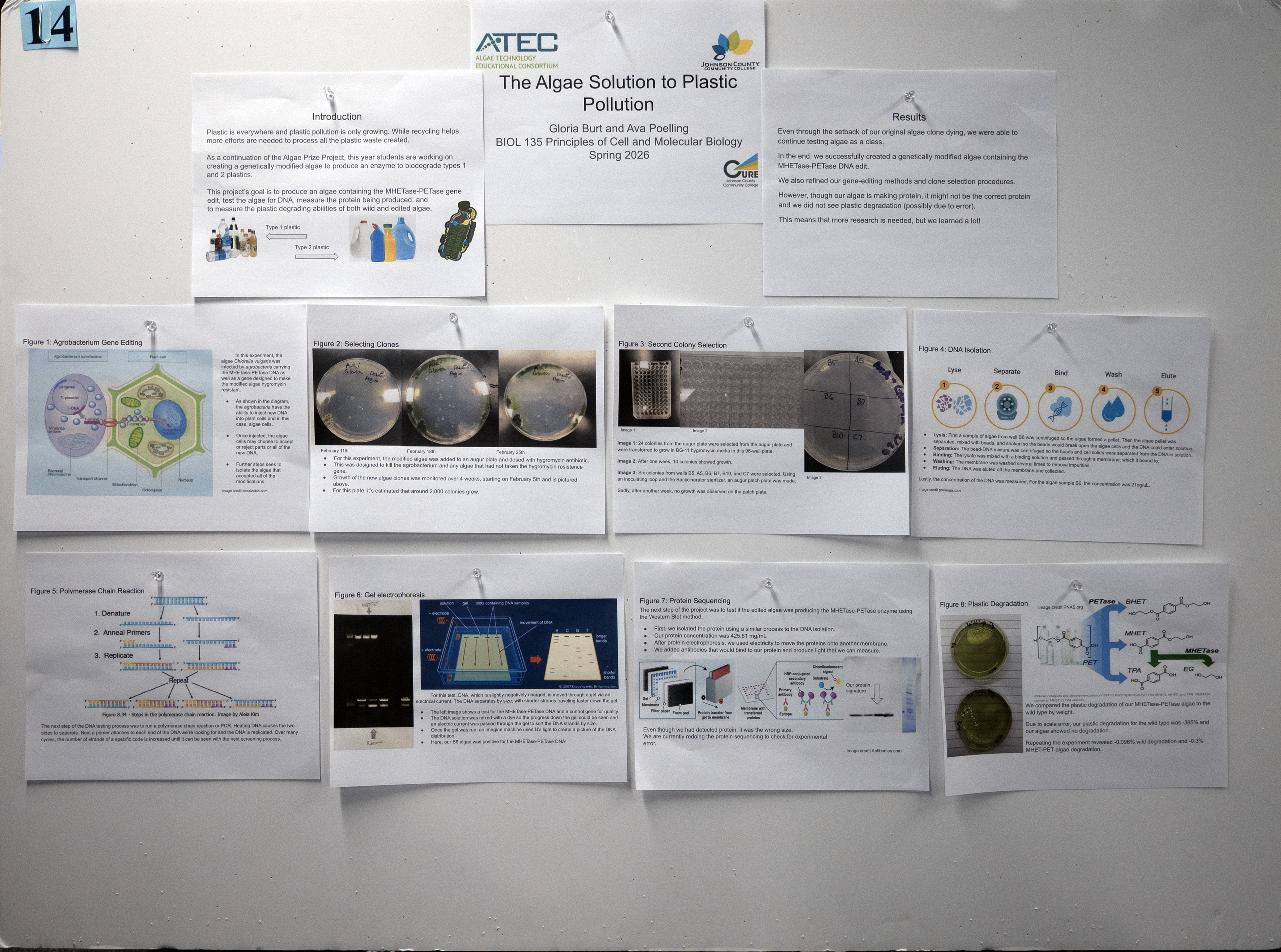
Plastic pollution is a major problem our world faces, with microplastics being present throughout the globe. Our research’s goal is to produce and test a genetically edited algae that can biodegrade types 1 and 2 plastics. We first introduced the MHETase-PETase gene, as well as a hygromycin-resistant gene, to an algae colony using Agrobacterium. The MHETase-PETase gene enables the algae to produce an enzyme that can degrade plastic, and the hygromycin resistance gene helps us isolate the modified algae—we grew the algae in growth media that contained the hygromycin antibiotic to kill whatever algae did not have our DNA. After several rounds of selection, we isolated the DNA, amplified it using PCR, and checked the concentration and quality, specifically searching for the MHETase-PETase gene. Next, we will test a modified algae colony for its ability to produce the plastic-degrading enzyme and for how well it can degrade plastic. Our clone tested positive for the MHET-PET gene, but it died over the break. So far, our class has 9 positive colonies. This research will give the scientific community further insight into methods for genetically modifying algae, how well the modified algae can grow and produce enzymes, and the effectiveness of these enzymes in biodegrading plastic
Image
Algae Plastic Degradation
CoLab, COM 235
Plastic pollution is a major problem our world faces, with microplastics being present throughout the globe. Our research’s goal is to produce and test a genetically edited algae that can biodegrade types 1 and 2 plastics. We first introduced the MHETase-PETase gene, as well as a hygromycin-resistant gene, to an algae colony using Agrobacterium. The MHETase-PETase gene enables the algae to produce an enzyme that can degrade plastic, and the hygromycin resistance gene helps us isolate the modified algae—we grew the algae in growth media that contained the hygromycin antibiotic to kill whatever algae did not have our DNA. After several rounds of selection, we isolated the DNA, amplified it using PCR, and checked the concentration and quality, specifically searching for the MHETase-PETase gene. Next, we will test a modified algae colony for its ability to produce the plastic-degrading enzyme and for how well it can degrade plastic. Our clone tested positive for the MHET-PET gene, but it died over the break. So far, our class has 9 positive colonies. This research will give the scientific community further insight into methods for genetically modifying algae, how well the modified algae can grow and produce enzymes, and the effectiveness of these enzymes in biodegrading plastic
Comments
The faculty mentor for this project was Heather Seitz.