

Beneath the Surface: An Exploration of Soil Microbial Diversity and Their Potential for Antibiotic Development
Location
CoLab, COM 112
Start Date
30-4-2026 8:15 AM
Document Type
Poster
Description
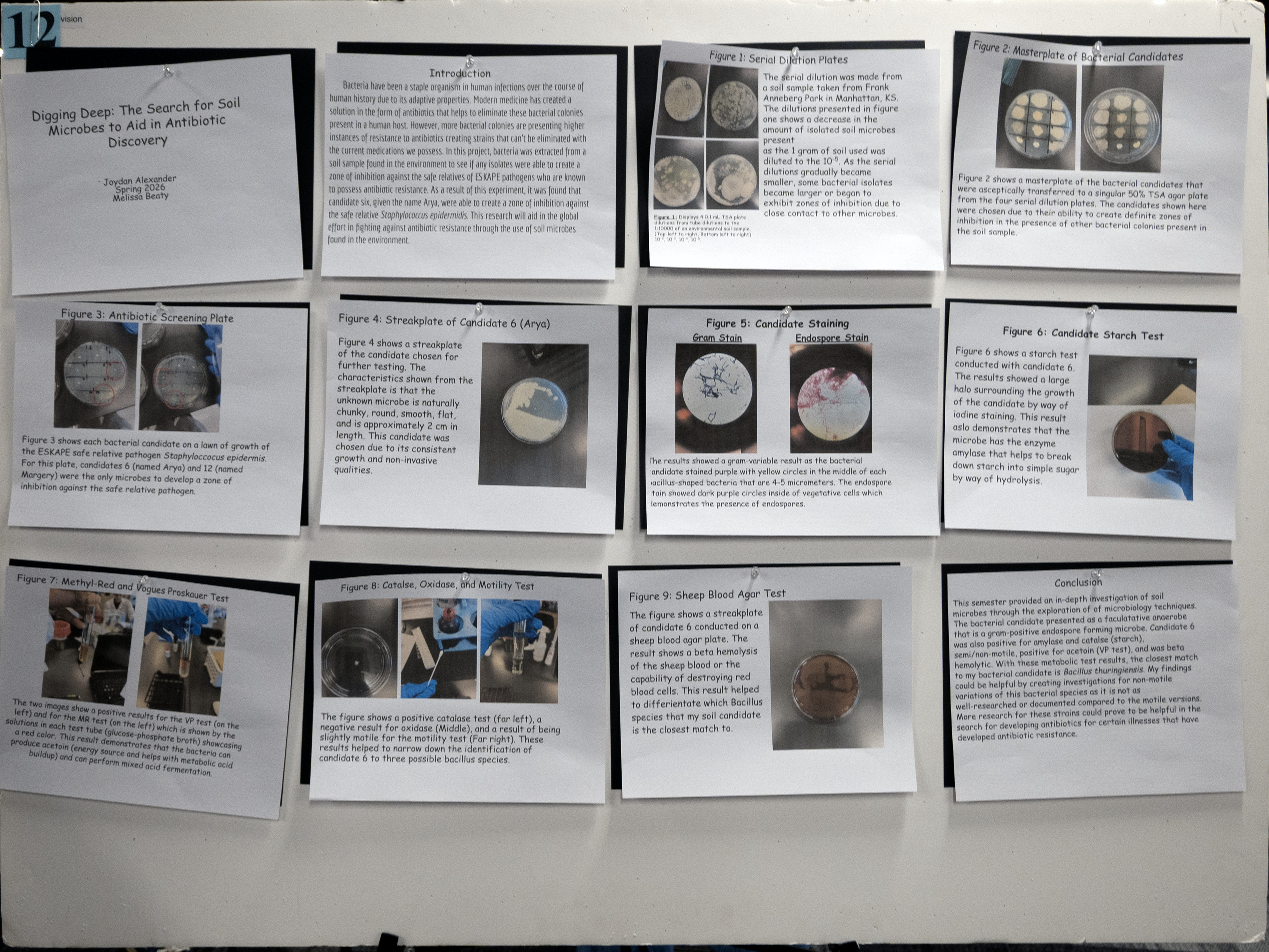
Bacteria have been a staple cause of human infections throughout history due to their adaptive properties. Modern medicine has created a solution in the form of antibiotics that helps to eliminate these bacterial colonies present in a human host and reduce the possibility of genetic mutations in bacteria that may make it harder to kill. However, many bacterial populations are now showing increased resistance to antibiotics, creating strains that cannot be eliminated with current medications. In this project, bacteria were extracted from a soil sample found in the environment to see if any isolates were able to create a zone of inhibition against the safe relatives of ESKAPE pathogens who are known to possess antibiotic resistance. As a result of this experiment, it was found that candidate six, given the name Arya, and candidate twelve, given the name Margery, were able to create a zone of inhibition against the safe relative Staphylococcus epidermidis. This research contributes to the global effort to combat antibiotic resistance through the study of soil microbes found in the environment.
Image
Beneath the Surface: An Exploration of Soil Microbial Diversity and Their Potential for Antibiotic Development
CoLab, COM 112
Bacteria have been a staple cause of human infections throughout history due to their adaptive properties. Modern medicine has created a solution in the form of antibiotics that helps to eliminate these bacterial colonies present in a human host and reduce the possibility of genetic mutations in bacteria that may make it harder to kill. However, many bacterial populations are now showing increased resistance to antibiotics, creating strains that cannot be eliminated with current medications. In this project, bacteria were extracted from a soil sample found in the environment to see if any isolates were able to create a zone of inhibition against the safe relatives of ESKAPE pathogens who are known to possess antibiotic resistance. As a result of this experiment, it was found that candidate six, given the name Arya, and candidate twelve, given the name Margery, were able to create a zone of inhibition against the safe relative Staphylococcus epidermidis. This research contributes to the global effort to combat antibiotic resistance through the study of soil microbes found in the environment.
Comments
The faculty mentor for this project was Melissa Beaty.