

Location
CoLab, COM 100
Start Date
1-5-2025 11:00 AM
Document Type
Poster
Description
The purpose of the study was to to increase the population of milkweed. The issue to be studied was finding the best method to use for vernalization and germination of Asclepias tuberosa. The research guidelines were to divide the milkweed seeds between cold dry and wet dry conditions and place in the fridge at 40 degrees F. Then the seeds were germinated and watered for 14 days. The results showed that cold dry conditions produced the highest seed germination compared to the cold dry conditions. For additional/future data, we could compare the sand cold wet conditions to different methods and/or bases. Cold wet vernalization can help increase milkweed populations for Monarch butterflies.
Image
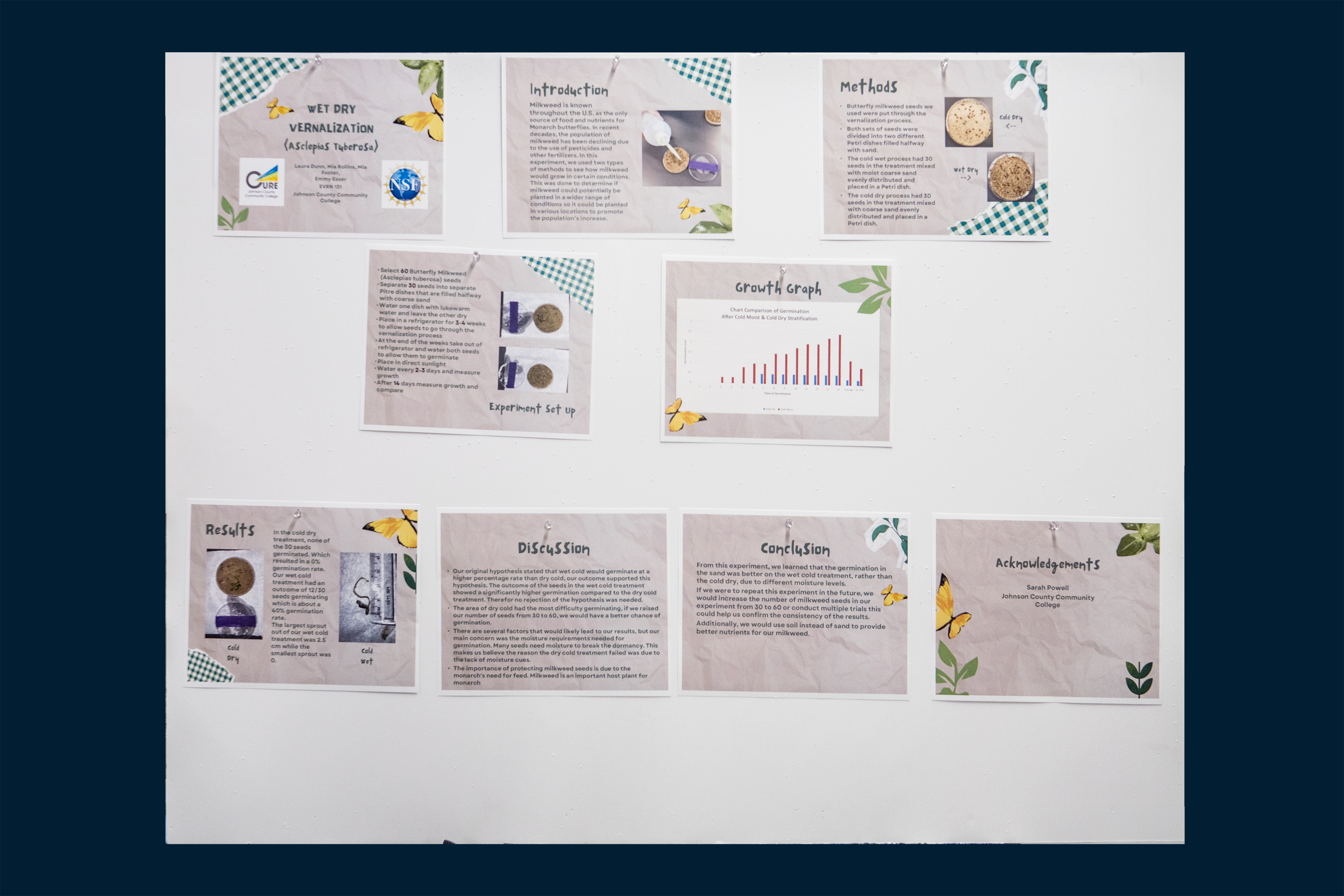
Wet and Cold Dry Sand Germination
CoLab, COM 100
The purpose of the study was to to increase the population of milkweed. The issue to be studied was finding the best method to use for vernalization and germination of Asclepias tuberosa. The research guidelines were to divide the milkweed seeds between cold dry and wet dry conditions and place in the fridge at 40 degrees F. Then the seeds were germinated and watered for 14 days. The results showed that cold dry conditions produced the highest seed germination compared to the cold dry conditions. For additional/future data, we could compare the sand cold wet conditions to different methods and/or bases. Cold wet vernalization can help increase milkweed populations for Monarch butterflies.
Comments
The faculty mentor for this project was Sarah Powell, Environmental Science.