

Location
CoLab, COM 100
Start Date
1-5-2025 8:30 AM
Document Type
Poster
Description
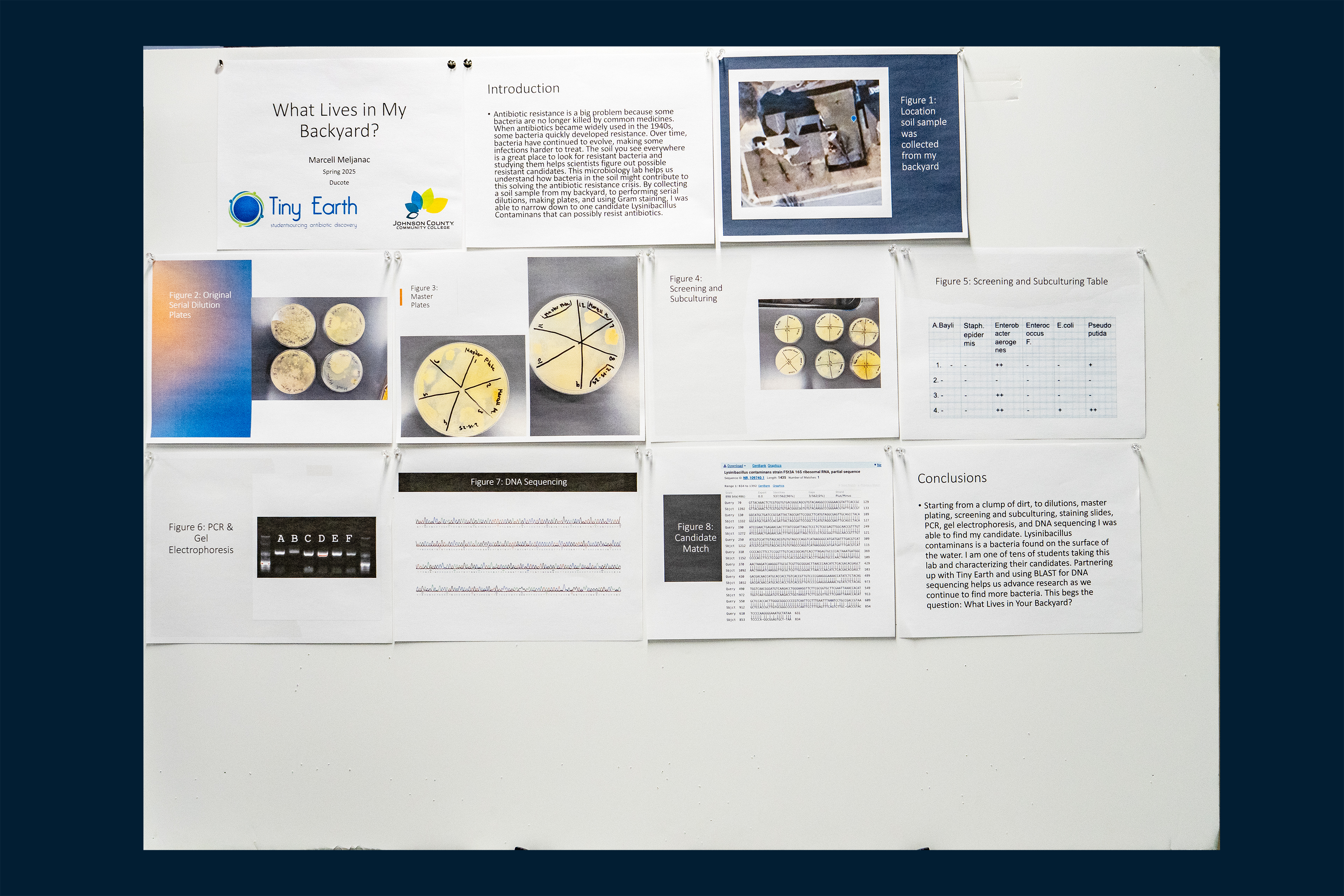
Antibiotic resistance is a big problem because some bacteria are no longer killed by common medicines. When antibiotics became widely used in the 1940s, some bacteria quickly developed resistance. Over time, bacteria have continued to evolve, making some infections harder to treat. The soil you see everywhere is a great place to look for resistant bacteria, and studying them helps scientists figure out possible resistant candidates. This microbiology lab helps us understand how bacteria in the soil might contribute to this solving the antibiotic resistance crisis. By collecting a soil sample from my backyard, to performing serial dilutions, making plates, and using Gram staining, I was able to narrow down to one candidate Gram negative rod bacteria that can possibly resist antibiotics.
Image
What Lives in My Backyard?
CoLab, COM 100
Antibiotic resistance is a big problem because some bacteria are no longer killed by common medicines. When antibiotics became widely used in the 1940s, some bacteria quickly developed resistance. Over time, bacteria have continued to evolve, making some infections harder to treat. The soil you see everywhere is a great place to look for resistant bacteria, and studying them helps scientists figure out possible resistant candidates. This microbiology lab helps us understand how bacteria in the soil might contribute to this solving the antibiotic resistance crisis. By collecting a soil sample from my backyard, to performing serial dilutions, making plates, and using Gram staining, I was able to narrow down to one candidate Gram negative rod bacteria that can possibly resist antibiotics.
Comments
The faculty mentor for this project was Matthew Ducote, Biology.