

Location
CoLab, COM 100
Start Date
1-5-2025 9:45 AM
Document Type
Poster
Description
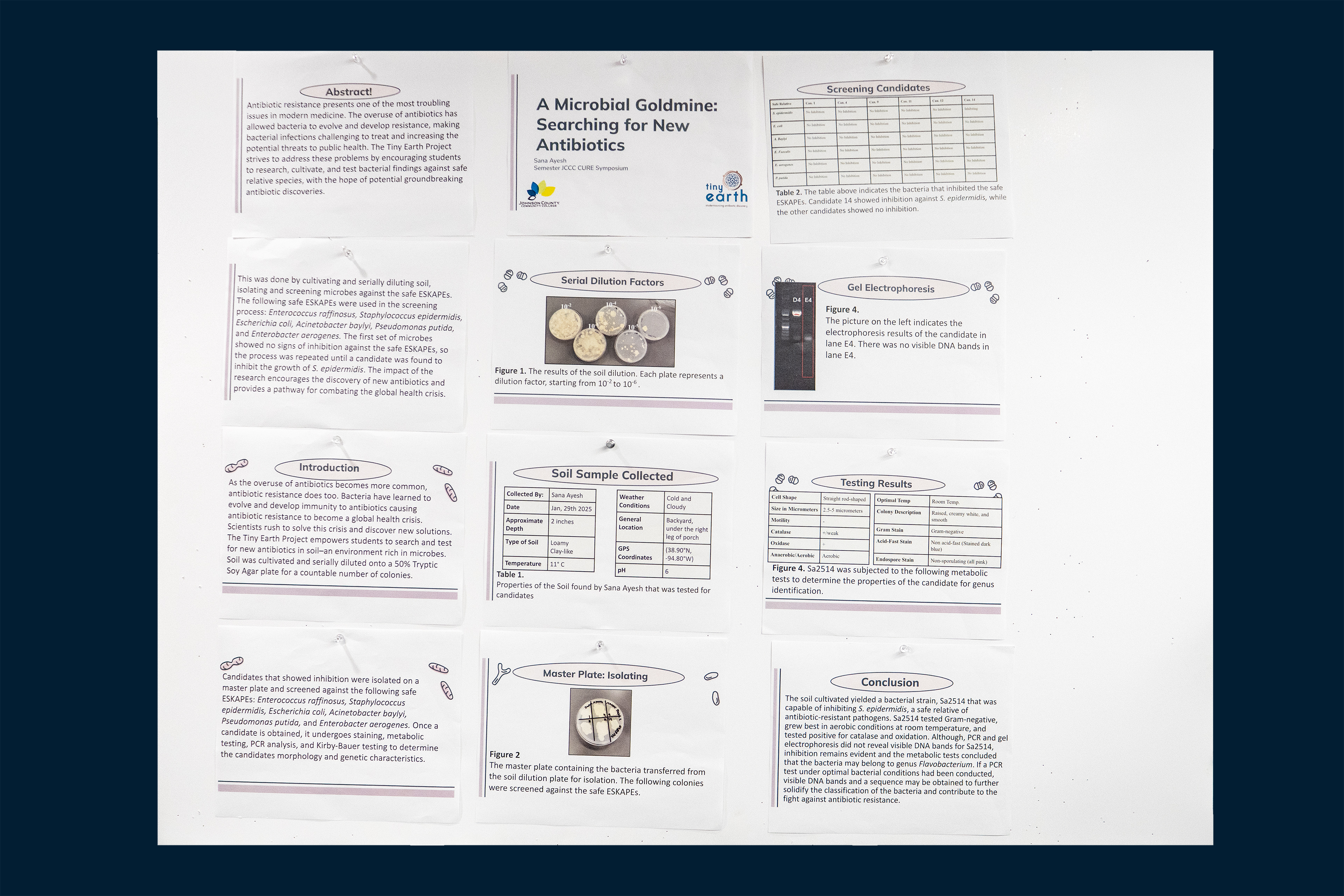
Antibiotic resistance presents one of the most troubling issues in modern medicine. The overuse of antibiotics has allowed bacteria to evolve and develop resistance, making bacterial infections challenging to treat and increasing the potential threats to public health. The Tiny Earth Project strives to address these problems by encouraging students to research, cultivate, and test bacterial findings against safe relative species, with the hope of potential groundbreaking antibiotic discoveries. This was done by cultivating and serially diluting soil, isolating and screening microbes against the safe ESKAPEs. The following safe ESKAPEs were used in the screening process: Enterococcus raffinosus, Staphylococcus epidermidis, Escherichia coli, Acinetobacter baylyi, Pseudomonas putida, and Enterobacter aerogenes. The first set of microbes showed no signs of inhibition against the safe ESKAPEs. The impact of the research encourages the discovery of new antibiotics and provides a pathway for combating the global health crisis.
Image
A Microbial Goldmine: A Search for New Antibiotics
CoLab, COM 100
Antibiotic resistance presents one of the most troubling issues in modern medicine. The overuse of antibiotics has allowed bacteria to evolve and develop resistance, making bacterial infections challenging to treat and increasing the potential threats to public health. The Tiny Earth Project strives to address these problems by encouraging students to research, cultivate, and test bacterial findings against safe relative species, with the hope of potential groundbreaking antibiotic discoveries. This was done by cultivating and serially diluting soil, isolating and screening microbes against the safe ESKAPEs. The following safe ESKAPEs were used in the screening process: Enterococcus raffinosus, Staphylococcus epidermidis, Escherichia coli, Acinetobacter baylyi, Pseudomonas putida, and Enterobacter aerogenes. The first set of microbes showed no signs of inhibition against the safe ESKAPEs. The impact of the research encourages the discovery of new antibiotics and provides a pathway for combating the global health crisis.
Comments
The faculty mentor for this project was Eulandria Biddle, Biology.