

Location
CoLab, COM 100
Start Date
1-5-2025 1:30 PM
Document Type
Poster
Description
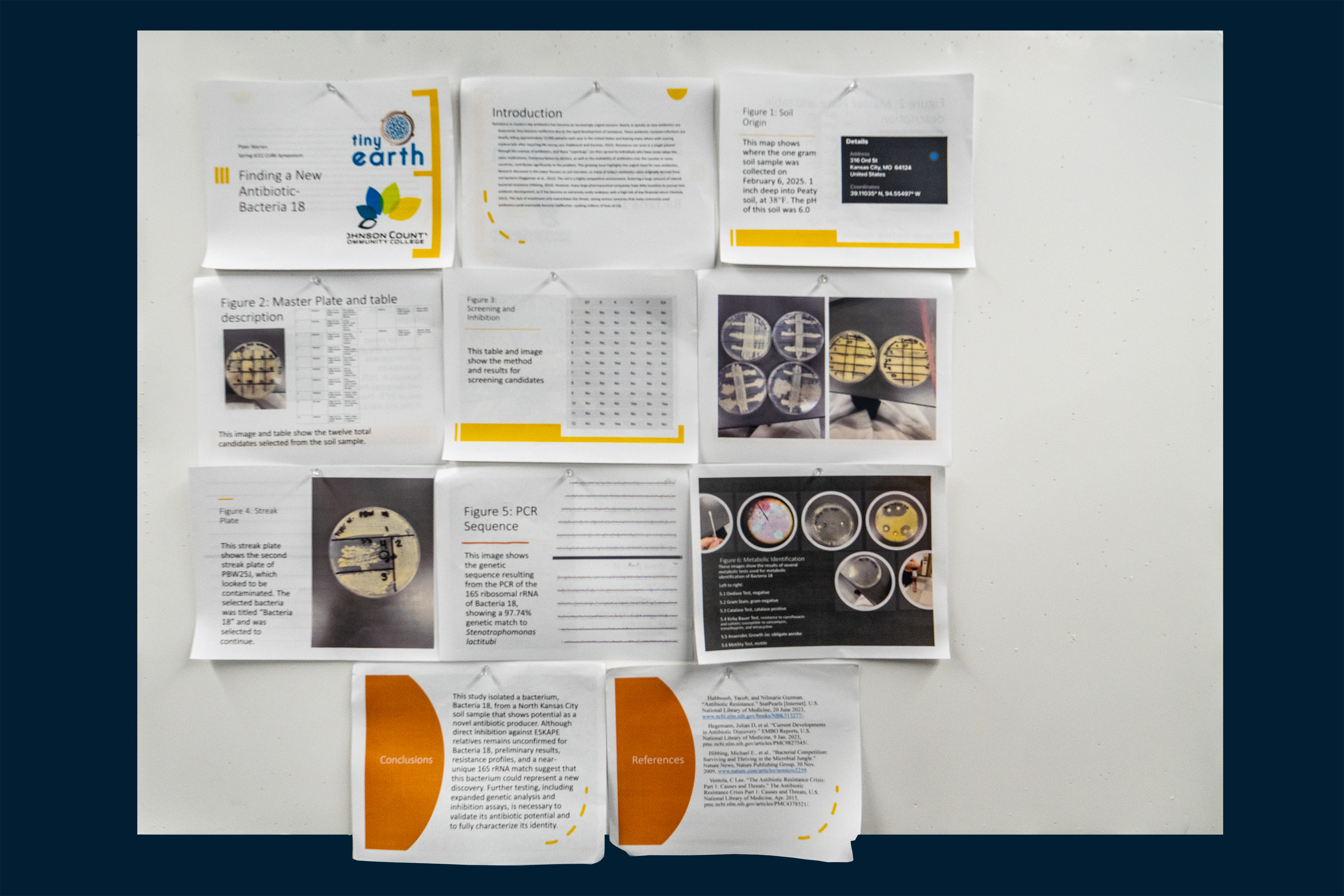
As medicine has become more accessible worldwide, dangerous bacteria have gained as much antibiotic exposure as humans. There has not been a new antibiotic discovery in over 30 years. The ESKAPE pathogens are the most dangerous, highly antibiotic-resistant bacteria. Soil is an extremely competitive environment for microorganisms, thus making the bacteria collected likely to produce antibiotics. Soil collected from northern Kansas City produced twelve potential bacterial candidates. Using safe relatives of the ESKAPE pathogens, these bacteria are screened for the production of antibiotics that successfully inhibit the relatives. If these candidates produce inhibition, they could be key to creating a new antibiotic drug. Candidates PBW25F and PBW25K show inhibition zones against Escherichia coli, a safe relative of Klebsiella pneumonia. No other inhibition zones have been discovered for any candidate against any other ESKAPE relatives.
Image
KCMO Soil- Antibiotics
CoLab, COM 100
As medicine has become more accessible worldwide, dangerous bacteria have gained as much antibiotic exposure as humans. There has not been a new antibiotic discovery in over 30 years. The ESKAPE pathogens are the most dangerous, highly antibiotic-resistant bacteria. Soil is an extremely competitive environment for microorganisms, thus making the bacteria collected likely to produce antibiotics. Soil collected from northern Kansas City produced twelve potential bacterial candidates. Using safe relatives of the ESKAPE pathogens, these bacteria are screened for the production of antibiotics that successfully inhibit the relatives. If these candidates produce inhibition, they could be key to creating a new antibiotic drug. Candidates PBW25F and PBW25K show inhibition zones against Escherichia coli, a safe relative of Klebsiella pneumonia. No other inhibition zones have been discovered for any candidate against any other ESKAPE relatives.
Comments
The faculty mentor for this project was Heather Seitz, Biology.