

Location
CoLab, COM 100
Start Date
1-5-2025 12:15 PM
Document Type
Poster
Description
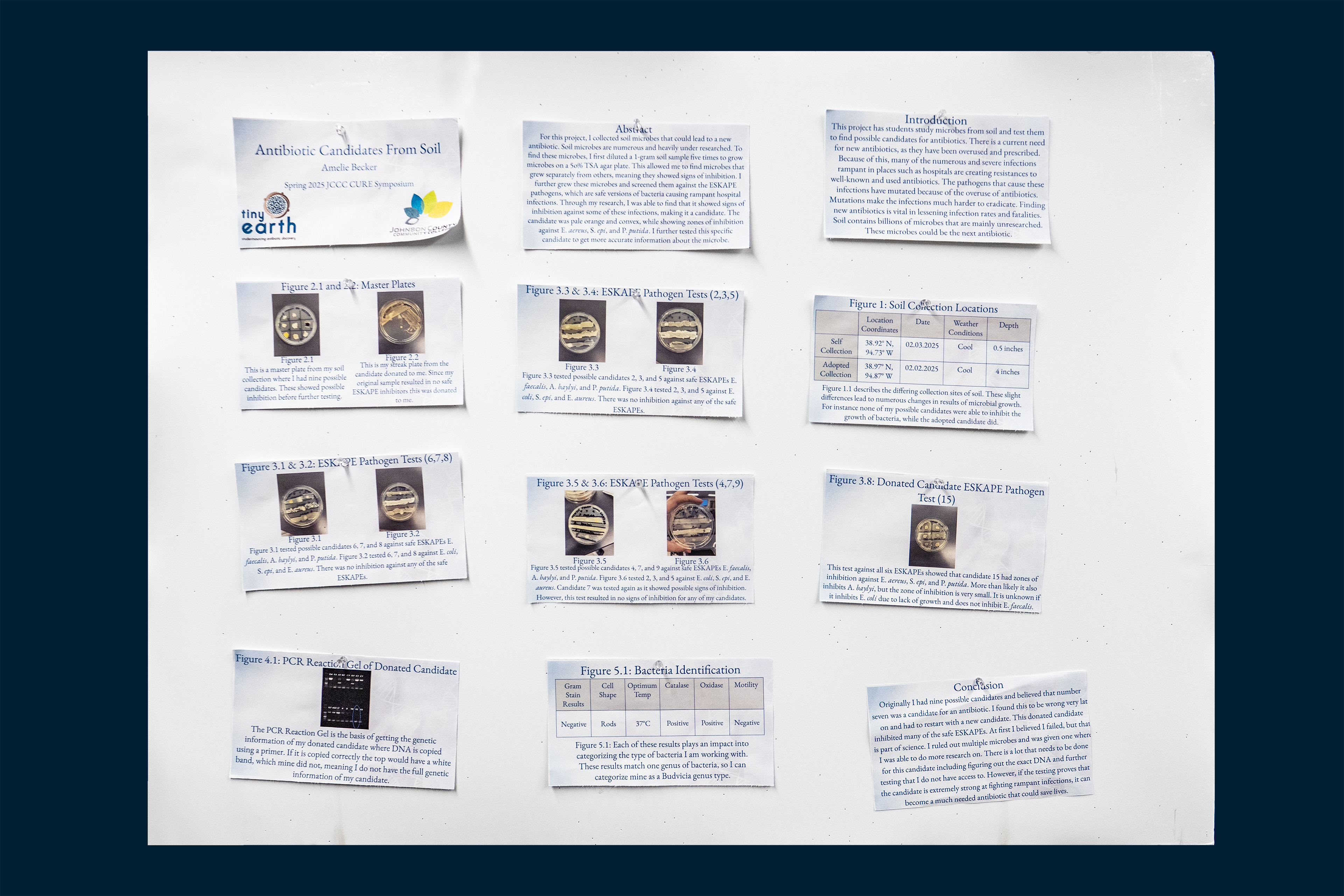
This project takes studying microbes from soil and testing them to find possible candidates for antibiotics. Many students across the nation are currently doing this project. Soil contains billions of microbes and is mainly unresearched. There is a current need for new antibiotics, as antibiotics have been overused and prescribed. Because of this, many of the extremely numerous and severe infections that are rampant in places such as hospitals are creating resistances to well-known and used antibiotics. The pathogens that cause these infections have mutated because of the overuse of antibiotics. That is why finding new antibiotics is vital in keeping infection rates and fatalities due to infections low. Soil contains many of these microbes and is likely to hold new microbes that can create antibiotics. To find these microbes, I first diluted a 1-gram soil sample five times to grow microbes on a 5o% TSA agar plate. This allowed me to find microbes that grew separately from others, meaning they showed signs of inhibition. I further grew these microbes and screened them against the ESKAPE pathogens, which are safe versions of these rampant hospital infection causing microbes. Through my research, I was able to find a candidate that showed signs of inhibition against one of these infections. The candidate was white and convex, while showing slight inhibition against S epi. I furtherer tested this specific candidate to find out whether it could be an antibiotic.
Image
Antibiotic Candidates from Soil
CoLab, COM 100
This project takes studying microbes from soil and testing them to find possible candidates for antibiotics. Many students across the nation are currently doing this project. Soil contains billions of microbes and is mainly unresearched. There is a current need for new antibiotics, as antibiotics have been overused and prescribed. Because of this, many of the extremely numerous and severe infections that are rampant in places such as hospitals are creating resistances to well-known and used antibiotics. The pathogens that cause these infections have mutated because of the overuse of antibiotics. That is why finding new antibiotics is vital in keeping infection rates and fatalities due to infections low. Soil contains many of these microbes and is likely to hold new microbes that can create antibiotics. To find these microbes, I first diluted a 1-gram soil sample five times to grow microbes on a 5o% TSA agar plate. This allowed me to find microbes that grew separately from others, meaning they showed signs of inhibition. I further grew these microbes and screened them against the ESKAPE pathogens, which are safe versions of these rampant hospital infection causing microbes. Through my research, I was able to find a candidate that showed signs of inhibition against one of these infections. The candidate was white and convex, while showing slight inhibition against S epi. I furtherer tested this specific candidate to find out whether it could be an antibiotic.
Comments
The faculty mentor for this project was Eulandria Biddle, Biology.