

Peace in the Petri Dish: A Search for New Antibacterial Activity
Location
CoLab, COM 195
Start Date
30-4-2026 10:45 AM
Document Type
Poster
Description
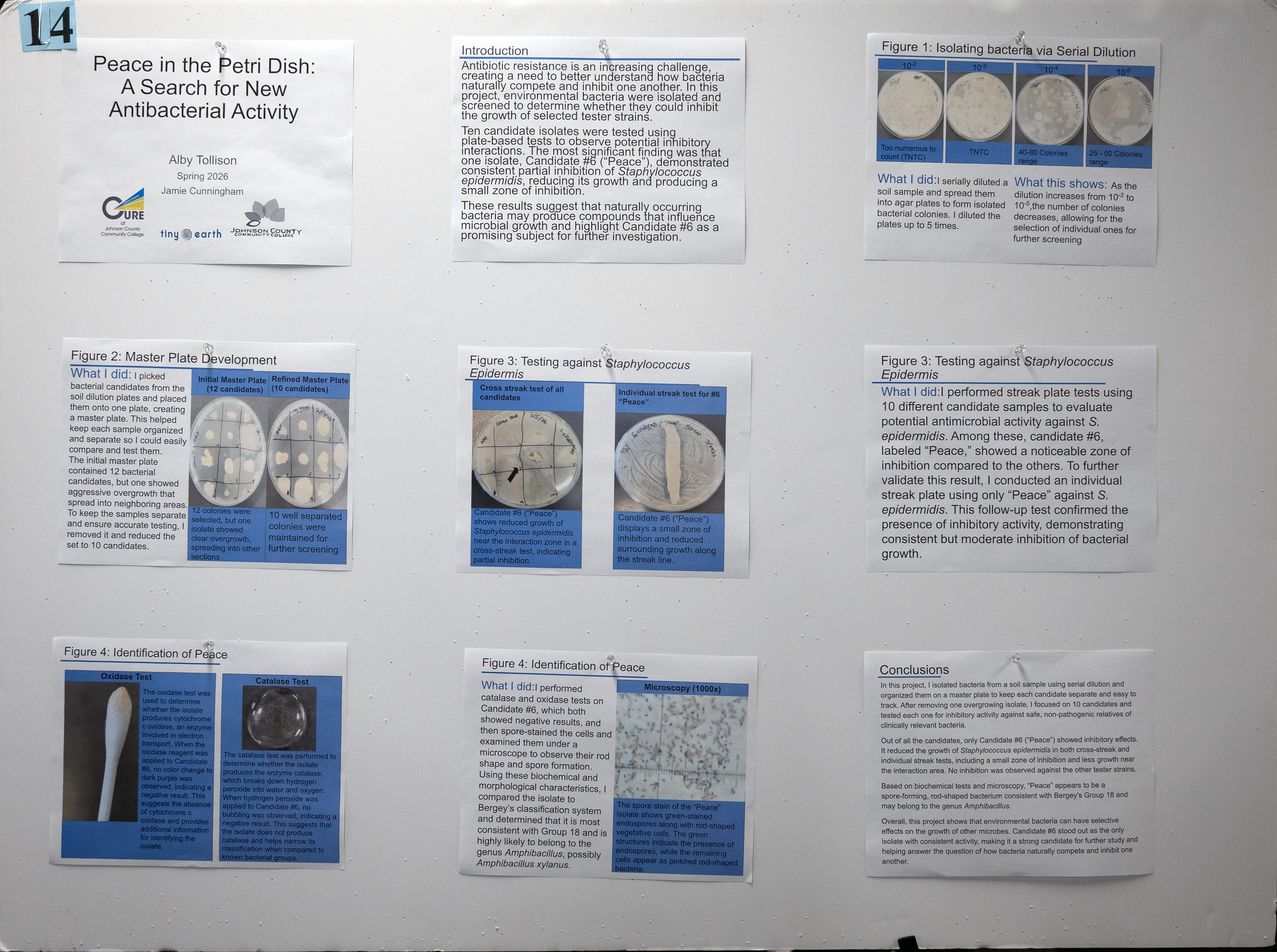
Antibiotic resistance is becoming a major problem in healthcare, making it important to find new ways to slow or stop bacterial growth. In this project, I tested whether naturally occurring bacterial isolates could inhibit the growth of other bacteria linked to hard-to-treat infections. Ten different candidates were screened against several ESKAPE-related organisms to look for any signs of antibacterial activity. Out of all the candidates, only isolate #6 (“Peace”) showed noticeable results. It produced a clear zone of inhibition against Staphylococcus epidermidis, a species closely related to methicillin-resistant Staphylococcus aureus (MRSA), which is becoming increasingly difficult to treat. When tested further using a streak interaction, S. epidermidis showed reduced growth near the isolate, indicating a partial inhibitory effect rather than complete inhibition. None of the other candidates showed any effect against the organisms tested. Overall, these results suggest that while most isolates did not display antimicrobial activity under the conditions used, candidate #6 may be worth further investigation for its potential antibacterial properties.
Image
Peace in the Petri Dish: A Search for New Antibacterial Activity
CoLab, COM 195
Antibiotic resistance is becoming a major problem in healthcare, making it important to find new ways to slow or stop bacterial growth. In this project, I tested whether naturally occurring bacterial isolates could inhibit the growth of other bacteria linked to hard-to-treat infections. Ten different candidates were screened against several ESKAPE-related organisms to look for any signs of antibacterial activity. Out of all the candidates, only isolate #6 (“Peace”) showed noticeable results. It produced a clear zone of inhibition against Staphylococcus epidermidis, a species closely related to methicillin-resistant Staphylococcus aureus (MRSA), which is becoming increasingly difficult to treat. When tested further using a streak interaction, S. epidermidis showed reduced growth near the isolate, indicating a partial inhibitory effect rather than complete inhibition. None of the other candidates showed any effect against the organisms tested. Overall, these results suggest that while most isolates did not display antimicrobial activity under the conditions used, candidate #6 may be worth further investigation for its potential antibacterial properties.
Comments
The faculty mentor for this project was Jamie Cunningham.