

Bacteria in Soil: A Potential Remedy to a Global Health Threat
Location
CoLab, COM 156
Start Date
30-4-2026 9:30 AM
Document Type
Poster
Description
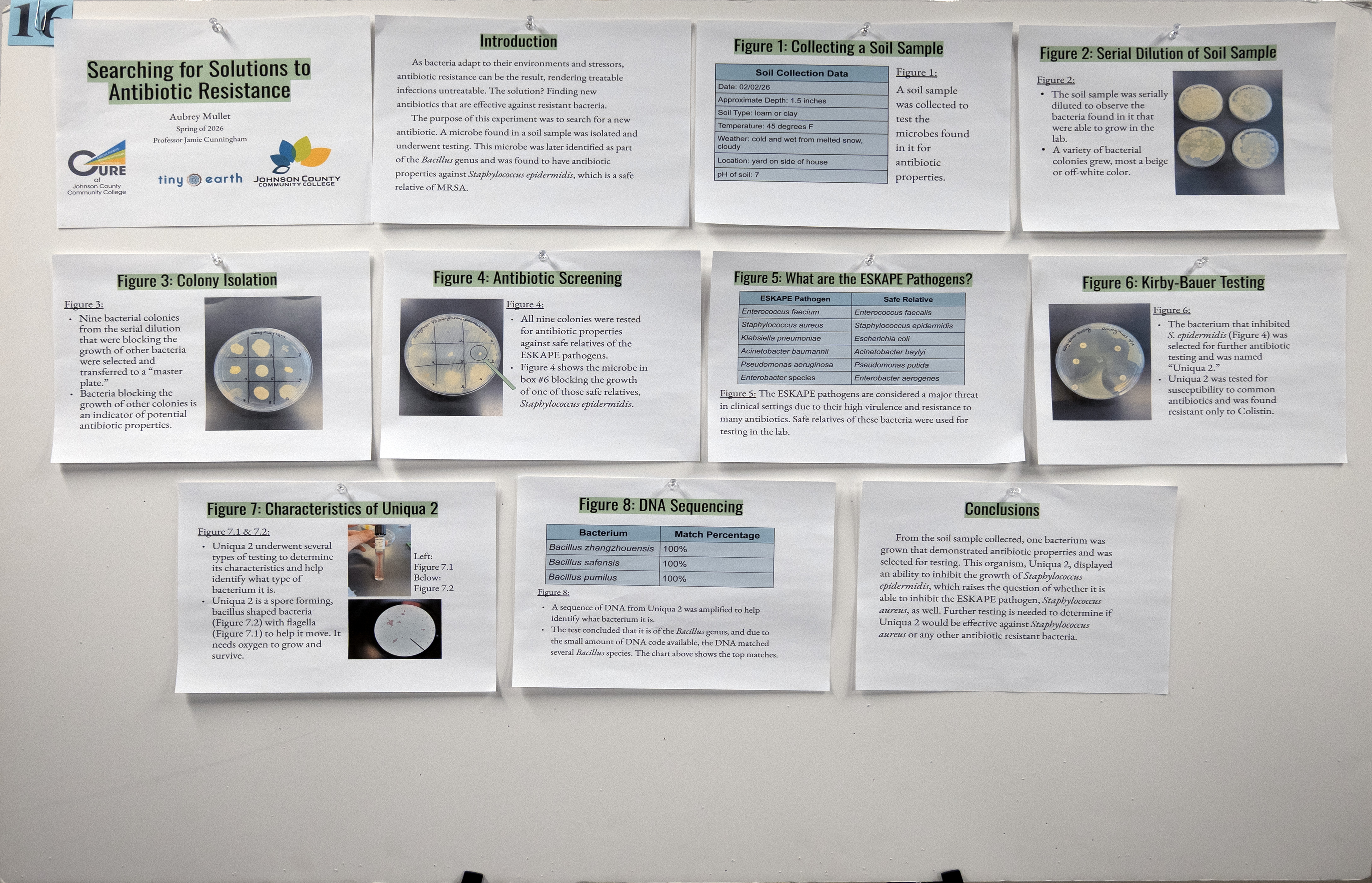
Antibiotic resistance has become a global health threat. As bacteria adapt to their environments and stressors, antibiotic resistance can be the result. When these bacteria develop defenses against antibiotics and are able to resist them, previously treatable infections become untreatable. The pressing solution to this problem is to find new antibiotics that these bacteria have not developed a resistance to, which was the purpose of this experiment. Many current antibiotics are derived from bacteria found in the environment, notably soil. So, a soil sample was collected, and it underwent a serial dilution to isolate and grow the bacterial colonies found in the soil collected. These bacterial colonies were then isolated into pure, separate samples. Each colony was tested for antibiotic properties against safe, noninfectious relatives of the highly infectious, antibiotic resistant ESKAPE pathogens. One microbe isolated from the soil sample was found to have antibiotic properties against one of the safe ESKAPE relatives, Staphylococcus epidermidis.
Image
Bacteria in Soil: A Potential Remedy to a Global Health Threat
CoLab, COM 156
Antibiotic resistance has become a global health threat. As bacteria adapt to their environments and stressors, antibiotic resistance can be the result. When these bacteria develop defenses against antibiotics and are able to resist them, previously treatable infections become untreatable. The pressing solution to this problem is to find new antibiotics that these bacteria have not developed a resistance to, which was the purpose of this experiment. Many current antibiotics are derived from bacteria found in the environment, notably soil. So, a soil sample was collected, and it underwent a serial dilution to isolate and grow the bacterial colonies found in the soil collected. These bacterial colonies were then isolated into pure, separate samples. Each colony was tested for antibiotic properties against safe, noninfectious relatives of the highly infectious, antibiotic resistant ESKAPE pathogens. One microbe isolated from the soil sample was found to have antibiotic properties against one of the safe ESKAPE relatives, Staphylococcus epidermidis.
Comments
The faculty mentor for this project was Jamie Cunningham.