

When Life Gives You Mud
Location
CoLab, COM 155
Start Date
30-4-2026 9:30 AM
Document Type
Poster
Description
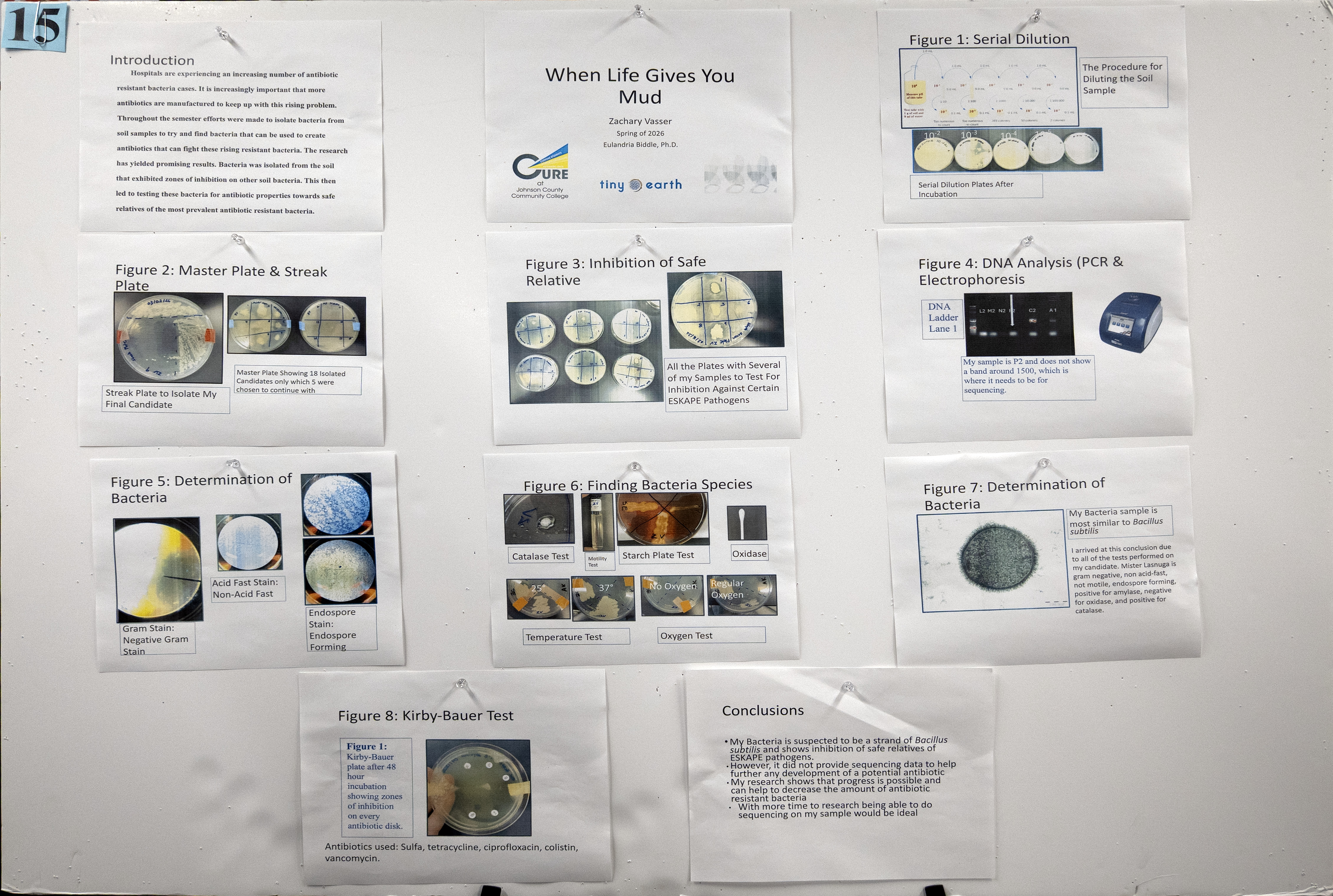
Hospitals are experiencing an increasing number of antibiotic resistant bacteria cases. With these cases becoming more prevalent it is increasingly important that more antibiotics are manufactured to keep up with this rising problem. Throughout the semester efforts are being made to isolate bacteria from soil samples to try and find bacteria that can be used to create antibiotics that can fight these rising resistant bacteria. So far the research has yielded promising results. We isolated bacteria from the soil that exhibited zones of inhibition on other soil bacteria. This then led to testing these bacteria for antibiotic properties towards safe relatives of the most prevalent antibiotic resistant bacteria. My sample has shown zones of inhibition on two of the six safe relatives. Tests are going to be conducted on this sample to discover its structure and what type of bacteria it is. This will finally led to testing that will show if it is a feasible candidate for future antibiotics.
Image
When Life Gives You Mud
CoLab, COM 155
Hospitals are experiencing an increasing number of antibiotic resistant bacteria cases. With these cases becoming more prevalent it is increasingly important that more antibiotics are manufactured to keep up with this rising problem. Throughout the semester efforts are being made to isolate bacteria from soil samples to try and find bacteria that can be used to create antibiotics that can fight these rising resistant bacteria. So far the research has yielded promising results. We isolated bacteria from the soil that exhibited zones of inhibition on other soil bacteria. This then led to testing these bacteria for antibiotic properties towards safe relatives of the most prevalent antibiotic resistant bacteria. My sample has shown zones of inhibition on two of the six safe relatives. Tests are going to be conducted on this sample to discover its structure and what type of bacteria it is. This will finally led to testing that will show if it is a feasible candidate for future antibiotics.
Comments
The faculty mentor for this project was Eulandria Biddle.