

Dig Deeper: Continuing the Hunt for Antimicrobials in Soil
Location
CoLab, COM 149
Start Date
30-4-2026 9:30 AM
Document Type
Poster
Description
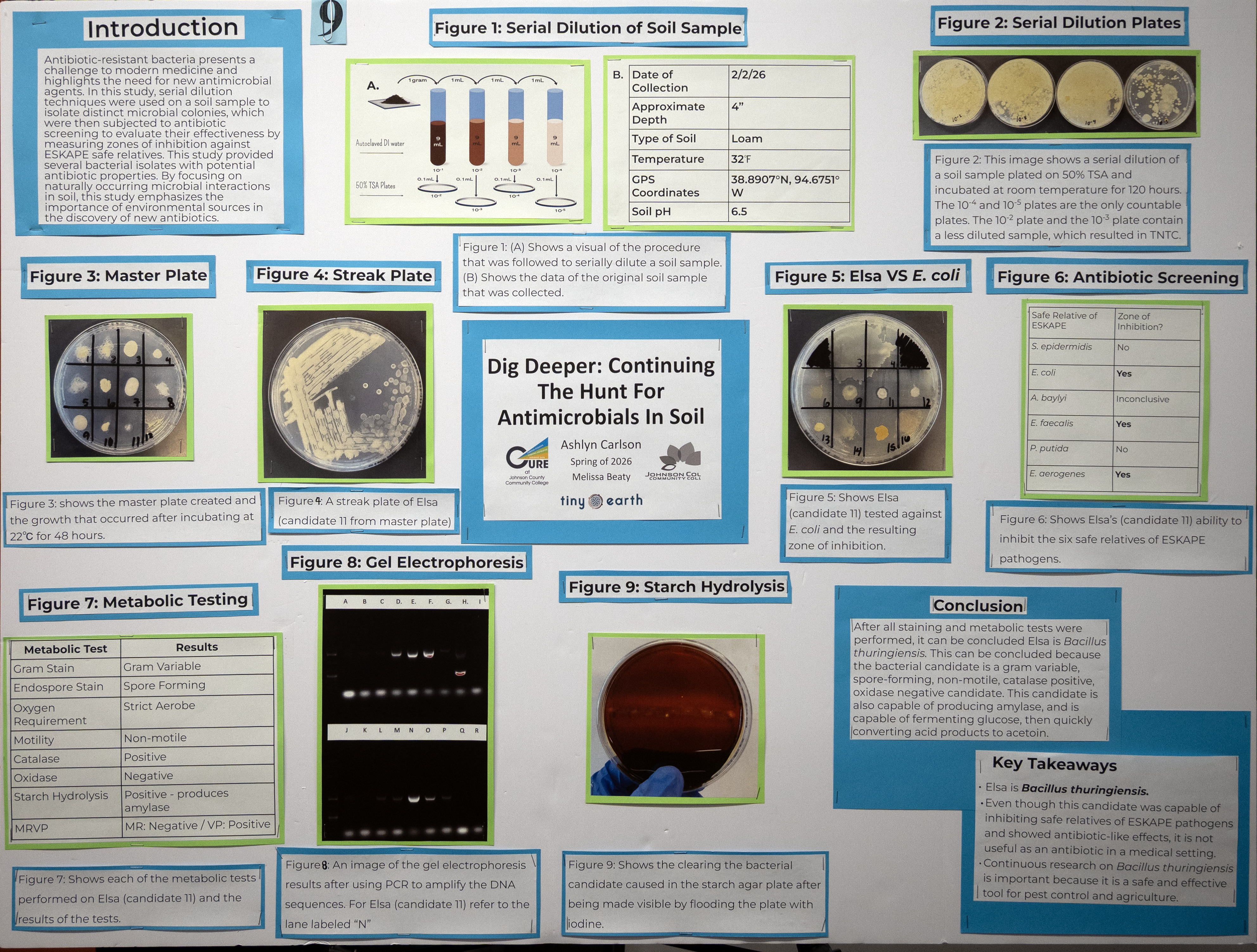
The increasing prevalence of antibiotic-resistant bacteria presents a major challenge to modern medicine and highlights the need for new antimicrobial agents. This study explores the use of soil samples to isolate microorganisms capable of producing antimicrobial substances. Soil-derived microbes were cultured and screened for their ability to inhibit the growth of several bacterial strains. Serial dilution techniques were used to isolate distinct microbial colonies, which were then subjected to antibiotic screening to evaluate their effectiveness by measuring zones of inhibition against ESKAPE safe relatives. This study provided several bacterial isolates with potential antibiotic properties, including strains that were effective in inhibiting Enterococcus faecalis and Escherichia coli. By focusing on naturally occurring microbial interactions in soil, this study emphasizes the importance of environmental sources in the discovery of new antibiotics.
Image
Dig Deeper: Continuing the Hunt for Antimicrobials in Soil
CoLab, COM 149
The increasing prevalence of antibiotic-resistant bacteria presents a major challenge to modern medicine and highlights the need for new antimicrobial agents. This study explores the use of soil samples to isolate microorganisms capable of producing antimicrobial substances. Soil-derived microbes were cultured and screened for their ability to inhibit the growth of several bacterial strains. Serial dilution techniques were used to isolate distinct microbial colonies, which were then subjected to antibiotic screening to evaluate their effectiveness by measuring zones of inhibition against ESKAPE safe relatives. This study provided several bacterial isolates with potential antibiotic properties, including strains that were effective in inhibiting Enterococcus faecalis and Escherichia coli. By focusing on naturally occurring microbial interactions in soil, this study emphasizes the importance of environmental sources in the discovery of new antibiotics.
Comments
The faculty mentor for this project was Melissa Beaty.