

The Secret Life of Soil Bacteria
Location
CoLab, COM 424
Start Date
30-4-2026 6:45 PM
Document Type
Poster
Description
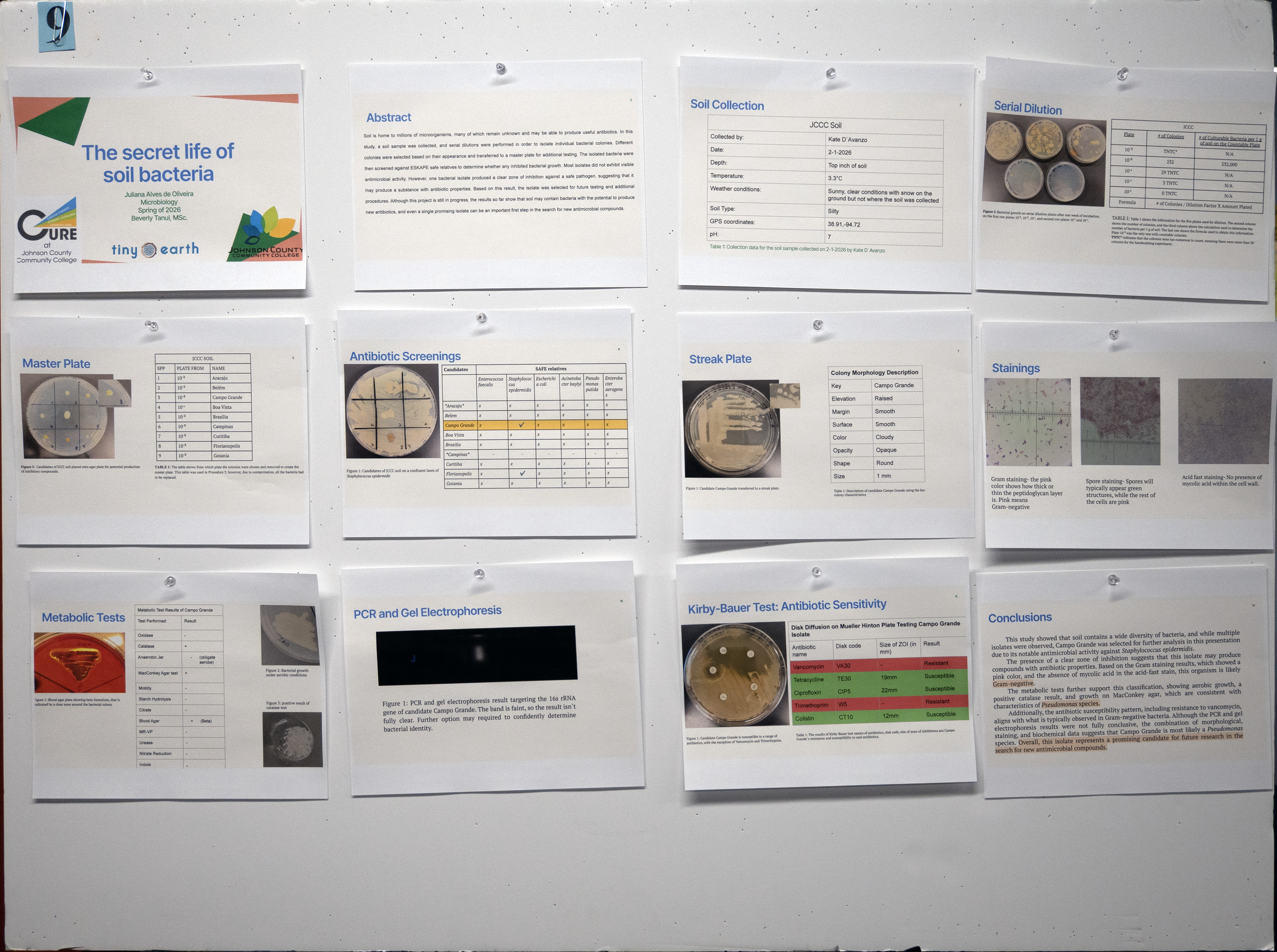
Soil is home to millions of microorganisms, many of which remain unknown and may be able to produce useful antibiotics. In this study, a soil sample was collected, and serial dilutions were performed in order to isolate individual bacterial colonies. Different colonies were selected based on their appearance and transferred to a master plate for additional testing. The isolated bacteria were then screened against ESKAPE safe relatives to determine whether any inhibited bacterial growth. Most isolates did not exhibit visible antimicrobial activity. However, one bacterial isolate produced a clear zone of inhibition against a safe pathogen, suggesting that it may produce a substance with antibiotic properties. Based on this result, the isolate was selected for future testing and additional procedures. Although this project is still in progress, the results so far show that soil may contain bacteria with the potential to produce new antibiotics, and even a single promising isolate can be an important first step in the search for new antimicrobial compounds.
Image
The Secret Life of Soil Bacteria
CoLab, COM 424
Soil is home to millions of microorganisms, many of which remain unknown and may be able to produce useful antibiotics. In this study, a soil sample was collected, and serial dilutions were performed in order to isolate individual bacterial colonies. Different colonies were selected based on their appearance and transferred to a master plate for additional testing. The isolated bacteria were then screened against ESKAPE safe relatives to determine whether any inhibited bacterial growth. Most isolates did not exhibit visible antimicrobial activity. However, one bacterial isolate produced a clear zone of inhibition against a safe pathogen, suggesting that it may produce a substance with antibiotic properties. Based on this result, the isolate was selected for future testing and additional procedures. Although this project is still in progress, the results so far show that soil may contain bacteria with the potential to produce new antibiotics, and even a single promising isolate can be an important first step in the search for new antimicrobial compounds.
Comments
The faculty mentor for this project was Beverly Tanui.