

A Promising Antibiotic Discovery Cut Short by Contamination
Location
CoLab, COM 422
Start Date
30-4-2026 6:45 PM
Document Type
Poster
Description
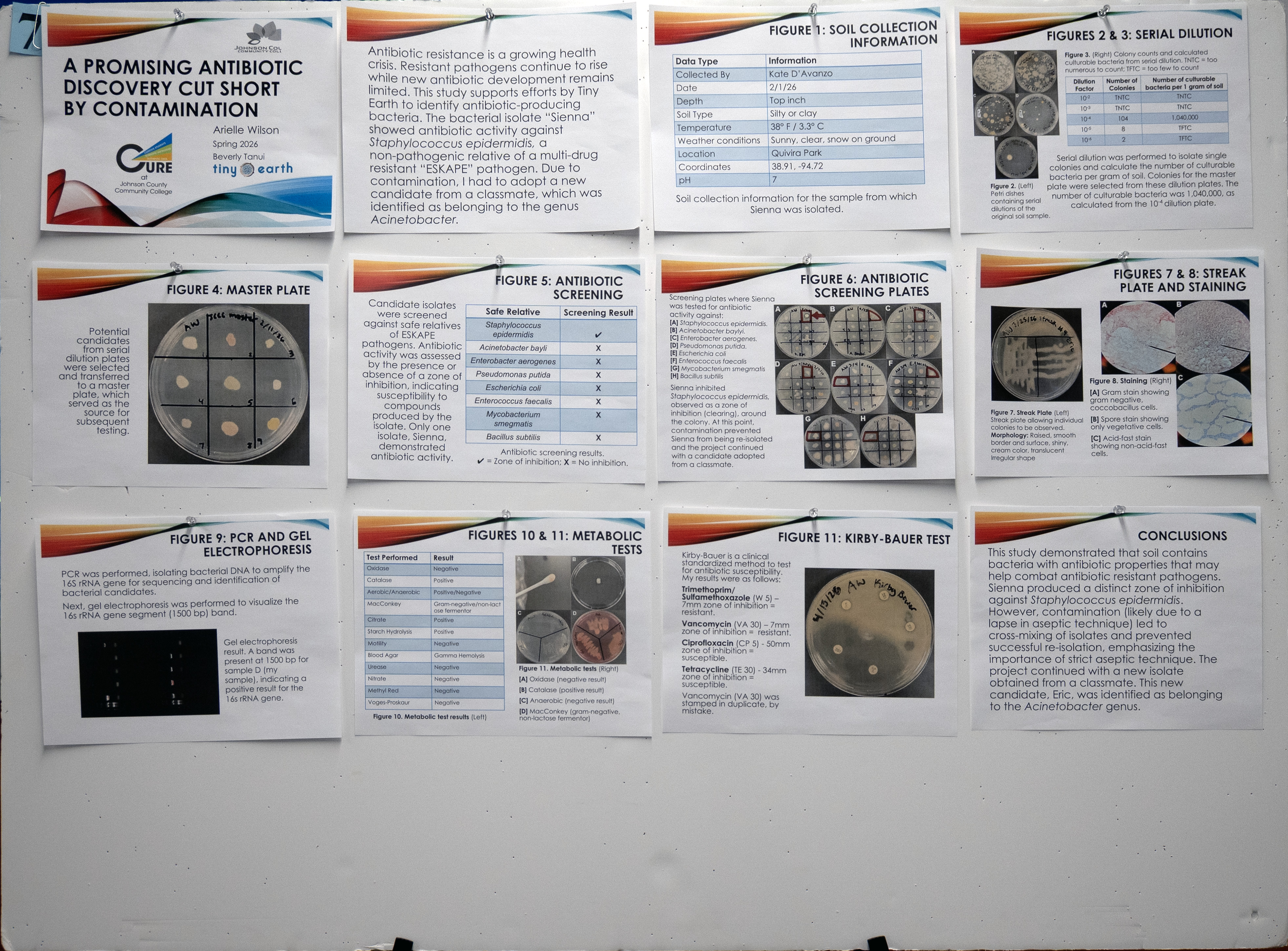
The healthcare community faces a growing crisis as antibiotic-resistant pathogens continue to increase while new antibiotic development remains limited. This has led to more harmful bacteria becoming resistant to common treatments, especially among the ESKAPE pathogens, which are resistant to multiple classes of antibiotics. Research to discover new antibiotics for these strains is expensive and often unprofitable, causing many pharmaceutical organizations to move away from this field. As a result, groups like Tiny Earth aim to fill this gap by bringing students together to discover novel antibiotic-producing bacteria. This research contributes to that effort. The bacterial isolate identified, “Sienna”, showed antibiotic activity against Staphylococcus epidermidis, a non-pathogenic relative of Staphylococcus aureus, one of the ESKAPE pathogens. A clear zone of inhibition was observed, suggesting potential for further research; however, due to cross-contamination from another colony, the project could not be completed.
Image
A Promising Antibiotic Discovery Cut Short by Contamination
CoLab, COM 422
The healthcare community faces a growing crisis as antibiotic-resistant pathogens continue to increase while new antibiotic development remains limited. This has led to more harmful bacteria becoming resistant to common treatments, especially among the ESKAPE pathogens, which are resistant to multiple classes of antibiotics. Research to discover new antibiotics for these strains is expensive and often unprofitable, causing many pharmaceutical organizations to move away from this field. As a result, groups like Tiny Earth aim to fill this gap by bringing students together to discover novel antibiotic-producing bacteria. This research contributes to that effort. The bacterial isolate identified, “Sienna”, showed antibiotic activity against Staphylococcus epidermidis, a non-pathogenic relative of Staphylococcus aureus, one of the ESKAPE pathogens. A clear zone of inhibition was observed, suggesting potential for further research; however, due to cross-contamination from another colony, the project could not be completed.
Comments
The faculty mentor for this project was Beverly Tanui.