

Effectiveness of the JCCC Storm Water Basin and the Filtration System
Location
CoLab, COM 132
Start Date
30-4-2026 8:15 AM
Document Type
Poster
Description
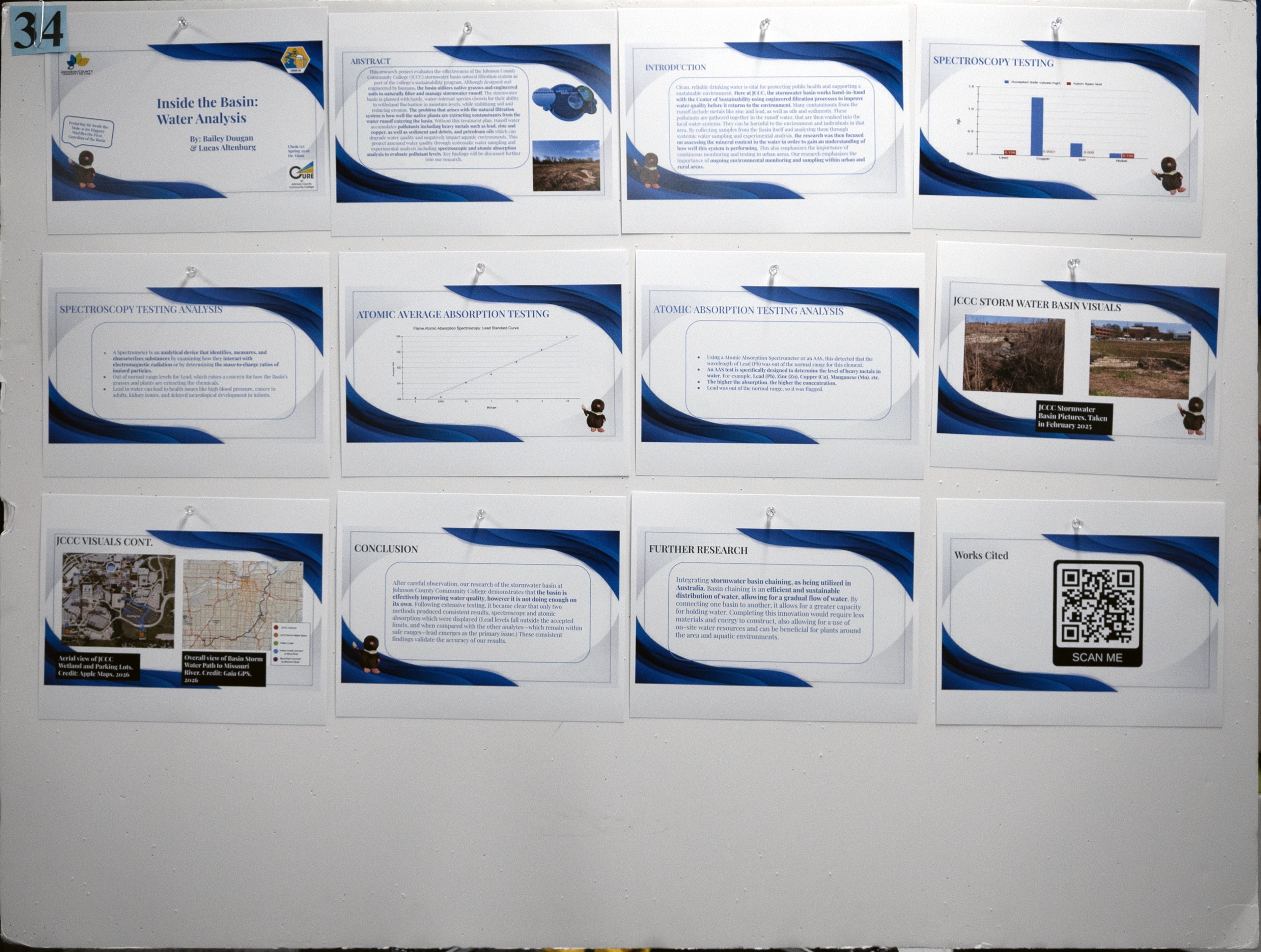
This research project evaluates the effectiveness of the Johnson County Community College (JCCC) stormwater basin’s natural filtration system as part of the college’s sustainability program. Although designed and engineered by people, the basin utilizes native grasses and engineered soils to naturally filter and manage stormwater runoff. The stormwater basin is planted with hardy, water-tolerant species chosen for their ability to withstand fluctuating moisture levels, while stabilizing soil and reducing erosion. Together, these plants play a key role in slowing runoff and supporting effective water filtration. The problem that arises with the natural filtration system includes how well the natural plants are extracting chemicals from the water runoff entering the basin, and if those plants are still thriving in the basin. Without this treatment plan, runoff water accumulates pollutants, including petroleum oils, heavy metals (such as lead, zinc, and copper), sediment, and debris, which can degrade water quality and negatively impact aquatic sources. The project assessed water quality through systematic water sampling and experimental analyses, including measurements of pH, spectroscopic analysis, and titration-based testing to evaluate pollutant levels. Key findings will be discussed further. This project evaluates the effectiveness of engineered soils in the JCCC stormwater basin at reducing pollutant concentrations in runoff as water moves through the natural filtration system.
Image
Effectiveness of the JCCC Storm Water Basin and the Filtration System
CoLab, COM 132
This research project evaluates the effectiveness of the Johnson County Community College (JCCC) stormwater basin’s natural filtration system as part of the college’s sustainability program. Although designed and engineered by people, the basin utilizes native grasses and engineered soils to naturally filter and manage stormwater runoff. The stormwater basin is planted with hardy, water-tolerant species chosen for their ability to withstand fluctuating moisture levels, while stabilizing soil and reducing erosion. Together, these plants play a key role in slowing runoff and supporting effective water filtration. The problem that arises with the natural filtration system includes how well the natural plants are extracting chemicals from the water runoff entering the basin, and if those plants are still thriving in the basin. Without this treatment plan, runoff water accumulates pollutants, including petroleum oils, heavy metals (such as lead, zinc, and copper), sediment, and debris, which can degrade water quality and negatively impact aquatic sources. The project assessed water quality through systematic water sampling and experimental analyses, including measurements of pH, spectroscopic analysis, and titration-based testing to evaluate pollutant levels. Key findings will be discussed further. This project evaluates the effectiveness of engineered soils in the JCCC stormwater basin at reducing pollutant concentrations in runoff as water moves through the natural filtration system.
Comments
The faculty mentor for this project was Amanda Glass.