

CURE Water Project
Location
CoLab, COM 401
Start Date
30-4-2026 5:30 PM
Document Type
Poster
Description
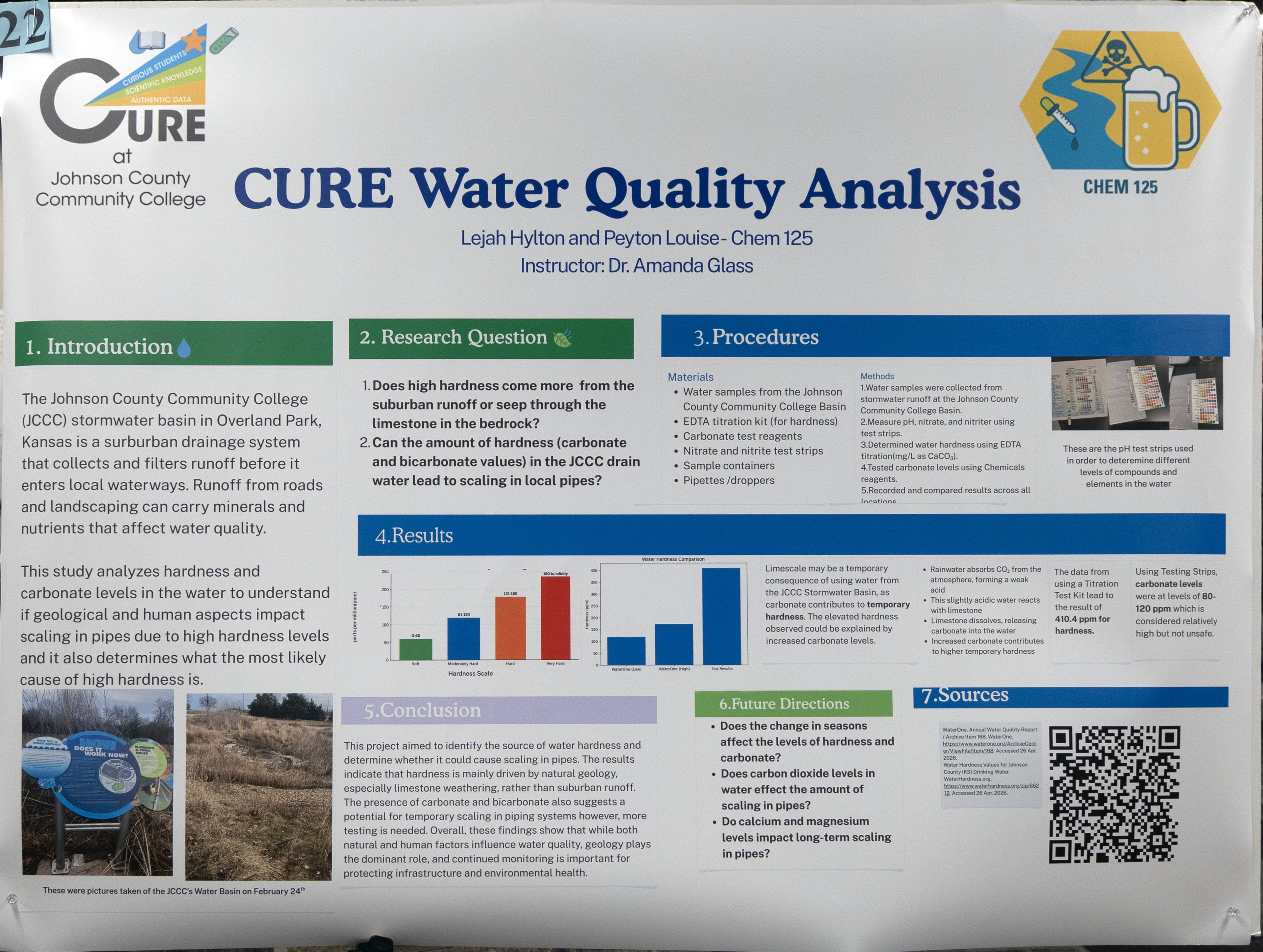
JCCC’s Stormwater Basin was designed in 2009 and was created to emulate a natural drain system that is cohesive with the surrounding ecosystem. This system uses engineered soils and plantings to help filtrate water into the basin. However there are many geological systems and urban impacts, such as runoff and using salts, that can affect different components of the water that is produced from the system. To find out what is in the water, a Water Quality Report was done to analyze the different components of water and how the environmental aspects, such as previously stated, impact the quality and composition of the water tested. The water tested was collected from rain water that was filtered through the basin. To test for quality, many techniques were used such as Water Test Strips, Test Kits, and Spectroscopy. A finding from this test was that water hardness has a range of 50 - 410.4 ppm, which is considered high. Hardness is defined as the concentration of calcium and magnesium. However temporary hardness can be a result of carbonate and bicarbonate. The carbonate values for the water are 80-120 mg/L, which is considered relatively high but not over the level of safety. This could have originated from the local bedrock and limestone, which are rich in carbonate, seeping up into the water and creating a high total hardness. High hardness can affect scaling on pipes and the effectiveness of detergents. It can also increase energy consumption and CO2 emissions by also causing limescale on water heaters and boilers, making them use 30% more energy, and thus less environmentally efficient. This shows why a Water Quality report is important, because it gives the public data into what specifically they are using when it comes to water. This report will show how hardness affects both environmental and human use and suggest why this is the cause.
Image
CURE Water Project
CoLab, COM 401
JCCC’s Stormwater Basin was designed in 2009 and was created to emulate a natural drain system that is cohesive with the surrounding ecosystem. This system uses engineered soils and plantings to help filtrate water into the basin. However there are many geological systems and urban impacts, such as runoff and using salts, that can affect different components of the water that is produced from the system. To find out what is in the water, a Water Quality Report was done to analyze the different components of water and how the environmental aspects, such as previously stated, impact the quality and composition of the water tested. The water tested was collected from rain water that was filtered through the basin. To test for quality, many techniques were used such as Water Test Strips, Test Kits, and Spectroscopy. A finding from this test was that water hardness has a range of 50 - 410.4 ppm, which is considered high. Hardness is defined as the concentration of calcium and magnesium. However temporary hardness can be a result of carbonate and bicarbonate. The carbonate values for the water are 80-120 mg/L, which is considered relatively high but not over the level of safety. This could have originated from the local bedrock and limestone, which are rich in carbonate, seeping up into the water and creating a high total hardness. High hardness can affect scaling on pipes and the effectiveness of detergents. It can also increase energy consumption and CO2 emissions by also causing limescale on water heaters and boilers, making them use 30% more energy, and thus less environmentally efficient. This shows why a Water Quality report is important, because it gives the public data into what specifically they are using when it comes to water. This report will show how hardness affects both environmental and human use and suggest why this is the cause.
Comments
The faculty mentor for this project was Amanda Glass.