

Screening Soil Bacteria for Antibiotic Activity
Location
CoLab, COM 393
Start Date
30-4-2026 5:30 PM
Document Type
Poster
Description
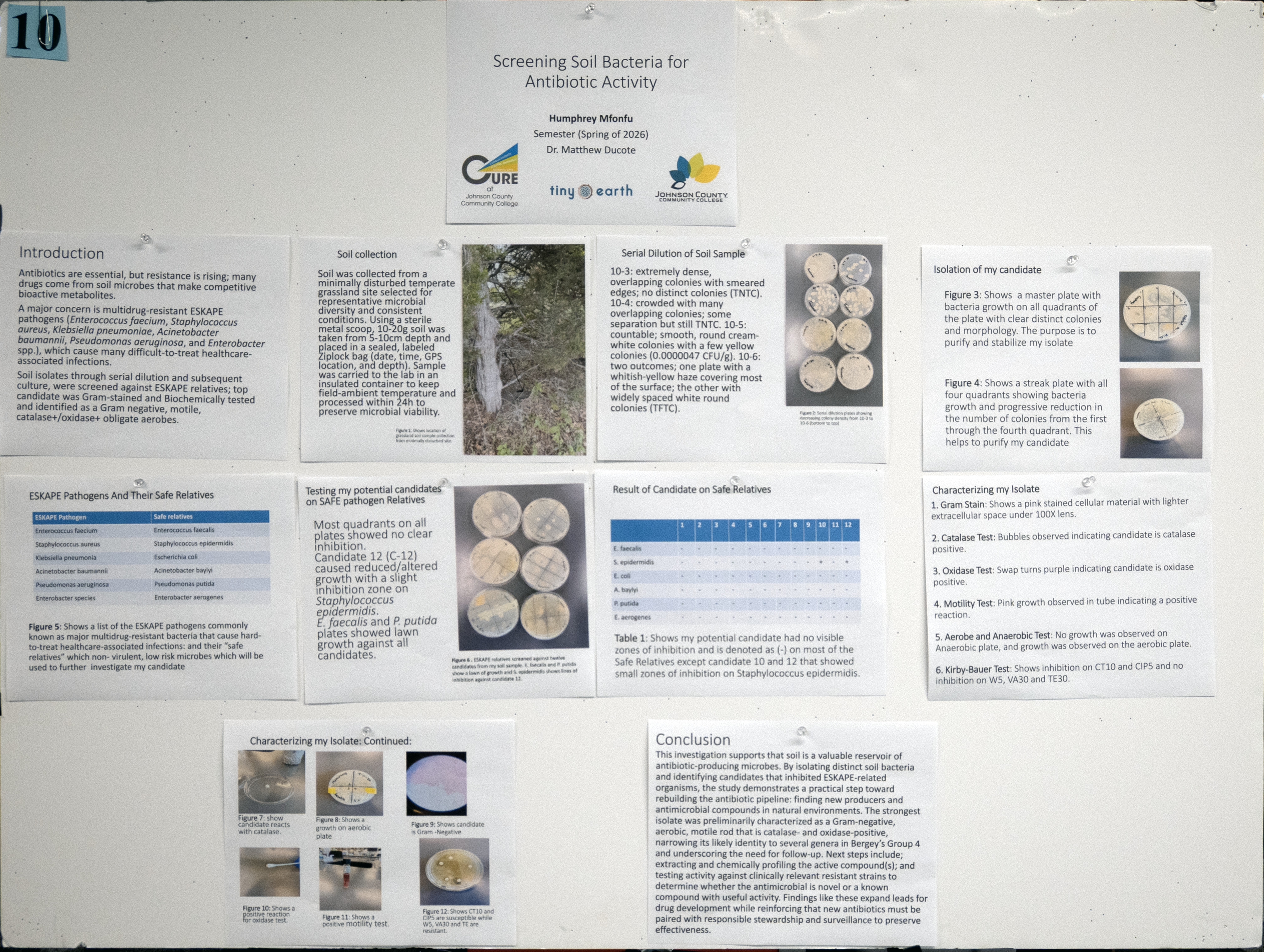
The rapid increase of antibiotic resistance has become a critical global health challenge, prompting an urgent need to discover new and more effective antimicrobial organisms. Most clinically important antibiotics originate from the soil microorganisms and as such, the soil remains one of the most promising and diverse reservoirs for identifying new antibiotic-producing bacteria. This study investigates the microbial composition of a selected soil sample with the goal of isolating bacteria capable of producing antibiotics. Serial dilution and culture-based isolation techniques were used to obtain distinct bacteria colonies, which were subsequently screened against the ESKAPE relatives for antibiotic activities. Candidate which exhibited the best inhibition were further examined through Gram staining and were observed to be Gram negative, pink, rod-shaped bacteria commonly classified within the Pseudomonas, specifically under the family of Enterobacter. PCR testing and further genetic examination would provide genetic information which will reveal the identity and potential antimicrobial characteristics of the candidate. This research not only highlights the global crisis of antibiotic resistance, but it also underscores the soil’s potential as a rich source of novel antibiotic-producing species and contributes to the ongoing effort to address antibiotic resistance by expanding the pool of microorganisms that may produce future therapeutic compounds.
Image
Screening Soil Bacteria for Antibiotic Activity
CoLab, COM 393
The rapid increase of antibiotic resistance has become a critical global health challenge, prompting an urgent need to discover new and more effective antimicrobial organisms. Most clinically important antibiotics originate from the soil microorganisms and as such, the soil remains one of the most promising and diverse reservoirs for identifying new antibiotic-producing bacteria. This study investigates the microbial composition of a selected soil sample with the goal of isolating bacteria capable of producing antibiotics. Serial dilution and culture-based isolation techniques were used to obtain distinct bacteria colonies, which were subsequently screened against the ESKAPE relatives for antibiotic activities. Candidate which exhibited the best inhibition were further examined through Gram staining and were observed to be Gram negative, pink, rod-shaped bacteria commonly classified within the Pseudomonas, specifically under the family of Enterobacter. PCR testing and further genetic examination would provide genetic information which will reveal the identity and potential antimicrobial characteristics of the candidate. This research not only highlights the global crisis of antibiotic resistance, but it also underscores the soil’s potential as a rich source of novel antibiotic-producing species and contributes to the ongoing effort to address antibiotic resistance by expanding the pool of microorganisms that may produce future therapeutic compounds.
Comments
The faculty mentor for this project was Matt Ducote.