

Isolation and Screening of Soil Bacteria for Antimicrobial Activity
Location
CoLab, COM 387
Start Date
30-4-2026 5:30 PM
Document Type
Poster
Description
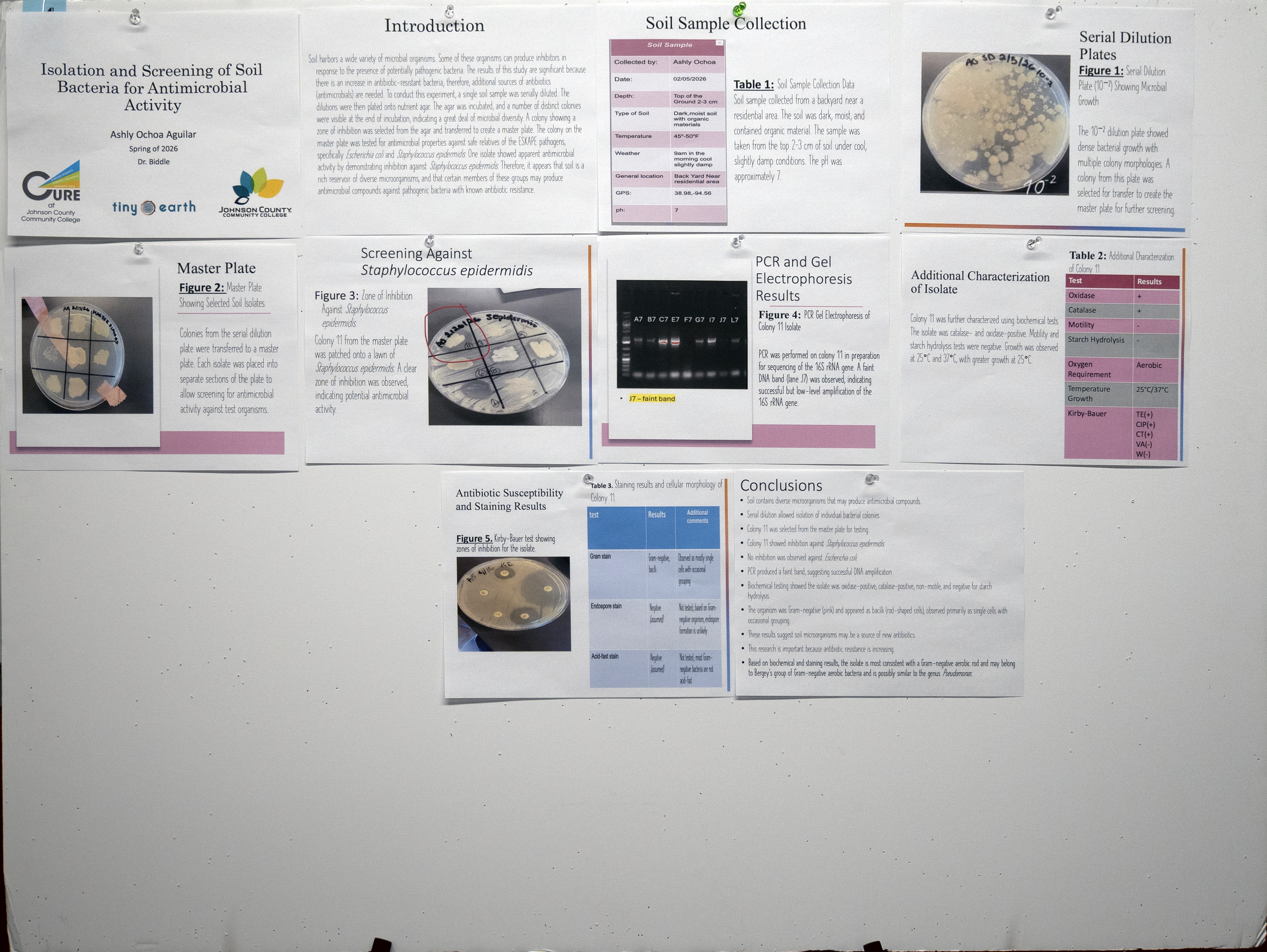
Soil harbors a wide variety of microbial organisms. Some of these organisms can produce inhibitors in response to the presence of potentially pathogenic bacteria. The results of this study are significant because there is an increase in antibiotic-resistant bacteria; therefore, additional sources of antibiotics (antimicrobials) are needed. To conduct this experiment, a single soil sample was serially diluted. The dilutions were then plated onto nutrient agar. The agar was incubated, and a number of distinct colonies were visible at the end of incubation, indicating a great deal of microbial diversity. A colony showing a zone of inhibition was selected from the agar and transferred to create a master plate. The colony on the master plate was tested for antimicrobial properties against safe relatives of the ESKAPE pathogens, specifically Escherichia coli and Staphylococcus epidermidis. One isolate showed apparent antimicrobial activity by demonstrating inhibition against Staphylococcus epidermidis. Therefore, it appears that soil is a rich reservoir of diverse microorganisms, and that certain members of these groups may produce antimicrobial compounds against pathogenic bacteria with known antibiotic resistance.
Image
Isolation and Screening of Soil Bacteria for Antimicrobial Activity
CoLab, COM 387
Soil harbors a wide variety of microbial organisms. Some of these organisms can produce inhibitors in response to the presence of potentially pathogenic bacteria. The results of this study are significant because there is an increase in antibiotic-resistant bacteria; therefore, additional sources of antibiotics (antimicrobials) are needed. To conduct this experiment, a single soil sample was serially diluted. The dilutions were then plated onto nutrient agar. The agar was incubated, and a number of distinct colonies were visible at the end of incubation, indicating a great deal of microbial diversity. A colony showing a zone of inhibition was selected from the agar and transferred to create a master plate. The colony on the master plate was tested for antimicrobial properties against safe relatives of the ESKAPE pathogens, specifically Escherichia coli and Staphylococcus epidermidis. One isolate showed apparent antimicrobial activity by demonstrating inhibition against Staphylococcus epidermidis. Therefore, it appears that soil is a rich reservoir of diverse microorganisms, and that certain members of these groups may produce antimicrobial compounds against pathogenic bacteria with known antibiotic resistance.
Comments
The faculty mentor for this project was Eulandria Biddle.