

Plastic Degrading Algae
Location
CoLab, COM 354
Start Date
30-4-2026 3:45 PM
Document Type
Poster
Description
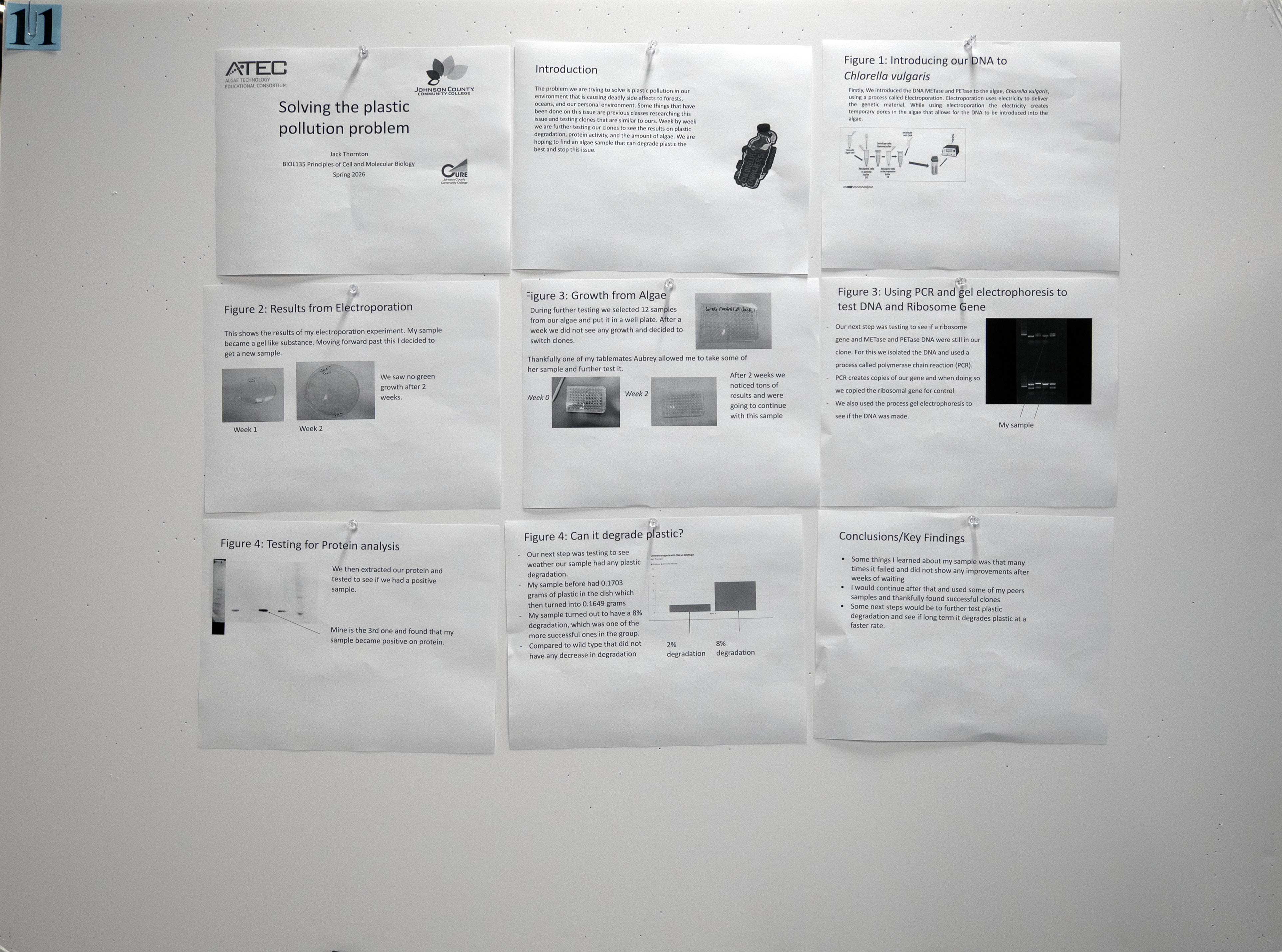
Plastic pollution creates a big footprint in our environments like forests, oceans, and our personal environment. Because of this deadly problem we are researching solutions to stop this issue. Using algae with DNA METase and PETase we are creating and testing our samples and finding new results every week. Every week we try and analyze and shorten are sample sizes by testing weather or not these samples are affective or not. When introducing the DNA to the clone we found that our first sample had unfortunately dried up when allowing for our sample to grow and we had to restart. However we were able to use a helpful classmates clones who had lots of algae growth. We transferred some of the clones from the agar plate into a new 96 well plate and found that the 96 well plate over a couple of weeks had lots of samples for us to test further. After a couple of weeks of screening and testing plastic degradation, I was able to help my classmates by sharing my growth in testing to see if our clones became positive. Unfortunately only 2 out of the 4 clones were positive DNA. I will be looking to see if these positive clones had any protein expression and enzyme activity. I believe my research can help future students and myself to fully understand what it takes to degrade plastic.
Image
Plastic Degrading Algae
CoLab, COM 354
Plastic pollution creates a big footprint in our environments like forests, oceans, and our personal environment. Because of this deadly problem we are researching solutions to stop this issue. Using algae with DNA METase and PETase we are creating and testing our samples and finding new results every week. Every week we try and analyze and shorten are sample sizes by testing weather or not these samples are affective or not. When introducing the DNA to the clone we found that our first sample had unfortunately dried up when allowing for our sample to grow and we had to restart. However we were able to use a helpful classmates clones who had lots of algae growth. We transferred some of the clones from the agar plate into a new 96 well plate and found that the 96 well plate over a couple of weeks had lots of samples for us to test further. After a couple of weeks of screening and testing plastic degradation, I was able to help my classmates by sharing my growth in testing to see if our clones became positive. Unfortunately only 2 out of the 4 clones were positive DNA. I will be looking to see if these positive clones had any protein expression and enzyme activity. I believe my research can help future students and myself to fully understand what it takes to degrade plastic.
Comments
The faculty mentor for this project was Heather Seitz.