

Plastic-degradation Properties of Genetically Modified Algae
Location
CoLab, COM 311
Start Date
30-4-2026 2:30 PM
Document Type
Poster
Description
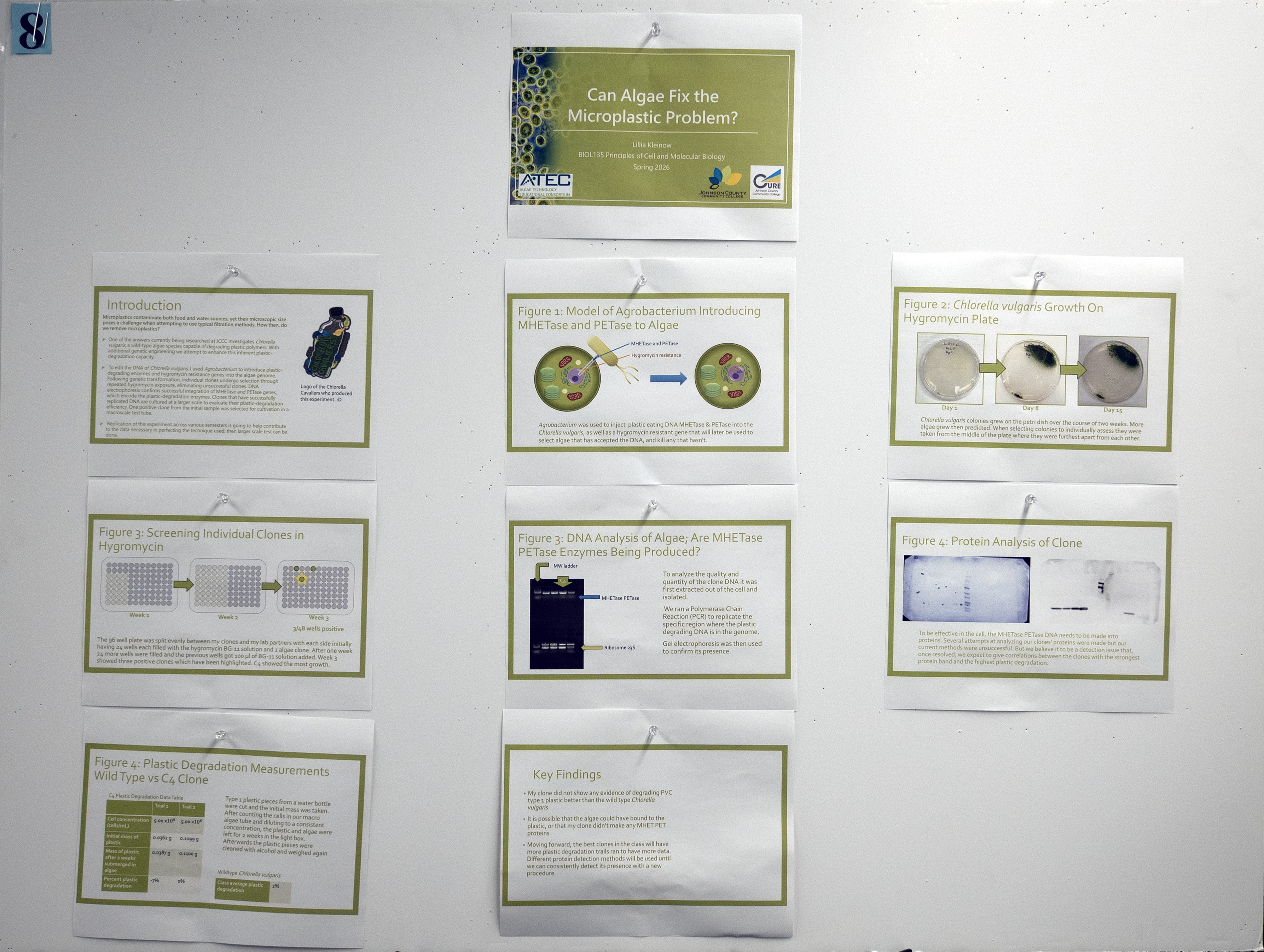
Microplastics contaminate both food and water sources, yet their microscopic size poses a challenge when attempting to use typical filtration methods. How then, do we remove microplastics? One of the answers currently being researched at JCCC investigates Chlorella vulgaris, a wild-type algae species capable of degrading plastic polymers. With additional genetic engineering we attempt to enhance this inherent plastic-degradation capacity. To edit the DNA of Chlorella vulgaris, I used Agrobacterium to introduce plastic-degrading enzymes and hygromycin resistance genes into the algal genome. Following genetic transformation, individual clones undergo selection through repeated hygromycin exposure, eliminating unsuccessful clones. DNA electrophoresis confirms successful integration of MHETase and PETase genes, which encode the plastic-degradation enzymes. Successfully transformed clones are cultured at a larger scale to evaluate their plastic-degradation efficiency. One positive clone from the initial sample was selected for cultivation in a macroscale test tube. Replication of this experiment across various semesters will contribute to the data necessary in perfecting the technique used, then larger scale test can be done.
Image
Plastic-degradation Properties of Genetically Modified Algae
CoLab, COM 311
Microplastics contaminate both food and water sources, yet their microscopic size poses a challenge when attempting to use typical filtration methods. How then, do we remove microplastics? One of the answers currently being researched at JCCC investigates Chlorella vulgaris, a wild-type algae species capable of degrading plastic polymers. With additional genetic engineering we attempt to enhance this inherent plastic-degradation capacity. To edit the DNA of Chlorella vulgaris, I used Agrobacterium to introduce plastic-degrading enzymes and hygromycin resistance genes into the algal genome. Following genetic transformation, individual clones undergo selection through repeated hygromycin exposure, eliminating unsuccessful clones. DNA electrophoresis confirms successful integration of MHETase and PETase genes, which encode the plastic-degradation enzymes. Successfully transformed clones are cultured at a larger scale to evaluate their plastic-degradation efficiency. One positive clone from the initial sample was selected for cultivation in a macroscale test tube. Replication of this experiment across various semesters will contribute to the data necessary in perfecting the technique used, then larger scale test can be done.
Comments
The faculty mentor for this project was Heather Seitz.