

Excavating Antibiotics
Location
CoLab, COM 289
Start Date
30-4-2026 1:15 PM
Document Type
Poster
Description
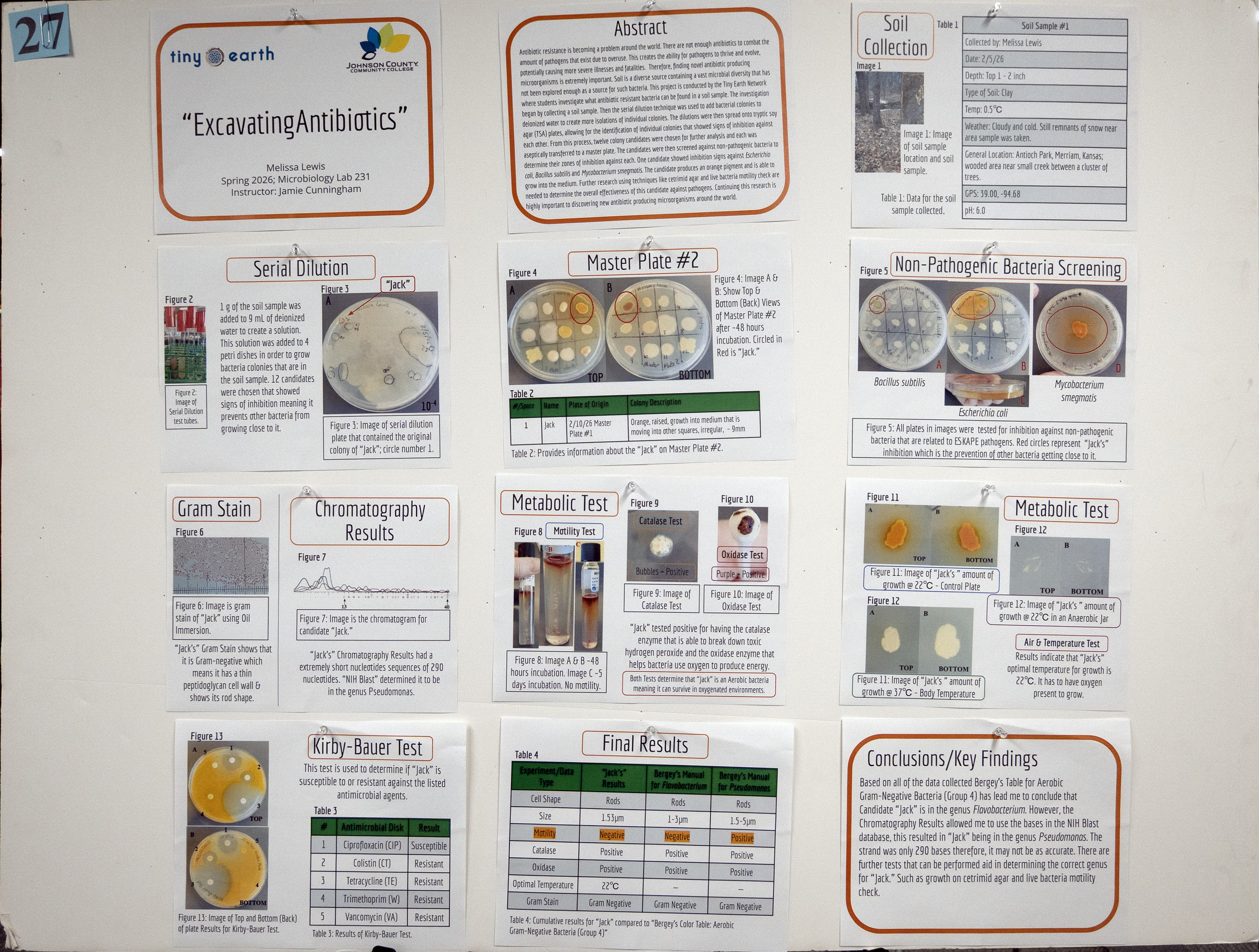
Antibiotic resistance is becoming a problem around the world. There are not enough antibiotics to combat the amount of pathogens that exist. This creates the ability for pathogens to thrive and evolve, potentially causing more severe illnesses and fatalities. Therefore, finding novel antibiotic producing microorganisms is extremely important. Soil is a diverse source containing a vast microbial diversity. This project is conducted in partnership with the Tiny Earth Network where students investigate their soil sample to determine if it could be useful in creating new antibiotics. The investigation began by collecting a soil sample from a local park and began following the steps. This includes serial dilution, master plates, testing against ESKAPE relatives, isolation of pure colonies, staining, and PCR. I had a few candidates show some inhibition against the ESKAPE relatives however, one candidate showed inhibition signs against Escherichia coli, Bacillus subtilis and Mycobacterium smegmatis. The candidate produces an orange pigment and is able to grow into the medium. Further research using techniques like staining, PCR, and DNA sequencing are needed to determine the overall effectiveness of this candidate against pathogens and its potential bacteria type. Continuing this research is highly important to discovering new antibiotic producing microorganisms around the world.
Image
Excavating Antibiotics
CoLab, COM 289
Antibiotic resistance is becoming a problem around the world. There are not enough antibiotics to combat the amount of pathogens that exist. This creates the ability for pathogens to thrive and evolve, potentially causing more severe illnesses and fatalities. Therefore, finding novel antibiotic producing microorganisms is extremely important. Soil is a diverse source containing a vast microbial diversity. This project is conducted in partnership with the Tiny Earth Network where students investigate their soil sample to determine if it could be useful in creating new antibiotics. The investigation began by collecting a soil sample from a local park and began following the steps. This includes serial dilution, master plates, testing against ESKAPE relatives, isolation of pure colonies, staining, and PCR. I had a few candidates show some inhibition against the ESKAPE relatives however, one candidate showed inhibition signs against Escherichia coli, Bacillus subtilis and Mycobacterium smegmatis. The candidate produces an orange pigment and is able to grow into the medium. Further research using techniques like staining, PCR, and DNA sequencing are needed to determine the overall effectiveness of this candidate against pathogens and its potential bacteria type. Continuing this research is highly important to discovering new antibiotic producing microorganisms around the world.
Comments
The faculty mentor for this project was Jamie Cunningham.