

Cilantro-Licous: An Analysis of Volatile Molecules using GCMS
Location
CoLab, COM 277
Start Date
30-4-2026 1:15 PM
Document Type
Poster
Description
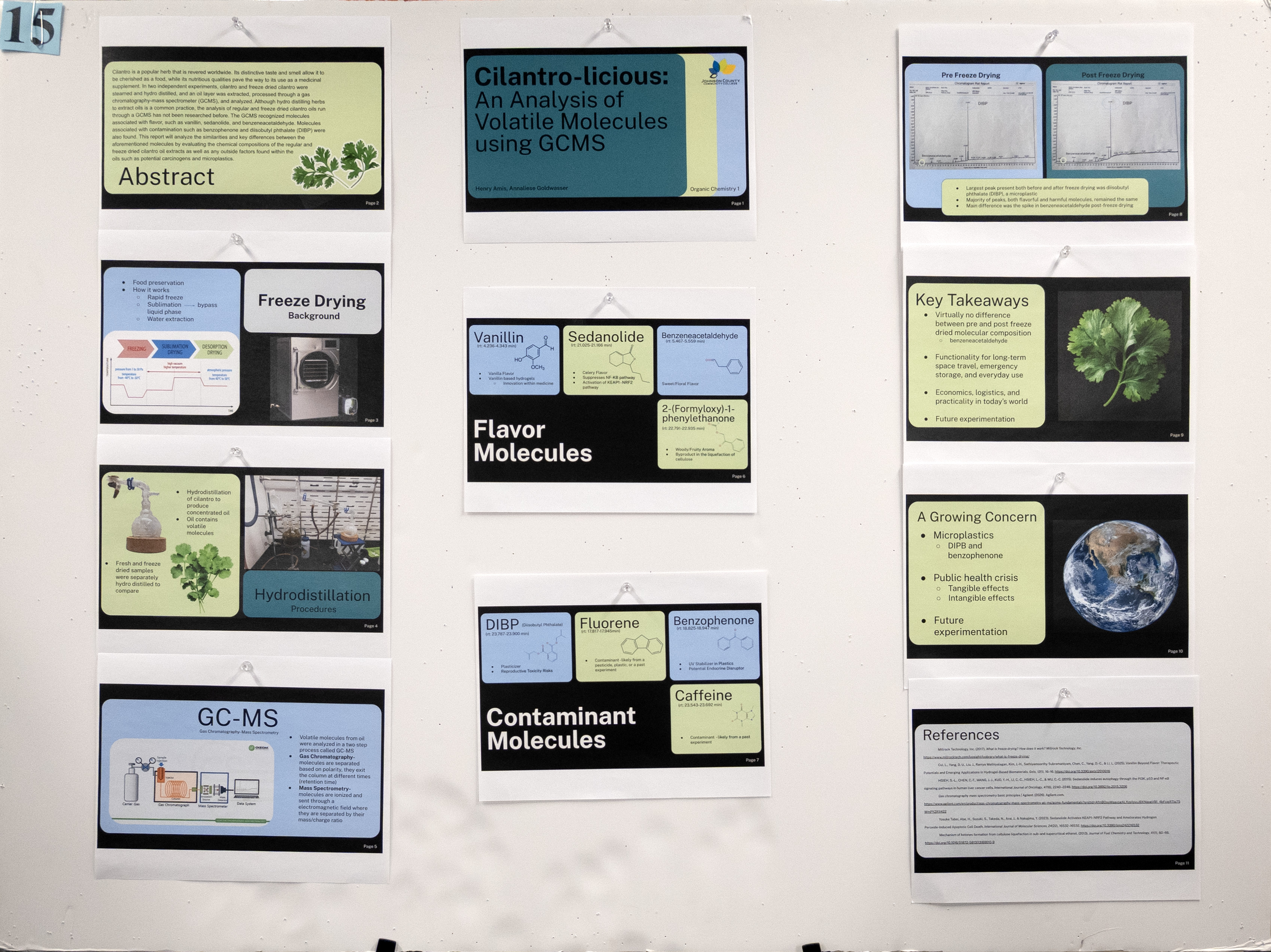
Cilantro is a popular herb that is revered worldwide. Its distinctive taste and smell allow it to be cherished as a food, while its nutritious qualities pave the way to its use as a medicinal supplement. In two independent experiments, cilantro and freeze-dried cilantro were steamed and hydrodistilled, and an oil layer was extracted, processed through a gas chromatography-mass spectrometer (GCMS), and analyzed. Although hydrodistilling herbs to extract oils is a common practice, the analysis of regular and freeze-dried cilantro oils run through a GCMS has not been researched before. The GCMS recognized molecules associated with flavor, such as vanillin, sedanolide, and benzeneacetaldehyde. Molecules associated with contamination such as benzophenone and diisobutyl phthalate (DIBP) were also found. This report will analyze the similarities and key differences between the aforementioned molecules by evaluating the chemical compositions of the regular and freeze-dried cilantro oil extracts as well as any outside factors found within the oils such as carcinogens and microplastics.
Image
Cilantro-Licous: An Analysis of Volatile Molecules using GCMS
CoLab, COM 277
Cilantro is a popular herb that is revered worldwide. Its distinctive taste and smell allow it to be cherished as a food, while its nutritious qualities pave the way to its use as a medicinal supplement. In two independent experiments, cilantro and freeze-dried cilantro were steamed and hydrodistilled, and an oil layer was extracted, processed through a gas chromatography-mass spectrometer (GCMS), and analyzed. Although hydrodistilling herbs to extract oils is a common practice, the analysis of regular and freeze-dried cilantro oils run through a GCMS has not been researched before. The GCMS recognized molecules associated with flavor, such as vanillin, sedanolide, and benzeneacetaldehyde. Molecules associated with contamination such as benzophenone and diisobutyl phthalate (DIBP) were also found. This report will analyze the similarities and key differences between the aforementioned molecules by evaluating the chemical compositions of the regular and freeze-dried cilantro oil extracts as well as any outside factors found within the oils such as carcinogens and microplastics.
Comments
The faculty mentor for this project was Todd Watson.