

The Dirt on Antibiotics
Location
CoLab, COM 249
Start Date
30-4-2026 12:00 PM
Document Type
Poster
Description
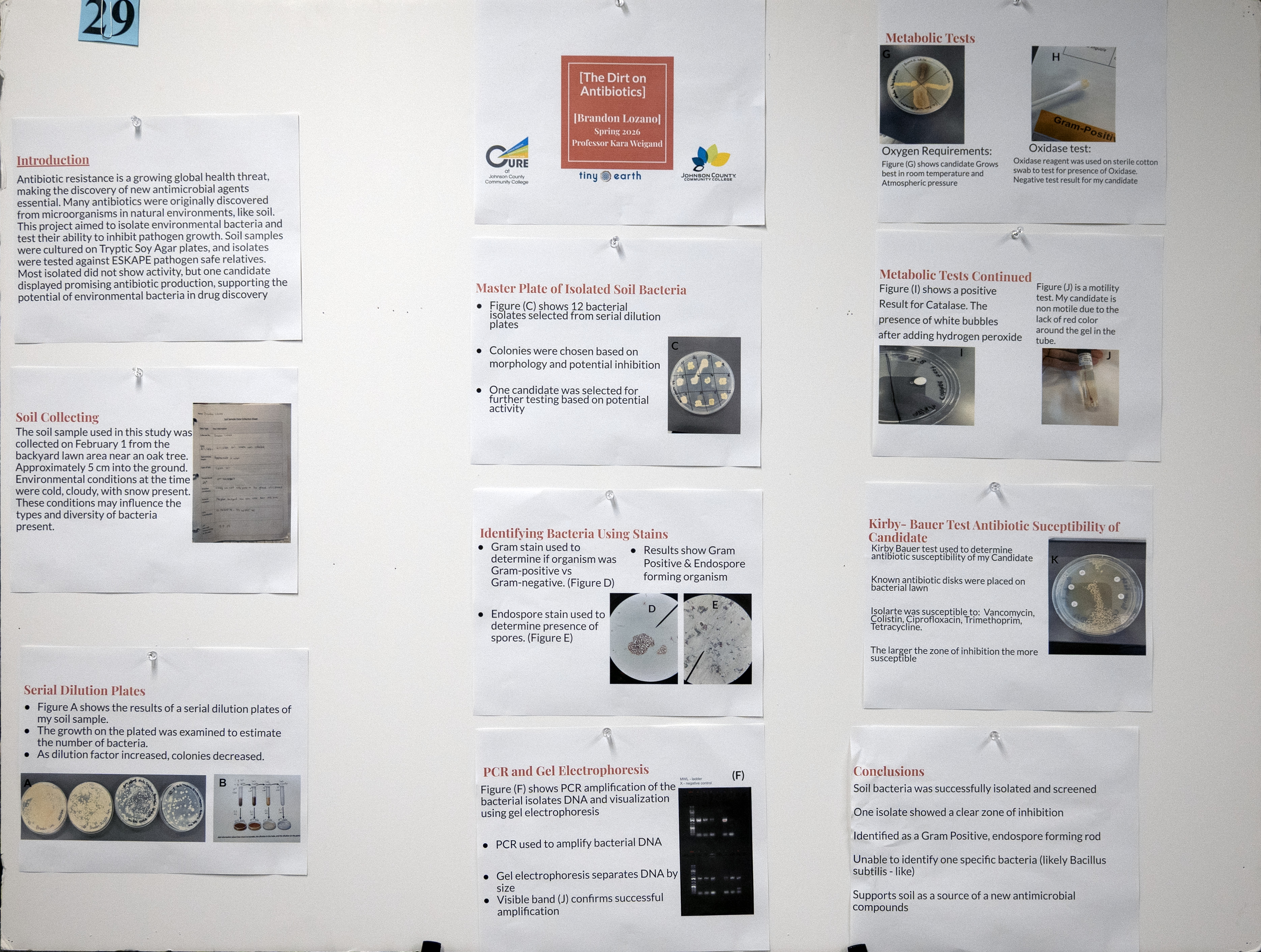
Antibiotic resistance is a growing global health concern, making the discovery of new antimicrobial compounds increasingly important. Many antibiotics currently used in the medical field were originally discovered from microorganisms found in natural environments such as soil. The purpose of this project was to isolate environmental bacteria and screen them for the ability to inhibit the growth of other bacterial species. Soil samples were diluted and cultured on nutrient Tryptic Soy Agar (TSA) plates to obtain individual bacterial colonies. Selected isolates were then tested for antibiotic activity by transferring them onto screening plates containing lawns of ESKAPE pathogen safe relatives. Zones of inhibition surrounding the isolates were used as an indicator of antimicrobial activity. Most isolates did not show measurable inhibition against the test organisms. However, one candidate showed evidence of antibiotic production. The isolate was further tested to characterize and identify its properties. These findings support the continued exploration of environmental bacteria as a potential source of antimicrobial compounds.
Image
The Dirt on Antibiotics
CoLab, COM 249
Antibiotic resistance is a growing global health concern, making the discovery of new antimicrobial compounds increasingly important. Many antibiotics currently used in the medical field were originally discovered from microorganisms found in natural environments such as soil. The purpose of this project was to isolate environmental bacteria and screen them for the ability to inhibit the growth of other bacterial species. Soil samples were diluted and cultured on nutrient Tryptic Soy Agar (TSA) plates to obtain individual bacterial colonies. Selected isolates were then tested for antibiotic activity by transferring them onto screening plates containing lawns of ESKAPE pathogen safe relatives. Zones of inhibition surrounding the isolates were used as an indicator of antimicrobial activity. Most isolates did not show measurable inhibition against the test organisms. However, one candidate showed evidence of antibiotic production. The isolate was further tested to characterize and identify its properties. These findings support the continued exploration of environmental bacteria as a potential source of antimicrobial compounds.
Comments
The faculty mentor for this project was Kara Weigand.